
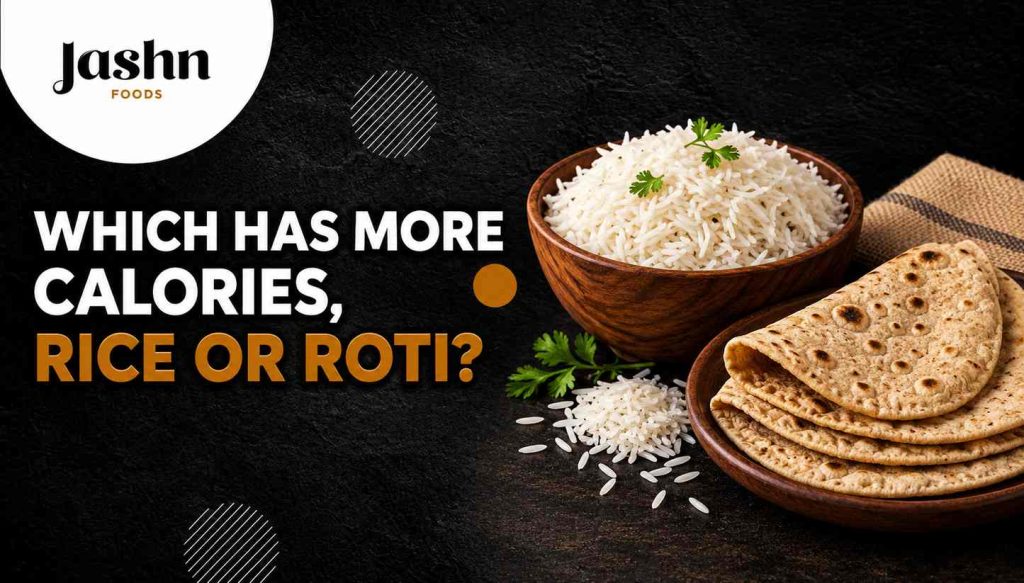
Ask someone at home whether rice or roti is better for everyday meals, and you might hear two different answers. Some people prefer roti with sabzi, while others enjoy a bowl of steaming rice with dal. Both are familiar parts of Indian food culture, but their calorie content often becomes a concern for people watching their weight. So, which has more calories, rice or roti? The answer depends on portion size, ingredients and cooking methods rather than the food alone.
Neither food needs to disappear from your daily diet. A cup of cooked rice and two medium homemade rotis can provide almost the same number of calories. People interested in grain varieties can also explore options from basmati rice suppliers in India such as Jashn Foods. Understanding the nutritional differences makes it easier to choose portions that suit your routine.
Understanding which has more calories, rice or roti?
Comparing calories in everyday portions
Think about a typical lunch at home. One person might eat a bowl of rice with dal and vegetables, while another prefers two rotis with the same dishes. Both meals can provide a similar amount of energy when the portions are comparable. The final calorie count depends on the quantity served and the ingredients used.
One cup of cooked white rice, weighing approximately 158 grams, provides around 205 calories. A medium roti prepared with approximately 30 grams of whole wheat flour generally contains about 100–110 calories without added ghee. Two such rotis provide roughly 200–220 calories. These estimates show why neither option is automatically lower in calories.
For detailed nutritional information, the Indian Food Composition Tables 2017, published by the Indian Council of Medical Research–National Institute of Nutrition, provides nutrient data for commonly consumed Indian foods. Actual values vary with ingredients, flour quantity, serving weight, and preparation method.
The following table gives a quick comparison of the approximate calories in common rice and roti portions.
| Food | Approximate calories |
| Cooked white rice, 100 g | 130 kcal |
| Cooked white rice, 1 cup (158 g) | 205 kcal |
| One medium plain roti | 100–110 kcal |
| Two medium plain rotis | 200–220 kcal |
| One roti with added ghee | More, depending on quantity |
Serving sizes can change this comparison considerably. A large bowl of rice may contain more calories than two small rotis, while thick rotis made with extra flour can reverse the difference. Measuring your usual portions occasionally can help you understand how much you actually eat. You do not need to weigh every meal, but having a rough idea of serving sizes is useful.
What affects the final calorie count?
The ingredients used during cooking often make a bigger difference than people realise. Rice absorbs water as it cooks, increasing its weight without adding calories. Consequently, a measured cup of cooked rice contains fewer calories than an equal volume of uncooked rice. The quantity of dry rice used also affects how much cooked rice you eventually serve.
Rotis have their own variables. The amount of flour, dough thickness and final size influence their nutritional value. A roti prepared with whole wheat flour and cooked without added fat will generally have fewer calories than a similar preparation brushed with ghee or butter. When you eat several rotis in one sitting, those additions can increase your total calorie intake.
The same principle applies to rice dishes. Plain steamed rice differs from fried rice cooked with oil, butter or other calorie-dense ingredients. Biryani may contain additional fat from oil, ghee, meat or other ingredients. These dishes can still fit into a varied diet, but their calories cannot be compared directly with those of plain rice or roti.
Understanding the nutritional differences
Calories measure the energy supplied by food, but they do not tell you everything about its nutritional value. Rice and roti both provide carbohydrates, which the body uses for energy. Their fibre, protein and micronutrient content can vary depending on the grain, flour, processing method and serving size.
Whole wheat roti generally provides more fibre than an equivalent serving of polished white rice. Wheat flour also contributes protein and several naturally occurring minerals. However, the exact amounts depend on the flour and the size of the roti. Rotis made using refined flour may have a different nutritional profile from those prepared with whole wheat flour.
White rice remains a useful source of carbohydrates and is naturally low in fat when cooked without added oil. Brown rice retains more of the grain’s outer layers, so it generally contains more fibre than polished white rice. Some rice products are also fortified with selected nutrients, which changes their nutritional profile.
Neither rice nor roti supplies every nutrient your body needs. A meal based mainly on either staple may lack sufficient protein, vegetables or other important food groups. Adding dal, beans, curd, vegetables, eggs or other protein-rich foods helps make the meal more balanced.
The Dietary Guidelines for Indians published by ICMR and the National Institute of Nutrition provide a useful reference for building varied meals and making informed dietary choices.
Choosing portions for weight management
People frequently wonder about rice or roti which is better for weight loss. There is no universal answer because weight management depends on total calorie intake, physical activity and long-term eating habits. Either food can fit into a weight-management plan when the portion suits your individual energy needs.
Start by looking at your usual meal rather than removing a staple immediately. If you regularly eat a large serving of rice, try a moderate portion with dal and vegetables. If you prefer roti, pay attention to the number you eat and how much oil or ghee you add. Small, consistent adjustments can be easier to maintain than strict restrictions.
Your meal accompaniments matter, too. A moderate portion of rice served with vegetables and a protein-rich dish may be more balanced than a meal consisting mainly of rice. Similarly, rotis paired with dal and vegetables can contribute to a satisfying meal. Focus on the complete plate rather than expecting one ingredient to determine your progress.
Avoid treating carbohydrates as something that must always be eliminated. Your body needs energy, and the amount required varies with age, activity and other individual factors. A sustainable eating pattern should account for these differences while providing a variety of nutrients.
From everyday meals to special recipes, explore rice varieties that suit your kitchen.
Feeling full after a meal
Have you ever finished lunch and felt hungry again sooner than expected? The reason may not be rice or roti alone. Portion size, the balance of nutrients and your activity level can all influence how long you feel satisfied after eating.
Whole wheat roti contains fibre, which can support digestion and contribute to fullness. However, this does not mean every roti-based meal will keep you satisfied longer than every rice-based meal. A meal containing rice, dal, vegetables and curd may also be filling because it combines different food groups.
Protein and fibre deserve attention when planning meals. Lentils, chickpeas, beans, vegetables and other suitable foods can improve the overall nutritional balance. Eating slowly and paying attention to your hunger can also help you recognise when you have eaten enough.
If you feel hungry soon after meals, first review the quantity and composition of your food. Simply switching from rice to roti may not solve the problem if your meals remain unbalanced.
Meal timing and evening rice consumption
Many households follow different rules about what should be eaten at dinner. Some prefer rotis in the evening, while others regularly serve rice with dal or vegetables. The question “eating rice at night good or bad” is common, but eating rice at a particular time does not automatically make it unhealthy.
Your overall diet and total calorie intake matter more than the clock. A moderate serving of plain rice can form part of an evening meal, provided it fits your nutritional needs. What you eat alongside it also matters, especially when dinner includes large quantities of oil, rich gravies or other calorie-dense ingredients.
Consider your appetite, activity level and bedtime routine when deciding how much to eat. A very heavy meal shortly before sleeping may feel uncomfortable for some people. Others may prefer a lighter dinner because they go to bed soon after eating. Finding a suitable portion and allowing enough time for digestion can help you feel more comfortable.
People with diabetes, digestive concerns or specific dietary requirements may need individual guidance about their meals. In such cases, advice from a qualified healthcare professional or registered dietitian is more appropriate than following general food rules.
Selecting rice for everyday meals
Rice varieties differ in aroma, grain length, texture and cooking behaviour. These differences influence which variety works best for a particular dish. Some people prefer soft rice for everyday meals, while others enjoy grains that remain separate after cooking.
When deciding on the best rice for daily use, think about your household’s eating habits and cooking preferences. Consider whether you prepare plain steamed rice, pulao, biryani or other dishes regularly. Grain quality, cooking consistency and personal taste can help you select a suitable variety.
Basmati rice is popular for its distinctive aroma and long grains. Different basmati varieties offer different cooking characteristics, so it is worth following the preparation instructions for the variety you choose. Rinsing, soaking and using an appropriate water ratio can affect the final texture.
Remember that choosing a particular variety does not remove the need to manage portions. Plain rice can fit into balanced meals, regardless of its grain length or aroma. The ingredients added during cooking and the quantity served remain important considerations.
Discover long-grain basmati with distinctive aroma and the texture your favourite dishes deserve.
Why grain variety and cooking quality matter
The variety of rice you select can influence the appearance and texture of your finished dish. Long-grain varieties are often preferred for preparations where separate, elongated grains are desirable. Other varieties may suit dishes that require a softer or stickier texture.
For example, 1121 basmati rice is known for its extra-long grains and is often chosen for biryani, pulao and other dishes where grain length and separation matter. Its cooking performance depends on the specific product and preparation method. Correct soaking, water measurement and cooking time can help produce the desired texture.
Although these characteristics influence your cooking experience, they do not determine whether a meal is suitable for weight management. The quantity served, preparation method and foods eaten alongside rice remain relevant. A well-cooked meal can be enjoyable without requiring unnecessarily large portions.
Building balanced meals with familiar foods
You do not need an elaborate diet plan to make everyday meals more balanced. Start with a suitable portion of rice or roti, then include vegetables and a source of protein. Dal, rajma, chana, curd, paneer, eggs and other foods can help meet different nutritional needs according to your preferences.
Variety also helps prevent meals from becoming repetitive. You might enjoy rice with dal at lunch and rotis with vegetables at dinner. On another day, you could reverse the combination. Both approaches can work when your overall eating pattern provides sufficient energy and a range of nutrients.
Pay attention to added fats without treating them as completely forbidden. A little ghee or oil may be part of your usual cooking, but larger amounts increase calorie intake. Home cooking gives you greater control over these quantities.
Most importantly, build habits that suit your lifestyle. Regular meals, sensible portions and a varied selection of foods are more useful than repeatedly switching between rice and roti because one is labelled healthier.
Making the right choice for your routine
Rice and roti can both have a place in everyday meals. One cup of cooked white rice and two medium rotis prepared without added fat may provide similar calories, although the actual amounts depend on the portions and ingredients. Whole wheat roti generally supplies more fibre than polished white rice, but that difference does not make rice an unsuitable choice.
Instead of searching for a single winner, consider your nutritional needs, portion sizes and meal combinations. Include vegetables and protein-rich foods, and account for additional oil or ghee when comparing calories. If you have specific health concerns, individual dietary guidance can help you make more suitable choices.
You can enjoy a bowl of rice with dal one day and freshly prepared rotis the next. Neither food needs to be treated as the enemy. Once you understand how portions and preparation affect your meals, making everyday food choices becomes much easier.
Explore Jashn’s basmati range today and find grains that match your cooking style.