
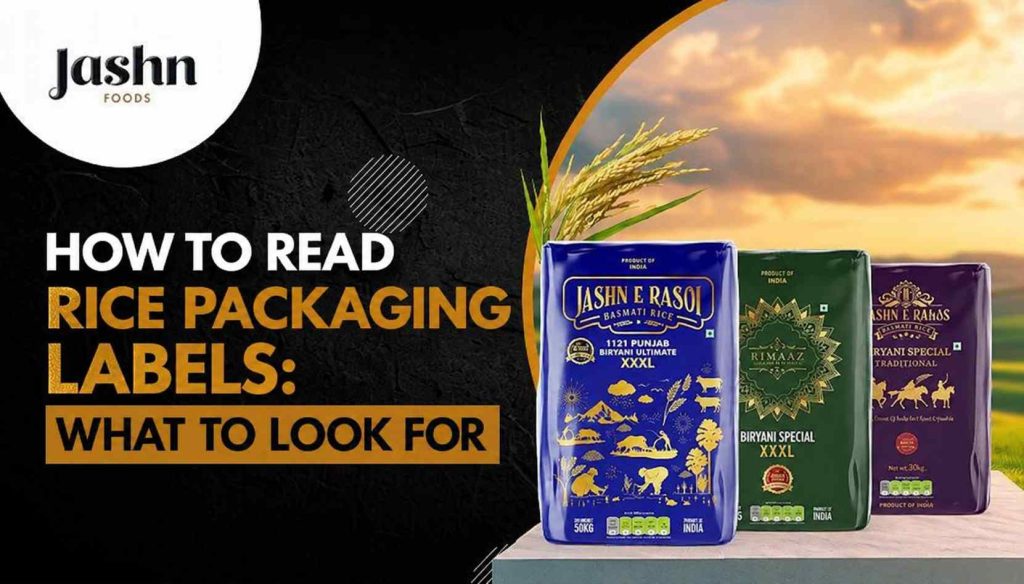
The front of a rice packet is designed to catch your eye. The back is where you usually find the information that helps you decide. A quick look at the label can tell you the rice variety, quantity, processing method, packing date, and storage instructions. Once you know how to read rice packaging labels, comparing two similar packets becomes much easier.
This matters when several products use similar words and almost identical pictures. A shiny pouch or a “premium” claim does not necessarily tell you what is inside. The small print often gives you a much clearer idea of what you are actually buying.
Go beyond the front label and explore the rice options available from Jashn Foods.
Understanding how to read rice packaging labels: what to look for
You do not need to study a rice packet like a legal document. A few checks are usually enough for an informed purchase. Start with the product name, then look at the variety, quantity, date, manufacturer details, and storage instructions.
After that, check any claims that influence your choice. This could include grain length, ageing, processing, cooking characteristics, or certifications. That simple habit works for household shopping and becomes even more useful when you buy rice in larger quantities.
Begin with the product name
Look at the name before anything else. It should give you a clear idea of the rice you are buying. You might see Basmati, non-Basmati, brown rice, parboiled rice, steam rice, or long-grain rice.
These names are not interchangeable. A long-grain product is not automatically Basmati just because the grains look slender. Start with the declared product name, and then use the remaining label information to understand it properly.
Find the rice variety
The variety gives you another useful layer of information. Some Basmati packs mention names such as 1121, 1718, 1509, or Pusa Basmati. Each variety can have its own characteristics, so the name helps you make a more informed comparison.
Think about where the rice will be used. A restaurant preparing biryani throughout the week may have different requirements from a family cooking rice once or twice a day. Grain length, aroma, texture, and cooking behaviour can all influence that choice.
Explore rice varieties that match your cooking, business, or sourcing needs.
Check how the rice was processed
Processing terms deserve a closer look because they can affect the final cooking result. Raw rice, steam rice, and sella or parboiled rice do not always cook in the same way. Water absorption, texture, and handling can vary between these products.
There is no universal winner here. The better option depends on the dish and the kitchen. Someone buying rice for biryani may want one type, while another household may prefer something different for daily meals.
Check the dates before buying
The date panel is easy to miss. It is often printed in a less noticeable area, especially on large bags. Still, you should check the packing or manufacturing information and then read the best-before or use-by declaration.
Packaging should also be in good condition. A torn seal, damp patch, unusual swelling, or signs of insects deserve attention. FSSAI’s labelling regulations cover date marking and other mandatory information required on pre-packaged foods in India.
Compare the quantity with the price
Price alone can give you the wrong impression. One packet may cost less simply because it contains less rice. Check the net quantity before deciding which product is actually better value.
Many shoppers immediately look for rice price and compare the printed numbers. A better comparison considers the pack size along with the variety and processing type. This becomes particularly important for restaurants, retailers, and other buyers placing repeated orders.
Check who packed or manufactured it
Turn the packet around and find the company information. Look for the manufacturer, packer, marketer, or brand owner name, along with the relevant address and customer information. You should also be able to find the applicable food licence details and batch information.
This information has a practical purpose. Suppose you like the rice and want the same product again. A clearly identified business makes that follow-up much simpler. For commercial sourcing, established basmati rice suppliers such as Jashn Foods can be useful when buyers need clarity around products and supply requirements.
Read the grain claims with some caution
Rice packaging often uses attractive descriptions. You may see phrases about extra-long grains, rich aroma, ageing, superior quality, or separate grains. Those claims can be useful, but they should not become the only reason you choose a packet.
Look for information that can actually help with your decision. A caterer may want grains that stay separate after cooking. A home cook may care more about aroma and texture. The same packet can appeal to both, but for completely different reasons.
Check storage instructions
Rice is generally easy to keep, but poor storage can change that quickly. Look for the storage guidance printed on the package and follow it after opening. A dry, clean area away from moisture and pests is usually important for maintaining product quality.
Large bags need a little more attention once they are open. Fold or seal the packet properly instead of leaving the top exposed. You can also shift the rice into a clean, dry container for easier handling.
Do not skip the cooking instructions
Some brands include cooking directions, soaking recommendations, or suggested water ratios. Experienced cooks may ignore them, especially when they already have a preferred method. They are still worth reading when you try a rice variety for the first time.
The instructions can also give you clues about the product. Steam rice, raw rice, and parboiled rice may need different treatment. A few minutes spent reading the packet can save a disappointing batch later.
Look at safety and certification information
A packet may display several symbols, declarations, or certification marks. In India, the FSSAI logo and licence information are important details to notice on applicable packaged foods. The rules also cover how certain declarations and information should appear on labels.
Do not assume that one logo answers every quality question. It is only one part of the picture. You still need to consider the product name, quantity, date, packaging condition, and suitability for your intended use.
Use the label to compare products
Two rice packets can look almost the same on a shelf. Their labels may tell a very different story. Put them side by side and compare the same details instead of jumping from one claim to another.
Check the variety first. Then compare quantity, processing type, date, manufacturer information, and storage guidance. This makes the decision feel much less complicated because you are comparing facts in the same order.
Packaging has a bigger job than you think
A rice bag does not only protect the grains during handling and transport. It also introduces the product to the person standing in front of the shelf. The wording, information, and presentation can influence whether that person feels confident about the purchase.
That is why the role of packaging in rice sales goes beyond appearance. Clear information can remove doubts before a customer asks a shopkeeper for help. For a rice brand, that can make the buying experience smoother and more trustworthy.
Clear information can help retailers sell better
Retail staff cannot explain every packet to every shopper. Customers often make their decisions within a few minutes. A label that clearly explains the product gives them something useful to work with immediately.
Over time, that clarity can increase rice sales by reducing confusion and improving product recognition. A customer who knows what they bought is also more likely to find the same product again. That matters for supermarkets, local retailers, wholesalers, and distributors.
Bulk buyers need to read beyond the front panel
Buying one household packet is very different from purchasing rice for a restaurant or distribution network. Commercial buyers need consistency, not just attractive packaging. They may need a particular variety, processing type, bag size, grain specification, or repeat supply arrangement.
Before placing a large order, discuss those requirements clearly with the supplier. The product name should match the specification you expect to receive. Jashn Foods works with wholesale buyers, distributors, retailers, HoReCa businesses, and private-label customers seeking dependable rice sourcing options.
Export buyers should check more than the Indian label
Rice sold in India and rice shipped to another country may face different labelling expectations. Import markets can have their own rules covering declarations, language, quantity, dates, and other product information. Export buyers should therefore confirm the requirements that apply in their destination market.
That is especially useful when purchasing rice from India for retail sale overseas. A good supplier should understand that the buyer’s market may require more than the standard domestic presentation. Checking those details early can prevent avoidable problems later.
Match the label with your actual need
There is no point choosing a rice only because its packet looks impressive. Think about what you actually need the rice to do. Daily meals, biryani, catering, retail resale, and private-label distribution can all call for different specifications.
This is where how to read rice packaging labels becomes practical rather than theoretical. The label gives you information. Your cooking style or business requirement tells you which information matters most. Put those two things together, and the choice usually becomes clearer.
Discuss your rice requirements with a supplier experienced in wholesale and business sourcing.
Make label reading a quick habit
You do not have to spend ten minutes on every packet. With practice, a quick scan is enough. Check the name, variety, quantity, date, business details, processing type, and storage information.
Then pause on any claim that affects your decision. Ask whether it gives you useful product information or simply sounds appealing. This small habit can make supermarket shopping easier and can make bulk sourcing discussions far more precise.
Final takeaway
A rice packet tells you much more than the brand name printed on the front. The label can reveal the variety, processing method, quantity, dates, business details, storage requirements, and other useful information. Reading those details gives you a better basis for choosing the right product.
Once you understand how to read rice packaging labels, you are less likely to rely on appearance or bold marketing claims alone. The same approach works whether you are shopping for your kitchen or sourcing rice for a business. For buyers looking for wholesale, HoReCa, distribution, or private-label rice solutions, Jashn Foods offers a range of rice varieties to suit different requirements.