
Take a look at a typical Indian lunch and rice is often right there on the plate. It may be served with dal, rajma, kadhi, vegetables, fish, or a simple curry. Yet many people still ask what nutrients does rice have and whether it offers more than just carbohydrates.
The answer is yes, although the amount of each nutrient depends on the type of rice. Processing also matters. Brown rice, white rice, parboiled rice, and fortified rice do not have exactly the same nutritional profile.
Rice is eaten daily in India and remains popular in many other parts of the world. Its mild taste also makes it easy to pair with almost anything. For households and food businesses, that versatility is a big part of its appeal.
Choose a variety that matches your menu, market, and quality expectations.
What Nutrients Does Rice Have? A Guide to Rice Nutrition
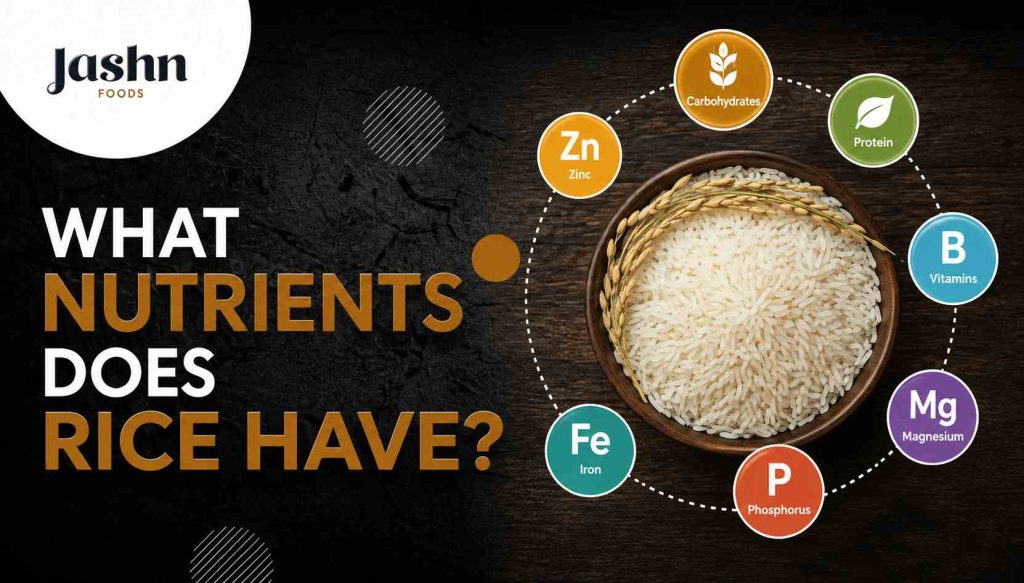
At its simplest, rice is mainly a carbohydrate food. It also contains protein, small amounts of fat, B-group vitamins, minerals, and fibre. The exact nutritional value changes with the variety and the amount of processing the grain undergoes.
The outer layers of a rice grain are nutritionally important. They contain more fibre and several vitamins and minerals than the inner portion. When rice is milled and polished, some of these layers are removed.
The Food and Agriculture Organization of the United Nations notes that rice supplies energy and protein and contains nutrients such as thiamine, riboflavin, niacin, iron, and calcium. Its nutritional composition also changes between brown and milled rice.
Carbohydrates Make Up Most of the Grain
If rice had a job description, providing energy would probably be near the top. Carbohydrates make up most of the grain and are broken down into glucose during digestion. The body then uses that glucose to support everyday activity.
That makes rice particularly useful in meals that need to be filling. Someone heading into a busy workday may have rice with dal and vegetables. A sportsperson may combine it with eggs, chicken, fish, or another source of protein.
The carbohydrate content is not identical across all varieties. Cooking also changes the amount of water in the finished food. Because of that, the nutritional value per cooked serving can look different from the numbers shown for uncooked rice.
There Is Protein in Rice Too
Rice does contain protein, although you would not normally choose it as your main protein source. Pulses, dairy products, eggs, fish, poultry, and meat generally provide more protein. Still, the protein in rice contributes to the total intake from a meal.
This is where familiar food combinations become useful. Think of dal-chawal. The dal brings protein and other nutrients, while the rice supplies energy. Add a vegetable and some curd, and the meal becomes even more varied.
The FAO notes that rice protein is relatively digestible, while also highlighting differences in protein quality between rice and other staple foods.
For food businesses, the conversation is slightly different. A restaurant or caterer also needs rice that behaves consistently in the kitchen. Jashn Foods supplies rice for bulk and commercial requirements where dependable grain quality matters from one batch to the next.
Compare varieties, processing options, and grain characteristics before your next purchase.
Fibre Depends on the Rice You Choose
Fibre is one area where rice varieties can differ quite noticeably. Brown rice keeps more of the grain intact, including the bran layer. As a result, it generally contains more dietary fibre than polished white rice.
White rice goes through more milling, which removes the bran and germ. That creates the soft, familiar grain used in countless Indian recipes. It also means that some nutrients naturally found in the outer layers are reduced.
This does not make white rice a food that needs to be avoided. Many people eat it as part of balanced meals every day. Adding vegetables, beans, lentils, fruits, nuts, and seeds can help increase fibre across the rest of the diet.
Rice Provides Several B Vitamins
Rice can contribute a few B vitamins to the diet, including thiamine, riboflavin, and niacin. These vitamins help the body use energy from food and support normal metabolic functions. The quantity depends partly on how much of the grain remains after milling.
Brown rice keeps its outer layers, so it tends to retain more naturally occurring B vitamins. Some rice products are also fortified after processing. That can add selected nutrients back into the product.
One point is worth remembering here. Rice is not supposed to provide every vitamin you need. A varied diet does that job better. Vegetables, fruit, pulses, dairy, eggs, nuts, seeds, and other foods all bring something different to the table.
Minerals Are Present in Small Amounts
Rice also contains minerals such as iron, magnesium, phosphorus, zinc, and calcium. The amount varies with the rice variety, growing conditions, processing, and fortification. Brown rice generally retains more minerals because fewer grain layers are removed.
The difference may not be obvious when you look at two bags of rice in a shop. Both may look clean and appealing. Nutritionally, however, they can be quite different.
For buyers, this is one reason labels and product information are useful. Variety and processing tell you much more than colour alone. For commercial procurement, factors such as purity, consistency, storage, packaging, and cooking performance matter too.
Can Washing Change the Nutritional Value?
Washing rice is almost second nature in many Indian kitchens. Some people give the grains one quick rinse. Others wash them several times until the water looks much clearer.
So, does rinsing rice remove nutrients? Washing can reduce some water-soluble nutrients, particularly when rice is washed repeatedly or soaked for a long time. The amount lost depends on the rice, the washing method, and what happens during cooking.
There is no need to become overly anxious about rinsing. Washing also serves a practical purpose by removing surface dust, loose starch, and unwanted particles. The better approach is to wash the rice sensibly rather than repeatedly rinsing it without a clear reason.
Cooking deserves attention as well. When rice is boiled in excess water and that water is discarded, some water-soluble nutrients can be lost with it. Using a suitable amount of water can help limit unnecessary losses.
White Rice and Brown Rice Serve Different Preferences
The white-versus-brown rice debate tends to become more complicated than it needs to be. Both begin as rice grains, but they are processed differently. Brown rice keeps the bran and germ, while white rice has these outer layers removed during milling.
Brown rice usually has a firmer texture and a nuttier flavour. White rice is softer and works especially well in dishes where a light texture is preferred. Cooking time can also be different.
So which one should you buy? That depends on the person and the meal. Someone may prefer brown rice for its higher fibre content, while another person may simply enjoy the taste and texture of white rice more.
Rice Can Be Part of a Balanced Diet
The health benefits of eating rice are easier to understand when you look at the complete meal rather than the grain by itself. Rice supplies energy and some nutrients, while the foods around it can bring fibre, protein, vitamins, and additional minerals.
Consider a regular Indian dinner. Rice might be served with dal, mixed vegetables, curd, salad, and a protein-rich dish. The nutritional value of that plate cannot really be judged by the rice alone.
Portion size can matter as well. Energy needs vary from person to person. Someone with a physically demanding routine may need more energy than someone who spends most of the day sitting.
There is therefore no universal rule that says everyone should eat the same amount of rice. Balance is more useful than blanket restrictions.
Different Rice Varieties Have Different Uses
Walk into a rice market and you will quickly see how many choices are available. Short-grain rice, long-grain rice, aromatic varieties, brown rice, parboiled rice, and basmati rice all have different characteristics.
These differences are especially important in commercial kitchens. A restaurant preparing biryani may want grains that stay separate and elongate well. A caterer may care more about cooking yield, consistency, and cost.
For example, 1121 basmati rice is widely valued for its long grain and strong elongation during cooking. It is particularly popular for biryani, pulao, catering, and other dishes where appearance plays an important role.
Jashn Foods works with buyers looking for rice suitable for different culinary and business applications. Choosing the right variety at the beginning can make a noticeable difference later in the kitchen.
How to Choose Rice for Your Needs
There is no single checklist that works for every buyer. Start with the dish you plan to prepare. Everyday meals, restaurant menus, export orders, and bulk distribution can all have different requirements.
Look at the grain shape and length first. Then consider aroma, cooking behaviour, processing, packaging, and consistency. For large-volume buyers, reliable supply is equally important because even a good product becomes difficult to manage when every batch behaves differently.
People comparing the top rice brands in India should look beyond the packaging. The brand matters, but so do sourcing practices, product consistency, quality checks, available varieties, and after-sales support for business buyers.
Jashn Foods caters to different rice requirements, including bulk supply and private-label opportunities. For businesses, having a supplier that understands both product quality and commercial needs can simplify procurement.
From everyday use to commercial kitchens, find the right variety for your requirements.
Processing Can Change What You Get From Rice
Rice does not arrive on your plate exactly as it comes from the field. It goes through several stages before cooking, and those stages can influence its nutritional profile.
Milling removes the outer layers. Polishing changes the appearance and texture. Parboiling uses heat and water before milling. Fortification can add selected nutrients to the finished product.
That is why asking what nutrients does rice have without mentioning the rice type gives only part of the answer. The same broad food category can contain products with different levels of fibre, vitamins, minerals, and other nutrients.
For everyday buyers, this does not mean shopping needs to become complicated. Knowing the variety and processing method is usually a good starting point.
What Does Rice Add to an Everyday Meal?
Rice brings one major thing to the plate: dependable energy. Beyond that, it contributes smaller amounts of protein, vitamins, minerals, and other nutrients. The amount changes according to the grain and how it has been processed.
The bigger picture matters more, though. Rice paired with dal is different from rice eaten alone. Rice with vegetables and curd is different again. The meal around the grain determines much of its overall nutritional value.
For this reason, there is no need to label rice simply as “good” or “bad.” It is a staple food with different forms, different uses, and different nutritional strengths.
Don’t compromise on grain quality, consistency, or cooking performance.
Final Thoughts
So, what nutrients does rice have? Rice is mainly rich in carbohydrates, but it also supplies protein, fibre, B vitamins, iron, magnesium, phosphorus, and other minerals in varying amounts. The type of rice and the processing method can change these levels considerably.
Brown rice keeps more of the grain’s outer layers, while white rice offers a softer texture and broad culinary flexibility. Parboiled and fortified products bring further differences. The best choice depends on the meal, dietary needs, cooking preferences, and intended use.
For Indian households and global food businesses, rice remains a versatile staple for good reason. When quality, consistency, and the right variety come together, it becomes much easier to get the result you want from every batch.
Jashn Foods helps businesses source rice for different market and food-service requirements. From everyday varieties to premium basmati options, choosing a suitable product and a reliable supplier can make procurement far more straightforward.
Disclaimer: This article is for general informational purposes only and should not be considered medical or dietary advice. Consult a qualified professional for specific dietary needs.