
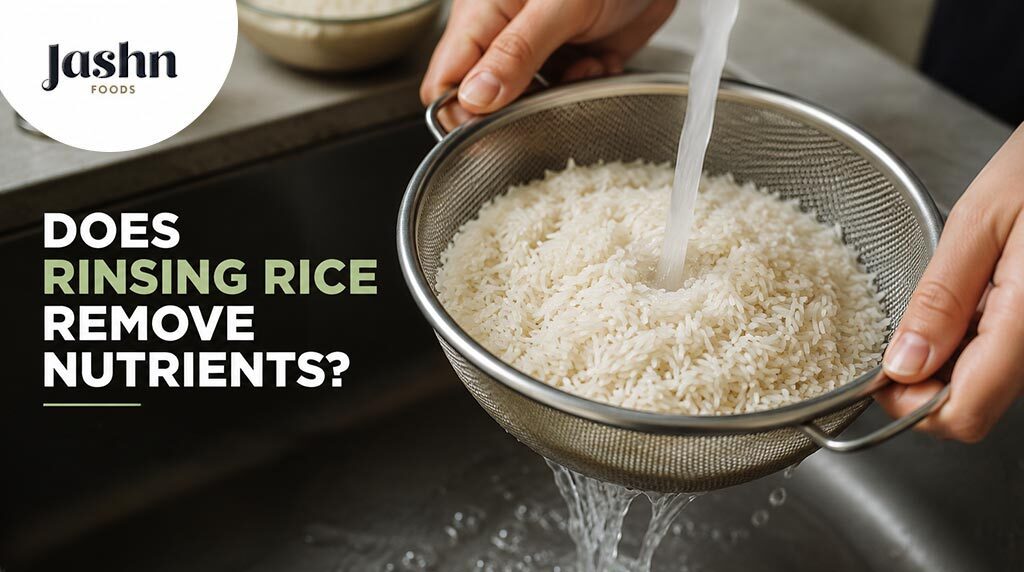
Every Indian kitchen has a rice-washing ritual. You rinse the grains under running water until it turns clear, then cook as usual. But does rinsing rice remove nutrients in the process? This question comes up often among home cooks and nutrition-conscious families. Some research says washing strips away iron, folate and B vitamins from the surface of the grain.
Other experts argue the benefits, especially lower arsenic exposure, outweigh this loss. If you eat Indian basmati rice most days, this debate probably matters to you. It isn’t only an Indian kitchen question, either. Home cooks in the US, UK, Middle East and Southeast Asia ask the same thing before every meal. Let’s look at what science actually says.
Choose naturally processed premium basmati rice that delivers purity, taste, and quality in every grain.
Does Rinsing Rice Remove Nutrients? What the Research Actually Shows
Yes, rinsing does remove some nutrients. Studies confirm this clearly.
A 2015 study led by researcher Sarah Gray found something surprising. Rinsing white rice removed close to 90 percent of its iron. It also washed away nearly 80 percent of B vitamins, including folate, niacin and thiamine.
Brown rice told a different story. Rinsing barely touched its iron or vitamin content in that same study. The bran layer on brown rice holds nutrients more tightly than polished white grains.
The FDA backs this up too. Its research shows that rinsing has minimal effect on arsenic levels in cooked rice. But it does wash off iron, folate, thiamine and niacin, particularly from polished and parboiled varieties.
So the nutrient loss is real. It happens mostly with white rice, not brown, and mostly with rice that has been enriched after milling.
Where the Lost Nutrients Actually Come From
Most packaged white rice sold in stores is enriched. Manufacturers spray a nutrient coating onto the grain after milling. This coating sits on the surface, not inside the grain.
When you rinse this rice, you wash the coating away. The vitamins go straight down the drain with the starchy water.
This is different from grains where nutrients sit naturally inside the seed. Brown rice keeps its nutrients inside the bran and germ layers. Rinsing does not strip these away as easily.
This is often the moment people start asking which rice is healthiest for daily meals. The honest answer depends on what you value more, convenience or nutrient density. Brown rice wins on raw nutrition. White rice wins on ease of cooking, digestion and shelf life.
Why Arsenic Changes the Rinsing Debate
Nutrient loss is not the only factor here. Arsenic exposure matters too, and it changes the calculation.
Rice absorbs arsenic from soil and water as it grows in flooded paddy fields. This heavy metal builds up more in rice than in most other grains people eat regularly.
The Institute for Environmental Research and Education recommends rinsing rice three to four times before cooking. This step can meaningfully lower arsenic levels, even though it costs some nutrients along the way.
So should you rinse rice, given this trade-off? For most people, a light rinse of two to three times strikes a reasonable balance. It cuts down arsenic without wiping out most of your nutrients.
Families with young children or pregnant women may want to rinse a little more carefully. Arsenic exposure carries higher risks for these groups specifically, since developing bodies absorb toxins more easily than adult bodies do.
Long-term arsenic exposure has been linked to skin lesions and certain cancers in multiple health studies. This is why global food safety agencies keep monitoring arsenic levels in staple grains like rice.
Does Cooking Method Matter More Than Rinsing?
Researchers at the University of Sheffield tested this question directly. They compared plain rinsing against a method called parboiling and absorption.
This method involves boiling rice in water for five minutes, draining it, then cooking it again in fresh water on low heat. The results were striking.
This approach removed over 50 percent of arsenic from brown rice. It removed 74 percent from white rice. Importantly, the study found no significant loss of micronutrients using this method.
Rinsing alone cannot match that level of arsenic reduction. If arsenic is your main concern, how you cook rice matters as much as how you wash it.
Experience premium basmati rice trusted by families, restaurants, and bulk buyers across the globe.
Basmati Rice and the Arsenic Advantage
Not all rice carries the same arsenic risk. Geography plays a huge role in this story.
Consumer Reports tested hundreds of rice samples over several years. Their findings placed basmati rice from India and Pakistan among the lowest in arsenic content worldwide.
A 2025 report from Healthy Babies Bright Futures confirmed this trend again. Indian basmati rice showed some of the lowest inorganic arsenic levels compared to rice grown in parts of the United States.
This is genuinely good news if you cook with basmati regularly. Many Indian households now buy directly from a trusted basmati rice exporter in India, where soil quality and processing standards already keep arsenic levels low. This means you may not need aggressive rinsing to stay safe.
Brown Rice, White Rice and Daily Cooking Habits
Most Indian homes don’t really choose between brown and white rice. Basmati, in its polished white form, dominates daily meals across the country.
If you eat everyday basmati rice, you’re already choosing a variety that tends to be naturally lower in arsenic. This reduces the pressure to rinse aggressively before cooking.
Still, a quick rinse before cooking removes surface dust and loose starch. It also gives you fluffier, less sticky grains once cooked. This benefit is mostly about texture, not nutrition.
Two to three rinses under cool water usually does the job well. You don’t need to scrub the grains or soak them for long periods.
Why This Question Matters Beyond Indian Kitchens
Rice feeds more than half the world’s population in some form. That makes this a genuinely global conversation, not a niche one.
Consumers in the United States and United Kingdom have raised similar concerns after government reports flagged arsenic levels in locally grown rice. Many of them now specifically look for imported basmati as a safer daily option.
This global attention has pushed exporters and food safety bodies to test rice more rigorously than before. The result is more transparent labelling and better sourcing information for shoppers everywhere, not just in India.
Does Rice Price Affect Its Nutritional Value?
People often assume higher basmati rice prices mean better nutrition. That assumption isn’t entirely accurate.
Price usually reflects grain length, the aging process and aroma, not vitamin or mineral content directly. A well-aged, expensive basmati and a fresh, affordable one can carry similar nutrient profiles.
What matters more is how the rice gets processed. Heavily polished rice loses more of its outer layer, along with some nutrients, regardless of what it costs.
Don’t judge nutrition by price alone. Look closely at how the rice is milled, stored and packaged instead.
Picking the Right Rice Brand for Your Kitchen
With so many Indian rice brands crowding store shelves, choosing one can feel overwhelming.
Look for brands that share sourcing details, milling standards or lab testing information on their packaging. Transparency usually signals stronger quality control practices.
Established names in this space often source from regions known for lower arsenic soil, particularly parts of Punjab, Haryana and the Himalayan foothills. This natural growing advantage matters more than clever marketing claims.
Reading the label carefully helps far more than trusting a brand purely on its size or popularity.
Simple Tips for Rinsing Rice the Smart Way
You don’t need a complicated system to rinse rice properly at home.
Fill a bowl with cool water and add your rice. Swirl the grains gently with your hand for a few seconds. Drain the cloudy water, then repeat this two or three times.
Stop once the water looks mostly clear. It doesn’t need to run perfectly transparently.
This simple method counts among the best rice for daily use practices followed in Indian kitchens today. It balances arsenic reduction, nutrient retention and better-tasting rice on your plate.
Avoid soaking rice for hours unless a specific recipe calls for it. Extended soaking pulls out more nutrients than a quick rinse ever will.
The Bottom Line
Does rinsing rice remove nutrients? Yes, to some extent, especially with enriched white rice. But the loss is manageable, and it’s smaller with basmati varieties to begin with.
A light rinse of two to three times offers a reasonable middle ground for most households. You reduce arsenic exposure without stripping away most of your rice’s nutritional value.
Pair this simple habit with a genuinely balanced diet. Rice alone was never meant to supply every nutrient your body needs.
Your grandmother’s rinsing habit, it turns out, wasn’t wrong at all. It just needed a little scientific context to make complete sense.
Discover premium rice that cooks beautifully while delivering authentic aroma, texture, and consistency.