
Rice is a staple food across India, Asia, and many parts of the world. It appears in everyday meals, festive dishes, lunch boxes, and family dinners.
Yet, choosing between polished and unpolished rice can create genuine confusion.
Both varieties provide carbohydrates, but their nutritional profiles differ in important ways. So, polished vs unpolished rice which is healthier depends on nutrition, cooking habits, and personal dietary needs.
As a trusted basmati rice manufacturer, Jashn Foods understand that quality matters beyond appearance. The right rice should suit your lifestyle while supporting a balanced and enjoyable diet.
Explore quality Jashn Foods rice for better everyday cooking.
Understanding polished vs unpolished rice which is healthier
Rice begins as a whole grain with several natural layers around its edible core. These layers include the outer bran, germ, and starchy endosperm. During milling, manufacturers remove some or most of these layers from the grain. The extent of removal determines whether rice remains unpolished, partially polished, or fully polished.
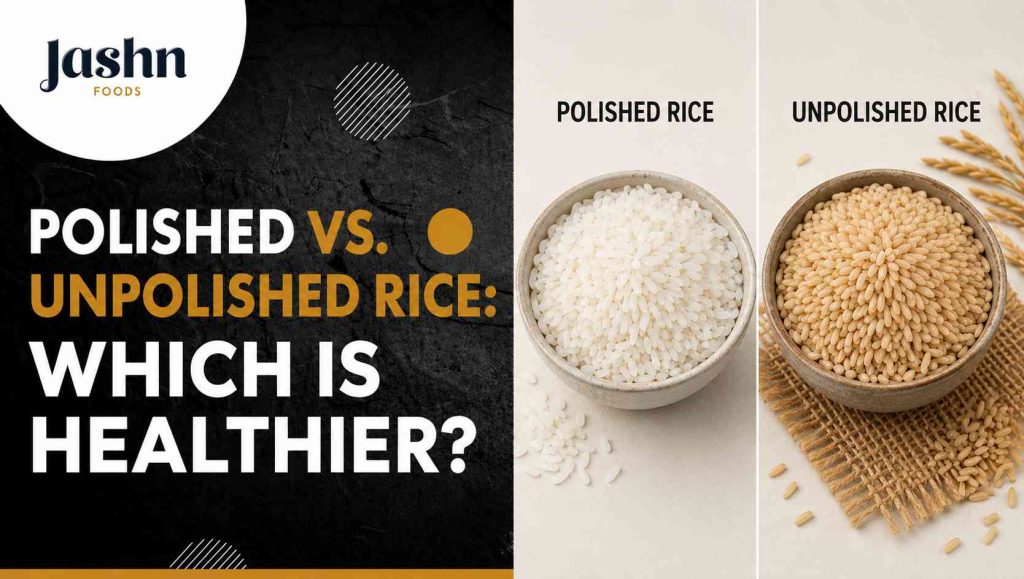
Unpolished rice generally retains more of the bran and germ layers. These layers contain dietary fibre, minerals, vitamins, and several naturally occurring plant compounds.
Brown rice is a familiar example of rice that retains these outer layers. Polished white rice undergoes additional milling that removes the bran and germ. This process gives the grains their familiar white appearance, softer texture, and lighter taste.
The ICMR-National Institute of Nutrition includes minimally polished or hand-pounded rice among minimally altered whole-grain foods. This distinction matters because processing can influence the nutrients available in the final grain.
Therefore, the healthier choice often depends on what you want from your everyday meals.
How polishing changes rice nutrition
Polishing mainly changes the outer layers of the rice grain. Those layers contribute fibre and several micronutrients to the overall nutritional profile. When milling removes them, some nutrients naturally decrease along with the removed portions.
Unpolished rice usually provides more dietary fibre than highly polished white rice. Fibre can support normal digestion and may contribute to better satiety after meals. The bran also contains minerals such as magnesium, phosphorus, and manganese. The germ contributes additional nutrients and naturally occurring compounds.
However, polished rice is not nutritionally empty. It remains a useful source of carbohydrates and provides energy for daily activities. Rice can also fit comfortably into balanced meals containing vegetables, pulses, dairy, eggs, fish, or other protein sources.
USDA research notes that milling brown rice into white rice reduces several nutrients, although enrichment can restore some nutrients in certain countries.
This difference becomes especially important when rice forms a large part of the daily diet. Indian meals often pair rice with dal, vegetables, curd, legumes, or protein-rich dishes. These combinations can improve the overall nutritional quality of the meal.
Unpolished rice and its nutritional advantages
Unpolished rice retains more of the grain’s natural structure after processing. That structure can make the grain more filling and nutritionally interesting. Its higher fibre content is one of the most notable advantages.
The additional fibre may support digestive health when consumed as part of a balanced diet. It can also help meals feel satisfying for longer periods. This quality may benefit people who want greater variety in their whole-grain intake.
Unpolished varieties also contain naturally occurring minerals and plant compounds. However, nutritional value varies between rice varieties, growing conditions, and processing methods.
Therefore, you should not assume every unpolished rice has identical nutritional benefits.
Texture also distinguishes unpolished rice from polished varieties. The grains can feel firmer and slightly chewier after cooking. Some people enjoy this texture, while others prefer softer rice with a milder flavour.
Cooking time can also differ between varieties. Unpolished rice may require more water and longer cooking compared with polished rice. Modern cooking methods can make preparation easier, but planning still matters for busy households.
Explore Jashn Foods varieties and make your next rice purchase with confidence.
Why polished rice remains popular
Polished rice remains extremely popular for practical and culinary reasons. Its softer texture works well with curries, gravies, pulao, biryani, and everyday meals. It also cooks relatively quickly and offers a familiar taste for many families.
Long-grain polished rice can produce separate, fluffy grains when prepared correctly. That quality makes it particularly useful for festive dishes and restaurant-style recipes. Basmati rice is especially valued for its aroma, length, and distinctive cooking characteristics.
Polished rice also has a longer shelf-life than some less-milled varieties.
Removing the outer layers reduces some components that can contribute to rancidity during storage. This advantage makes polished rice convenient for households that store rice for longer periods. USDA research also highlights cooking ease, palatability, and shelf stability as reasons white rice remains widely consumed globally.
Therefore, calling polished rice unhealthy would oversimplify the nutritional discussion. Portion size and the foods served alongside rice matter greatly.
Which rice works better for everyday meals?
There is no single answer for every household. Your choice should reflect your nutritional priorities, cooking preferences, and usual meal pattern.
If fibre intake is your priority, unpolished rice can offer an advantage. If convenience and texture matter most, polished rice may fit your routine better. You can also alternate between varieties instead of relying on only one type.
For many Indian families, the best rice for daily use should complement the entire meal. A bowl of rice becomes more balanced when served with dal, vegetables, legumes, curd, or lean protein.
Adding vegetables and protein can also make a rice-based meal more satisfying.
Jashn Foods focuses on rice quality so families can choose grains suited to different recipes. Aromatic basmati works beautifully in pulao, biryani, jeera rice, and many everyday preparations.
Choosing a suitable variety can improve both the taste and experience of home-cooked meals.
Does Rinsing Rice Affect Its Nutritional Value?
Many households rinse rice before cooking, especially when preparing traditional Indian recipes. Rinsing can remove surface starch, dust, and small particles from the grain. The effect on nutrients depends on the rice type and how extensively you wash it.
The question does rinsing rice remove nutrients has no simple yes-or-no answer. Water can remove small amounts of water-soluble nutrients from the grain surface. Repeated washing can potentially increase those losses, particularly with enriched or fortified rice.
However, rinsing also serves practical food-preparation purposes. It can reduce excess surface starch and help produce cleaner, more separate grains. The ideal method therefore depends on the rice variety and your cooking technique.
Avoid excessive washing when the product instructions do not require it. A gentle rinse can usually remove unwanted surface material without prolonged soaking and washing.
Always follow the preparation guidance provided for the particular rice you purchase.
Polished rice, blood sugar, and balanced meals
The type of rice can influence how quickly carbohydrates affect blood glucose. Generally, less processed whole-grain rice contains more fibre than highly polished rice. That difference can influence digestion and the overall response to a meal.
However, glycemic response depends on more than rice processing alone. Cooking method, portion size, variety, meal composition, and individual metabolism can all influence the outcome.
USDA research describes polished rice as having a higher glycemic load than brown rice. It also notes that white rice can remain part of a healthy plate when combined with other foods. This point is particularly relevant to traditional Indian meals.
Instead of focusing only on rice, consider the entire plate. Add vegetables, pulses, beans, curd, eggs, fish, or other protein sources where appropriate. A balanced plate provides greater nutritional variety than rice served alone.
People managing blood glucose concerns should discuss suitable portions and carbohydrate choices with their healthcare professional.
Individual nutritional needs can differ significantly, especially when medical conditions or medications are involved.
Choosing quality rice for Indian kitchens
Rice quality involves more than whether the grains look polished or unpolished. You should consider aroma, grain appearance, cooking performance, freshness, sourcing, and consistency.
Basmati rice remains a popular choice for Indian and international cuisines. Its long grains and natural aroma make it suitable for numerous traditional preparations. Good-quality grains should cook evenly and deliver the texture expected from their variety.
When comparing the best rice brands, look beyond packaging and marketing claims. Check the product information, variety, processing details, packaging quality, and storage recommendations.
A reliable food brand should maintain consistent quality across batches. Jashn Foods offers rice options designed for households that value flavour and dependable cooking results.
The brand can complement everyday meals while also supporting special dishes prepared for guests and celebrations.
From everyday meals to biryani, explore rice suited to every recipe.
Making a healthier rice plate at home
Choosing rice is only one part of creating a nutritious meal. The foods served alongside it can substantially change the meal’s overall nutritional balance.
Start by keeping portions appropriate for your individual energy needs. Then add vegetables for fibre, vitamins, minerals, and dietary variety. Dal, beans, paneer, curd, eggs, fish, or lean meats can provide valuable protein.
You can also include seasonal vegetables to make meals more colourful and diverse. Traditional combinations such as rice with dal and vegetables remain practical and nourishing choices.
Spices, herbs, and moderate amounts of healthy fats can add flavour without dominating the meal.
If your household enjoys polished rice, there is no need to eliminate it automatically. Instead, focus on portion control and build a balanced plate around it. You can also introduce unpolished varieties gradually if your family enjoys their texture.
This flexible approach makes healthy eating easier to maintain over time. Food choices should support both nutrition and the eating habits your household can realistically follow.
Conclusion
The answer ultimately depends on your individual nutritional priorities and eating pattern. Unpolished rice generally retains more fibre and nutrients because fewer grain layers are removed. Polished rice offers convenience, softer texture, easier cooking, and broad culinary versatility.
For people seeking greater whole-grain intake, unpolished rice can be a useful option. For households prioritising taste and convenience, quality polished rice can still fit a balanced diet. There is no need to treat either option as universally good or bad. The better approach is to understand how processing affects the grain. Then choose the variety that fits your nutritional needs, recipes, and lifestyle.
When considering polished vs unpolished rice which is healthier, think beyond the colour of the grain. Consider fibre, processing, portion size, meal composition, cooking methods, and personal preferences together. That approach provides a more realistic answer than simply labelling one variety healthy.
Jashn Foods makes it easier to explore quality rice options for everyday Indian cooking. Whether you prefer aromatic basmati for special dishes or dependable rice for daily meals, quality remains important.
Ultimately, polished vs unpolished rice which is healthier comes down to balance rather than a strict winner. Choose thoughtfully, vary your grains when practical, and pair rice with nutrient-rich foods. That simple strategy can make rice a valuable part of a balanced diet in India and worldwide.
Explore Jashn Foods varieties and find the grain that suits your kitchen.