
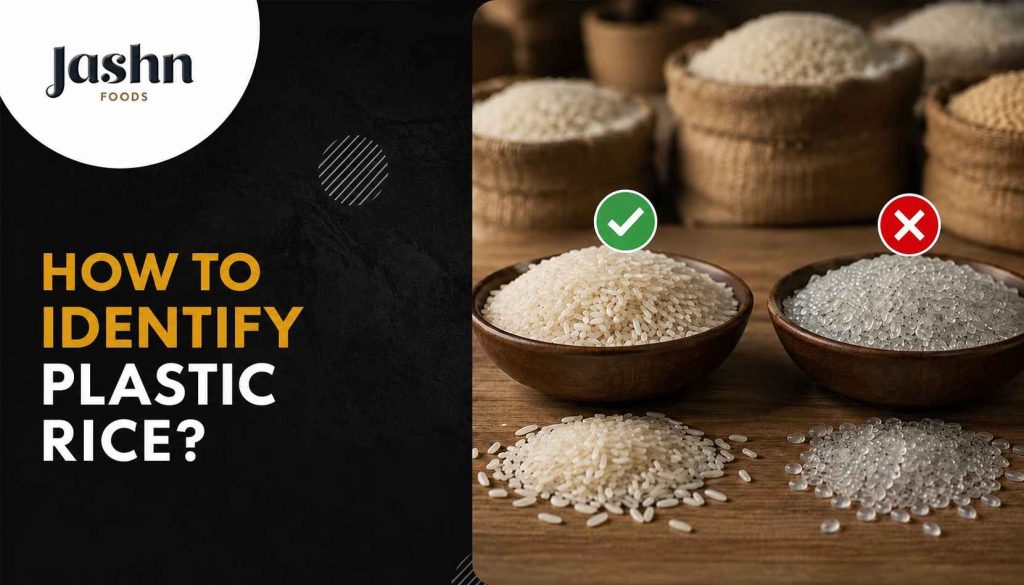
Rice is a part of daily life for billions of people. From home kitchens to five-star restaurants, it remains one of the world’s most trusted staple foods. Even so, many shoppers hesitate when they come across alarming videos claiming that markets are flooded with fake grains. That is why many people search for how to identify plastic rice before making a purchase.
The concern is understandable. Nobody wants to serve unsafe food to their family. Yet, much of what appears online is based on rumors rather than verified facts. Instead of relying on viral demonstrations, it is far more useful to understand how genuine rice behaves, what food experts say, and which signs actually deserve attention.
India has earned global recognition for producing premium-quality rice, especially the basmati rice of India, which is exported to more than a hundred countries under strict quality standards. Learning how to evaluate rice properly will help you make informed decisions whether you buy it for home use, retail, or international trade.
Choose premium-quality basmati from a verified manufacturer Like Jashn Foods
How to Identify Plastic Rice? What Every Buyer Should Know
The first thing to know is that food safety experts have never confirmed the widespread sale of plastic rice in regular markets. Every few years, videos resurface claiming that grains made from plastic are being mixed with real rice. These clips spread quickly because they trigger fear, but they rarely include laboratory evidence.
Several food authorities have investigated such claims over the years. Most concluded that ordinary cooking properties or poor-quality rice were being mistaken for plastic. Sticky grains, unusual textures, or clumps after cooking are not proof that the rice is fake.
If you genuinely want to identify poor-quality rice, focus on characteristics that can actually be observed instead of repeating internet experiments that lack scientific backing.
Good buying habits remain far more effective than viral home tests.
Why the Plastic Rice Story Became So Popular
Rumors often travel faster than facts.
A short video showing rice bouncing off a table or burning over a flame can collect millions of views within hours. Many viewers accept the demonstration without asking an important question: Has any laboratory confirmed these claims?
In most cases, the answer is no.
Food scientists explain that cooked rice naturally contains starch. During heating, starch changes its structure and may create appearances that people incorrectly associate with plastic. Different rice varieties also cook differently. Some remain firm, while others become softer or stick together.
These normal differences have fueled countless misleading videos over the years. Understanding this helps consumers avoid unnecessary panic.
Start with a Simple Visual Inspection
You do not need expensive equipment to check the overall quality of rice.Pour a small quantity onto a clean plate and examine the grains carefully.
Quality rice usually appears consistent in shape and color. The grains should look clean and free from excessive dust.
While a few broken kernels are common, an unusually large number may indicate poor grading.
Also pay attention to foreign particles. Tiny stones, husks, or other impurities suggest inadequate cleaning during processing.
A visual inspection cannot prove whether rice is plastic, but it can quickly reveal whether the product meets acceptable quality standards.
Notice the Aroma Before Cooking
Fresh rice has a clean, natural smell.
Some premium varieties develop a pleasant fragrance that becomes stronger during cooking. This aroma is part of their natural character and should never smell artificial.
If you detect an unusually strong chemical odor immediately after opening the package, do not ignore it. The smell may result from poor storage, contamination, damaged packaging, or exposure to chemicals during transportation.
Although this does not automatically indicate plastic, it certainly deserves attention. Consumers should avoid using products that have an abnormal odor until the seller clarifies the issue.
Observe How the Rice Cooks
Cooking provides valuable clues about rice quality.Instead of focusing on internet myths, watch how the grains behave in the pot.
Well-processed rice generally cooks evenly. The grains remain intact and develop the texture expected for that particular variety.
Poor-quality rice often shows inconsistent cooking. Some grains become mushy while others remain hard. This usually points to uneven processing, mixed varieties, or inconsistent moisture rather than the presence of plastic.
Cooking performance tells you much more than dramatic online experiments ever can.
Buy from Reliable Suppliers
One of the easiest ways to reduce quality concerns is to purchase rice from established businesses with a proven reputation.
Professional Indian basmati rice suppliers invest heavily in sourcing, milling, grading, storage, and packaging. Their products pass through multiple quality checks before reaching distributors or consumers.
Established exporters also follow strict documentation and food safety requirements because international buyers expect consistency.
Choosing reliable suppliers minimizes the chances of receiving poorly processed or contaminated products.
Discover premium basmati selected for quality, purity, and consistency.
Learn the Difference Between Genuine and Inferior Rice
Many shoppers spend time searching for fake rice while overlooking the characteristics of genuine rice.
Understanding how to identify authentic basmati rice is often more practical than chasing viral rumors.
Authentic basmati typically has naturally long, slender grains with a distinctive aroma. During cooking, the grains become longer instead of wider, remaining separate rather than turning sticky.
Packaging also provides useful information. Trusted manufacturers clearly mention the variety, batch number, packing details, and other essential product information.
A transparent label often reflects a manufacturer that values quality and traceability.
Many people assume that expensive rice is always better. In reality, that isn’t always true. Cost is only one part of the picture, and it should never be the only reason for choosing a product.
The price of basmati rice changes for several genuine reasons throughout the year. Weather during the growing season, crop yield, grain variety, ageing, processing, transportation expenses, export demand, and packaging all affect what buyers pay in the market.
Take aged basmati as an example. It is stored for several months before being sold. During this time, the grains naturally lose a little moisture, which helps improve their aroma and cooking quality. Storage, regular quality checks, and proper handling add to the overall cost, which is why aged rice is usually priced higher than freshly milled rice.
On the other hand, an unusually cheap product deserves a closer look. A low price does not automatically mean the rice is fake, but it could indicate lower-grade grains, a higher percentage of broken rice, mixed varieties, or inconsistent processing.
Before making a purchase, spend a few moments checking the packaging, grain appearance, manufacturer details, and overall product quality. Looking at these factors together will give you a much better idea of value than focusing on price alone.
Why Brand Reputation Matters
Buying rice is not only about finding the right variety. It is also about knowing who produced it.
Companies with a strong reputation usually invest in better sourcing, modern milling facilities, hygienic packaging, and strict quality control. Their goal is to deliver the same quality batch after batch because customer trust takes years to build.
Many trusted basmati rice brands such as Jashn Foods follow quality checks throughout the production process. Quality control teams inspect the rice at different stages, remove impurities, maintain grain consistency, and ensure every package meets the expected standard before it reaches the customer.
Choosing an established manufacturer also gives buyers greater confidence. If questions ever arise about the product, there is a clear source to contact and proper systems are already in place to address concerns.
For wholesalers, retailers, restaurants, and importers, consistency often matters far more than saving a small amount on the purchase price.
Food Safety Regulations Help Protect Consumers
Rice exported from India passes through several quality and safety measures before reaching domestic and international markets.
Manufacturers must follow food safety requirements related to processing, hygiene, packaging, and labeling. Export shipments are also checked to ensure they satisfy the standards required by importing countries.
Quality control does not happen only once. Throughout processing, manufacturers monitor grain purity, moisture levels, foreign matter, and other important parameters that influence both safety and quality.
Many exporters also work under internationally recognized food safety systems because overseas buyers expect reliable products with consistent quality.
Although no food supply chain can eliminate every possible risk, these regulations and inspection processes provide important safeguards for consumers and businesses alike.
Store Rice the Right Way After Buying
Buying good-quality rice is only the first step. Proper storage helps preserve that quality until the last grain is used.
Transfer the rice into a clean, airtight container after opening the package. Store it somewhere cool and dry, away from direct sunlight and excessive humidity. Moisture can encourage insects and gradually affect both the texture and aroma of the grains.
Keep rice away from products with strong smells because it can absorb surrounding odors during storage.
If you purchase large quantities, divide them into smaller containers instead of opening the main bag repeatedly. This simple habit helps maintain freshness for a longer period.
While proper storage cannot improve poor-quality rice, it does help protect good-quality rice from unnecessary damage.
Choosing Rice for Everyday Meals
Every household has different cooking habits, so there is no single variety that suits every recipe.
When choosing the best rice for daily use, think about the meals you prepare most often. Long-grain basmati is widely preferred for biryani and pulao because the grains stay long and separate after cooking. Medium-grain rice works well for many everyday dishes, while short-grain varieties are better suited to recipes that require a softer texture.
Your personal taste, preferred cooking method, aroma, and budget all influence the right choice.
Instead of following online trends or viral claims, choose a variety that matches your needs and purchase it from a supplier you trust.
Start with premium-quality basmati you can trust for every meal.
What Should You Do If Something Seems Wrong?
Although there is no reliable scientific evidence supporting widespread plastic rice claims, genuine quality problems should never be ignored.
If you notice an unusual odor, insects inside the package, visible contamination, or damaged packaging, stop using the product immediately. Keep the packet along with your purchase receipt and contact the retailer or manufacturer for assistance.
If you believe the issue involves food safety, report it to the appropriate authority so the product can be examined properly.
Laboratory analysis is the only dependable method for identifying contamination or synthetic materials. Simple home experiments cannot provide accurate scientific results.
Reporting genuine concerns through official channels also helps protect other consumers.
Separate Facts from Viral Myths
Stories about plastic rice continue to appear online, but most of them rely on dramatic demonstrations instead of scientific evidence.
Videos showing rice burning, floating, or sticking together often attract millions of views because they appear convincing. However, these reactions can occur naturally depending on the variety of rice, its starch content, and the cooking method used.
For example, rice may become sticky because of starch. Some grains can float for a short time due to trapped air. Like many natural foods, rice will burn if exposed to enough heat.
None of these observations confirms that the rice contains plastic.
The best way to judge food safety is to rely on credible information from recognized food authorities instead of social media claims designed to attract attention.
A little knowledge goes much further than unnecessary fear.
Conclusion
Food safety is a concern every consumer shares, and it is perfectly reasonable to ask questions before buying any product.
Even though plastic rice rumors continue to circulate online, there is still no credible scientific evidence showing that it is commonly sold through regular retail markets. In most cases, the claims come from misleading demonstrations or misunderstandings about how rice naturally behaves during cooking.
The smartest approach is also the simplest. Buy from reliable sellers, inspect the packaging, look at the grain quality, store rice correctly, and depend on verified information instead of internet rumors.
These practical habits make it much easier to choose high-quality rice with confidence, whether you are cooking at home, running a restaurant, supplying retailers, or purchasing for international trade.
Making informed decisions based on facts—not viral videos—is the most reliable way to protect both your family’s health and your investment.
Explore premium basmati that’s processed with strict quality standards.