
Most people do not think much before buying rice. If the grains look clean and the price feels reasonable, the bag usually goes straight into the cart. But many buyers later realize something feels off once the rice is cooked. The texture becomes sticky, the aroma disappears, or the grains break apart too easily.
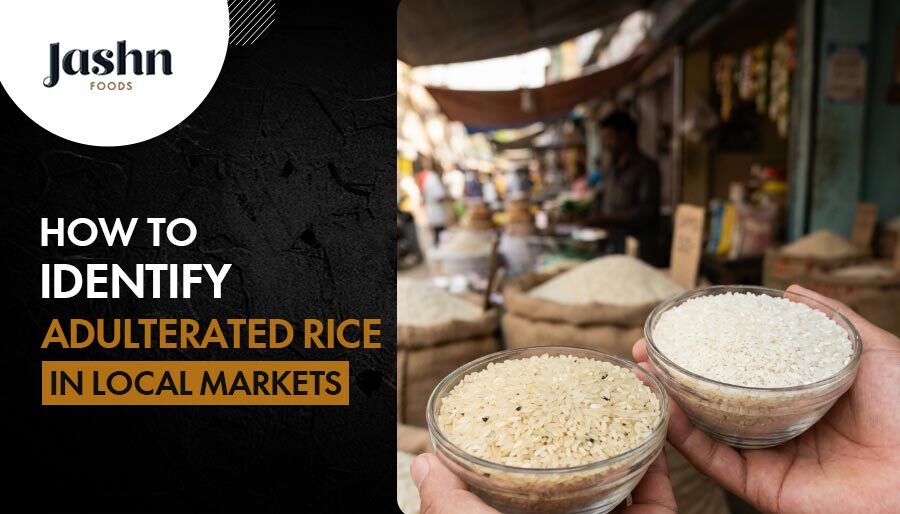
That is exactly why more consumers today want to understand how to identify adulterated rice in local markets before spending money. In many local shops and wholesale markets, rice is sold loose, and appearance becomes the biggest selling point. Sellers know customers are attracted to shiny grains and lower prices, so poor-quality rice is sometimes polished or mixed to make it look premium.
For families, restaurants, and bulk buyers, this creates a real problem because rice is not something people buy once in a while. It is part of everyday meals. That is why many consumers now prefer dependable products like premium-quality basmati rice from Jashn Foods instead of taking risks with inconsistent market stock.
One wrong choice can ruin daily meals. Switch to trusted grain before your next purchase.
How to Identify Adulterated Rice in Local Markets Without Lab Testing
Most rice buyers are not experts, and honestly, they should not have to be. The good thing is that rice usually gives enough clues on its own if someone checks carefully before buying.
Adulteration is not always extreme. Sometimes sellers mix broken grains into better varieties. Sometimes older rice is polished heavily to make it look fresh again. In some markets, fragrance is added to ordinary rice so it smells more expensive than it actually is.
The challenge is that many buyers shop quickly and miss these details completely.
Look at the Grains Carefully Before Buying
One common mistake people make is checking rice from a distance. Good rice deserves a closer look.
Natural rice normally has a soft, balanced appearance. But when the grains look too bright or too glossy, there is a chance they have been polished excessively. Over-polishing is often used to improve the appearance of lower-quality stock.
It also helps to check whether the grains look consistent. If one handful contains different sizes, too many broken pieces, or uneven color, the rice may have been mixed.
These are small details, but they matter more than most buyers realize.
Rub the Rice Between Your Fingers
This is an old method, but many experienced grain traders still rely on it.
Take a small handful of rice and rub it gently between your fingers or palms. If a powdery residue remains on your skin, the rice may have surface coating or polishing material.
Naturally processed rice usually feels dry and slightly rough. Rice that feels unusually smooth or slippery can sometimes indicate chemical treatment or heavy polishing.
Simple touch-based checks often reveal more than attractive packaging.
Wash the Rice and Observe the Water
A bowl of water can reveal several quality problems immediately. While washing rice, pay attention to what happens during the first rinse.
Some rice releases excessive white residue very quickly. In certain cases, the water turns cloudy almost instantly because of polishing powder or coating on the grains.
Rice naturally releases starch during washing, but heavily treated rice usually behaves differently. The residue often looks thicker and feels chalky between the fingers.
People who cook rice daily can usually notice this difference once they start paying attention.
Strong Fragrance Can Be Misleading
Many buyers connect fragrance with premium quality, especially while buying basmati rice. That is exactly why artificial aroma is sometimes added to ordinary rice in local markets.
Naturally aged rice carries a mild aroma before cooking. Once heated, the fragrance becomes richer gradually. Artificially scented rice often smells too strong immediately after opening the bag.
The smell may feel sharp instead of natural. After comparing real and artificially scented rice once or twice, the difference becomes much easier to recognize.
Cooking Reveals the Real Quality
Rice may look attractive in the market and still disappoint completely after cooking. In fact, cooking is where the actual quality becomes obvious.
Poor-quality rice often turns sticky very quickly. Some grains remain hard while others become too soft. In many cases, the rice loses shape after boiling.
Good rice behaves differently. The grains remain separate, absorb water evenly, and maintain a better texture after cooking.
Restaurants and catering businesses usually notice these differences faster because they prepare rice in larger quantities every day.
Excessive White Coating Is Never a Good Sign
Some sellers use whitening agents or starch coating to improve the appearance of older rice stock. This makes the grains look cleaner and brighter in the market.
While rinsing rice, notice whether the water becomes excessively milky within seconds. Also pay attention to how the residue feels. If it feels unusually thick or chalky, there may be coating on the grains.
Natural starch release is normal, but heavily treated rice often behaves differently during washing.
Why Reliable Suppliers Matter
Many people focus only on getting the cheapest rice available. But low prices often lead to poor cooking quality later.
Established rice manufacturers in India usually maintain better standards in sorting, cleaning, storage, and packaging before rice reaches stores. Proper handling reduces contamination and improves consistency across batches.
When buying packaged rice, it is worth checking:
- Packaging condition
- Manufacturing details
- Grain consistency
- Storage quality
Reliable sourcing matters more than attractive pricing.
Choose rice that passes every quality check before it reaches your kitchen.
Simple Ways to Check Authentic Basmati Rice
Several ordinary long-grain rice varieties are sold in packaging designed to resemble premium basmati. Because of this, buyers often struggle to identify authentic basmati rice while shopping.
Real basmati usually has long and slender grains with a natural aroma that develops during cooking. Another major difference appears after boiling. Genuine basmati elongates in length instead of becoming thick or swollen.
This remains one of the easiest ways to separate authentic basmati from imitation products available in local markets.
Why Buyers Are Becoming More Careful
Consumers today are paying closer attention to food quality than before. As the overall rice market size continues growing globally, awareness about sourcing and purity has increased as well.
People now compare products more carefully instead of choosing rice only through appearance or price. This shift has encouraged better packaging, improved quality control, and cleaner processing practices across the industry.
Trust has become an important factor in food purchasing decisions.
Choosing Between Different Rice Products
The number of rice brands in India has increased rapidly over the years. While more options give buyers flexibility, they also make decision-making more confusing.
Some brands focus mainly on affordability, while others prioritize consistency and grain quality. Buyers usually notice the real difference only after cooking the rice at home.
Better-quality rice generally provides:
- Cleaner grains
- Better texture
- Improved aroma retention
- More consistent cooking performance
That is why many families continue buying from brands they already trust.
Why Quality Rice Usually Costs More
The basmati rice price depends on several factors, including grain quality, aging process, storage conditions, and handling methods. Rice that is aged properly and stored carefully naturally costs more because maintaining quality takes additional effort and time.
Very cheap rice may seem attractive initially, but poor texture and inconsistent cooking often reduce its actual value later.
For households and food businesses alike, dependable quality usually matters more than short-term savings.
Avoid hidden mixing and polishing tricks—switch to trusted sourcing today.
Final Thoughts
Buying rice is no longer as simple as choosing the cleanest-looking grains from a sack. Appearance alone cannot guarantee quality anymore. Small checks like observing grain texture, noticing aroma, and paying attention during cooking can help buyers avoid poor-quality rice.
Understanding how to identify adulterated rice in local markets helps consumers make smarter choices and bring safer, better-quality rice into their kitchens every day.