
Basmati rice isn’t just another variety of rice — it’s a cultural icon, a gastronomic favourite, and one of India’s most prestigious agricultural exports. From fragrant biryanis to fluffy pulaos, authentic Indian basmati rice transforms ordinary meals into culinary experiences.
But with premium quality comes premium prices, and unfortunately, not all rice marketed as basmati lives up to its reputation.
At Jashn Foods, one of the leading basmati rice exporters in India, we understand exactly what makes true basmati rice special. Whether you’re a home cook, restaurateur, or bulk buyer, this guide will help you confidently identify authentic basmati rice that delivers on aroma, texture, and quality.
Here is how to identify authentic basmati rice
What Makes Basmati Rice Unique?
True basmati rice is special because of its extra-long, slender grains that elongate significantly during cooking, producing soft, separate, and fluffy rice — a trait unmatched by most other rice types.
According to the Agricultural and Processed Food Products Export Development Authority (APEDA), basmati grains stretch to at least twice their uncooked length when boiled. This property is due to centuries of cultivation in the specific Himalayan foothill regions of northern India.
India remains the world’s leading basmati producer and exporter, with basmati rice shipments worth over ₹50,312 crore (~$5.9 billion) and more than 6 million MT exported globally in 2024-25.
Grain Shape & Length — The First Test
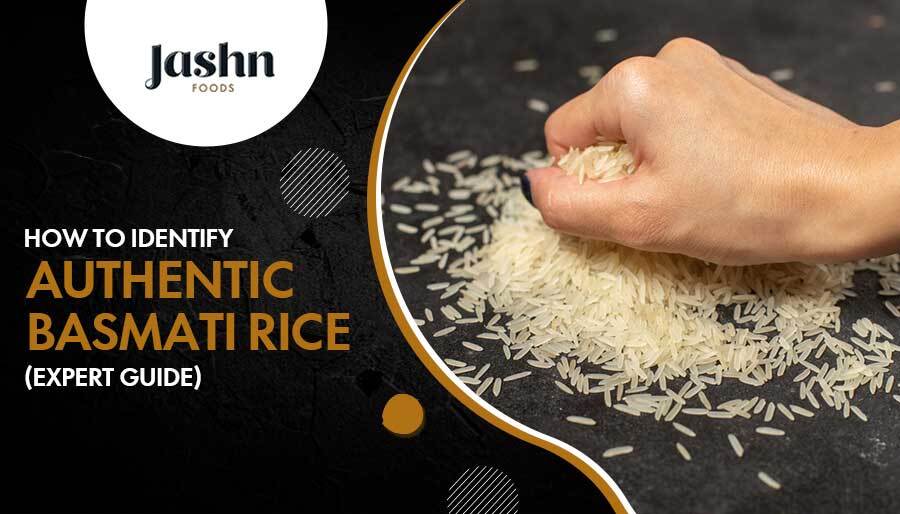
The hallmark of long-grain basmati rice is its elongated and slender uncooked grain. Authentic basmati grains have a high length-to-width ratio (over 3.0) — meaning they are significantly longer than they are wide.
When cooked, premium basmati grains should:
✔ Expand primarily in length.
✔ Remain separate (non-sticky)
✔ Be tender but firm
If the rice becomes sticky, clumpy, or shows little elongation, it’s likely not true basmati or a lower-grade blend.
Aroma — Nature’s Signature
One of basmati’s most celebrated traits is its distinct floral and nutty fragrance, driven by a naturally occurring compound called 2-acetyl-1-pyrroline.
Authentic basmati never requires added fragrances — its aroma should be noticeable even before cooking. Be wary of samples that smell overly sweet or chemical, as these may be artificially enhanced.
Texture & Cooking Behaviour
True basmati cooks into grains that are:
✔ Fluffy and separate, not sticky
✔ Soft but not mushy
✔ Aromatic throughout
This is why basmati is preferred for dishes like biryani and pulao, where individual grains must stay distinct. The fine-grain texture also means basmati pairs exceptionally well with rich spices and gravies.
Packaging, Certifications & GI Tag
India’s basmati rice is a registered Geographical Indication (GI) product, meaning it’s officially recognized as coming from specific regions in the Indian subcontinent and possessing unique quality traits.
When shopping:
✔ Look for GI certification, APEDA logos, and traceability details.
✔ Check for export quality stamps — especially for rice destined for the US, EU, and the Middle East.
These certifications help distinguish authentic basmati from generic long-grain rice.
Variety & Brand Matters
Not all basmati rice is the same, even among authentic varieties. Some notable Indian basmati rice varieties include:
✔ Pusa Basmati 1121 — known for extra-long grains and prized globally
✔ Pusa 1509, 1401, and others — high yield and excellent cooking properties
Among basmati rice brands, reputation and consistency are important. Quality brands ensure high milling standards, consistent grain size, and traceability — factors every buyer should consider.
Understanding Basmati Rice Prices (2025-26)
Due to its premium status and strict cultivation standards, Indian basmati rice price is higher than regular rice. Recent wholesale market data indicates:
✔ 1121 Basmati (raw/steam): ₹7,500 – ₹9,500 per quintal
✔ Pusa Basmati & 1509: ₹6,000 – ₹8,000 per quintal
✔ Traditional premium basmati: ₹8,000 – ₹10,000 per quintal
In international trade, premium long grain basmati rice generally trades around US$850–US$1,100 per metric tonne (FOB) depending on grade and destination.
Prices may vary based on crop quality, weather conditions, and global demand.
How to Choose the Best Basmati Rice
Here’s a quick checklist to help you choose best basmati rice:
✔ Long, slender grain with high length-to-width ratio
✔ Strong, natural aroma
✔ Fluffy, separate texture after cooking
✔ Certified GI and APEDA approval
✔ Trusted brand with proven export quality
Why Buy From Trusted Exporters in India
Partnering with reputable basmati rice exporters in India ensures authenticity, quality control, and global traceability. Established exporters like Jashn Foods follow stringent quality standards from paddy selection to processing and export, ensuring that every grain meets premium basmati expectations.
India’s dominance in the global basmati arena is clear — it is exported to over 170 countries and accounts for a significant share of rice export revenue compared to competitors.
Conclusion
Identifying authentic basmati rice requires understanding its grain characteristics, aroma, texture, certifications, and market context. With premium varieties like Pusa 1121 and a long history of cultivation, Indian basmati rice continues to be revered globally and valued by chefs, food lovers, and international buyers alike.
By following this expert guide, you’ll be better equipped to choose the best basmati rice — whether you’re shopping for your kitchen or sourcing for business.