
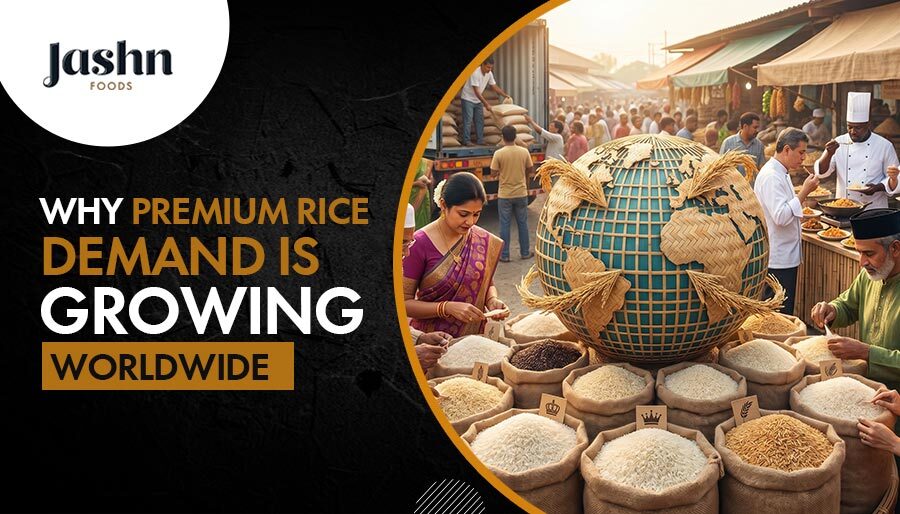
Rice has been part of human diets for centuries, but the way it is consumed and valued is changing in a noticeable way. In many markets, especially where food habits are becoming more global, buyers are no longer treating rice as just a basic staple. They are paying attention to grain quality, aroma, and cooking results in a way that was not common earlier.
In simple terms, why premium rice demand is growing worldwide comes down to a shift in expectations. Food is no longer only about filling the stomach—it is about experience, consistency, and sometimes even identity.
Among different varieties, basmati rice has long been associated with special occasions and traditional dishes, especially in South Asian kitchens where aroma and grain length matter a lot.
Aroma and consistency matter more than ever. Upgrade your supply before competitors do.
Why Premium Rice Demand Is Growing Worldwide: A Shift That Happened Quietly
If you really observe why premium rice demand is growing worldwide, it didn’t happen overnight. It has been gradual, almost silent, shaped by changes in how people cook, eat, and even think about food.
One of the biggest changes is exposure. A decade ago, most households stuck to local food patterns. Now, even small cities are experimenting with global recipes. When people start cooking different cuisines, they quickly realize that not all rice behaves the same in a dish. That alone pushes demand toward better-quality grains.
Income growth has also played a role, but not in a very dramatic way. It’s more subtle—families upgrading their groceries step by step, choosing slightly better ingredients without necessarily calling it a lifestyle change. Rice often becomes one of those upgrades because the difference is immediately noticeable on the plate.
There is also a growing awareness around food quality. People may not always articulate it, but they can tell when rice feels too sticky, breaks easily, or lacks aroma. That sensory awareness is quietly reshaping buying decisions across regions.
Global buyers are shifting toward higher-quality grains. Don’t wait until sourcing becomes harder.
What Is Premium Rice?
Premium rice is not defined only by packaging or branding. At its core, it is about how the grain behaves from storage to cooking.
The grains are usually longer, more uniform, and processed with greater care. After cooking, they remain separate instead of clumping together, which is something many chefs and households look for. The aroma is another defining factor—especially in aged varieties where the fragrance becomes more noticeable during cooking.
In international trade discussions, quality consistency matters just as much as taste. That is why basmati rice exporters in India such as Jashn Foods focus heavily on grading, sorting, and maintaining uniform standards across shipments. Buyers in global markets don’t want variation—they want predictability, and that is where premium rice stands out.
Over time, premium rice has moved away from being seen as a luxury product. It is now closer to a standard requirement in many food categories.
Changing Preferences in Everyday Cooking
Something interesting has happened in home kitchens. Cooking has become more experimental than routine. People are trying recipes they once only ordered from restaurants.
This shift has quietly raised expectations from basic ingredients. Rice, which used to be treated as a background item in meals, is now part of the main experience. If the texture is off, the entire dish feels different.
Because of this, consumers are paying more attention to consistency and reliability. That is also why basmati rice brands in India have gained stronger visibility, especially in markets where buyers associate brands with trust rather than just marketing.
Food habits are becoming more conscious, and rice is benefiting from that change in a very direct way.
Role of Restaurants and Food Businesses
Restaurants and catering services have always influenced food trends, but their role in premium rice demand is even stronger now.
A restaurant does not just cook rice; it repeats the same quality hundreds of times a day. Any inconsistency becomes visible immediately to customers. That pressure forces businesses to choose rice that performs reliably every time.
In many cuisines, especially South Asian and Middle Eastern, rice is not a side item—it is the base of the dish. That alone makes quality non-negotiable for chefs.
This is one of the reasons premium rice demand keeps growing steadily, even when retail trends fluctuate.
The right grain changes taste, aroma, and customer satisfaction. Explore premium options now.
Global Trade and Expanding Supply Networks
Rice is now part of a much larger global supply system than it used to be. Earlier, most rice was consumed locally. Today, it travels across continents regularly.
Better logistics, controlled storage, and improved packaging have made it easier to preserve quality over long distances. This has helped premium varieties reach markets where they were not easily available before.
As international demand increases, the overall rice market size continues to expand, particularly in value-based segments rather than just bulk commodity trade.
India remains a central supplier in this ecosystem, but what has really changed is how structured and quality-focused the supply chain has become.
Price Perception and Value Thinking
Rice is still sensitive to pricing, but the way people think about price has changed.
Instead of asking what is cheapest, buyers are now asking what performs better for the price. That small shift changes everything in the premium segment.
Even when Indian rice price fluctuates in the market, demand for higher-grade rice remains steady because consumers associate it with better cooking results and less wastage.
In other words, people are slowly moving from cost-based buying to value-based buying without even realizing it.
Where the Market Is Heading
The direction is fairly clear. Premium rice is not a temporary demand spike—it is becoming a stable category in global food trade.
As cooking habits become more international and people continue to explore different cuisines at home, demand for better ingredients will naturally rise. At the same time, supply chains are becoming more transparent, which encourages buyers to invest in quality.
Sustainability and traceability are also becoming part of the conversation. Buyers want to know where their food comes from, not just how it tastes.
All of this suggests that premium rice will continue to strengthen its position in global markets.
Consistent quality keeps restaurants, retailers, and distributors coming back for more.
Conclusion
The rise in premium rice demand is not driven by one factor. It is a combination of changing food culture, better awareness, and evolving expectations from everyday meals.
When you look closely at why premium rice demand is growing worldwide, it becomes clear that this is less about agriculture and more about lifestyle change. People want better experiences from even the simplest foods.
And as global kitchens continue to blend traditions and modern cooking styles, premium rice is likely to remain at the center of that shift for a long time.