
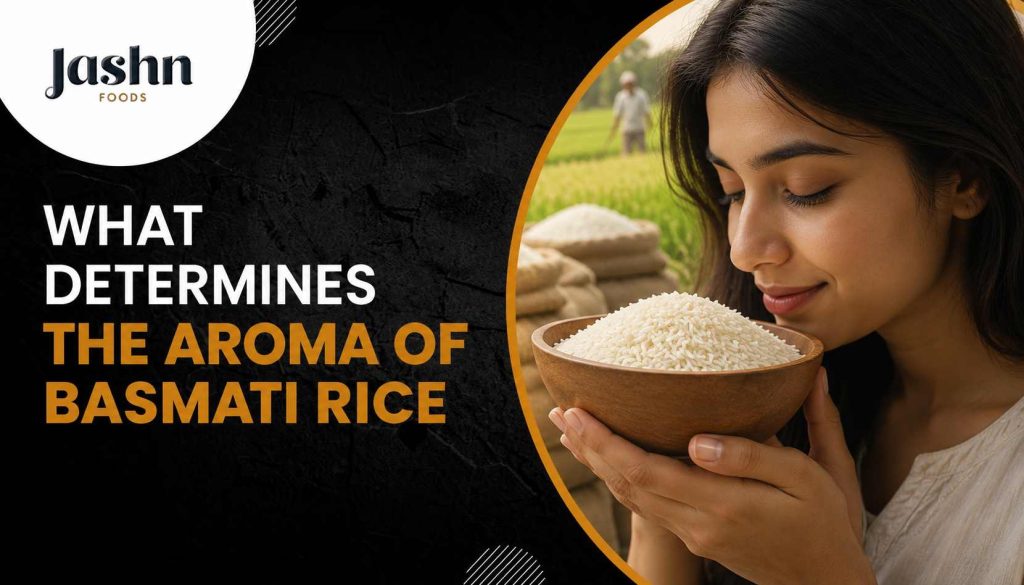
Open a fresh bag of basmati and the smell reaches you before the rice does. That fragrance is not luck. It is chemistry, farming, and time working together. So, what determines the aroma of basmati rice? The short answer is genetics, soil, climate, aging, and how the grain is cooked. Some batches smell sharp and nutty. Others feel flat and forgettable. If you have picked up quality basmati rice from two different bags and noticed a difference in scent, this guide explains why that happens, right from the field to your plate.
Get export-quality rice trusted by buyers worldwide.
What Determines the Aroma of Basmati Rice?
Basmati’s aroma comes from a combination of natural compounds, growing conditions, and post-harvest handling. No single factor works alone. A grain can carry the right genes and still lose its fragrance if it is harvested too early or stored badly. Let’s break each factor down.
The Compound Behind That Signature Scent
Scientists identified the main aroma molecule in basmati back in the early 1980s. It is called 2-acetyl-1-pyrroline, or 2AP for short. Researchers describe it as the single most important volatile compound behind rice fragrance. It carries a popcorn-like note that most people recognise instantly.
2AP is incredibly potent. Even tiny amounts can be detected by the human nose. Studies measuring basmati samples have found 2AP levels ranging widely across batches, which explains why aroma strength varies even within the same variety. Genetics decide whether a rice plant can produce this compound at all. The environment decides how much of it actually builds up in the grain.
Genetics Set the Foundation
Not every rice plant can produce 2AP, no matter how good the soil is. The ability to make this compound is written into the plant’s genes. Varieties like Pusa Basmati, Taraori Basmati, and 1121 were bred specifically to carry this trait along with the long, slender grain basmati is known for.
Non-aromatic varieties simply lack the genetic switch that triggers 2AP production. This is why you cannot turn an ordinary rice plant fragrant just by growing it in the right region. Genetics decide the potential. Everything else decides how much of that potential actually shows up in the final grain.
Soil and Climate Do Half the Work
Basmati is not grown everywhere in India. It comes mainly from the Indo-Gangetic plains, below the Himalayan foothills, across states like Punjab, Haryana, Uttarakhand, Himachal Pradesh, and western Uttar Pradesh. This region has legal protection through a Geographical Indication tag.
Why does location matter so much? The soil here is fertile and mineral-rich. The climate brings warm days and cooler nights near harvest time. That temperature drop is important. Cooler nights during grain maturity help the plant hold on to its aroma compounds instead of breaking them down. Move the same seed to a different climate, and the fragrance often weakens.
Why Aging Makes Such a Big Difference
Freshly harvested basmati is not at its aromatic best. It actually needs rest. Traditional processors age the rice for one to two years in controlled conditions before selling it.
During aging, moisture inside the grain drops slowly. Starches change structure. This makes the rice cook up longer, drier, and more fragrant than it would straight off the field. Old basmati traders have known this for generations, long before any lab confirmed the science behind it. Skip this step, and you get rice that looks like basmati but smells thinner.
Choose rice known for its authentic aroma and purity.
Harvest Timing Affects the Fragrance
Timing the harvest correctly protects the aroma compounds before they degrade. Pick the crop too early, and the grain has not finished developing its full flavour profile. Wait too long, and heat and moisture in the field start breaking 2AP down.
Farmers in the basmati belt track weather closely during this window. A few days can change how fragrant the final batch turns out. Rain right before harvest, or an unexpected heatwave, can undo months of careful growing in a matter of hours.
This is one reason why basmati from small, careful growers sometimes smells noticeably better than mass-harvested batches picked purely on a fixed calendar date.
Milling and Processing Play a Quiet Role
Milling removes the husk and bran layer from the grain. Done gently, this step preserves the aromatic compounds sitting close to the surface. Done roughly, with excess heat or friction, it can strip away fragrance along with the bran.
Good processors mill in small batches and monitor temperature carefully. They also sort grains by length and clean out broken pieces, since broken rice tends to lose aroma faster during storage. This is part of what separates a well-processed batch from an average one.
Picking From Trusted Growers Matters
Sourcing plays a bigger role than most buyers realise. Reputable Indian basmati rice suppliers follow strict harvest, aging, and storage protocols that protect fragrance from farm to warehouse. Cutting corners at any single stage flattens the final aroma, no matter how good the original seed was.
At Jashn Foods, sourcing is done directly from the traditional basmati belt, so the chain of custody stays short and traceable. Shorter supply chains generally mean fresher processing and better fragrance retention.
Cooking Method Can Wake Up or Kill the Aroma
Aroma does not stop developing once the rice leaves the bag. Cooking releases most of it. Studies on rice volatiles show that 2AP levels actually rise during cooking compared to raw grain, which is why cooked basmati smells stronger than uncooked.
Rinsing the rice gently, soaking it for twenty to thirty minutes, and cooking with just enough water all help. Overcooking or using too much water can wash out or dilute the fragrance. Simple habits in the kitchen matter as much as what happens on the farm.
Storage Habits That Protect the Scent
Aroma fades with poor storage. Heat, humidity, and light all speed up the breakdown of 2AP over time. Rice kept in a warm, humid kitchen loses its fragrance faster than rice kept cool and dry.
Airtight containers, away from direct sunlight and stove heat, keep basmati smelling fresh for much longer. This applies at home and at the warehouse level, before the rice even reaches a store shelf. Even a well-aged, well-milled batch can smell dull within months if it sits in a hot storeroom or an open sack.
The Real Factors Determining Rice Quality
Aroma is just one piece of a bigger picture. The full set of factors that determine rice quality includes grain length, elongation on cooking, texture, moisture content, and purity, along with fragrance. A rice can smell wonderful and still cook unevenly if these other factors are ignored.
Buyers who understand this tend to look beyond just the smell test. They check grain uniformity, ask about aging duration, and look for proper GI-tagged sourcing before buying in bulk.
What Makes a Rice Brand Worth Trusting
Packaging and pricing alone don’t tell you much. A dependable best rice brand is transparent about where the grain comes from, how long it was aged, and how it was processed. Look for clear labelling, consistent grain length, and a scent that feels natural rather than artificially perfumed.
Some low-quality rice is scented artificially to mimic basmati’s fragrance. That smell fades fast and smells different from the real thing once cooked. Genuine aroma, built through proper aging and sourcing, holds up through cooking.
Connect with Jashn Foods for reliable bulk supply.
Why Rice Prices Keep Shifting
Fragrance and quality both influence cost, but so do external factors. The latest rice prices move with monsoon patterns, export demand, currency shifts, and global trade policy. A weak harvest season in the basmati belt can push prices up within weeks.
This is worth knowing if you buy in bulk for a household or a business. Prices for aged, well-processed basmati tend to stay firmer than for lower-grade blends, simply because the aging process itself carries a cost.
Which Rice Works Best for Daily Meals
Not every meal needs the most fragrant, longest-aged basmati. For everyday cooking, many households ask which rice is best for daily use, and the answer usually comes down to balance. A mid-aged basmati offers good aroma and texture without the premium price tag of extra-aged, extra-long grain varieties.
Save the most aromatic, longest-aged batches for special meals like biryani or pulao, where fragrance is the star. For daily dal-chawal, a reliable, moderately priced basmati does the job well.
The Bottom Line
Basmati’s aroma is not one thing. It is genetics, soil, cooler nights near harvest, careful aging, gentle milling, smart storage, and the right cooking method, all adding up together. Skip even one step, and the fragrance you expect simply won’t show up in the bowl.
Understanding these factors, and picking a genuinely fragrant bag becomes a lot easier, whether you’re buying for your kitchen in India or shipping it across the world. The next time a pot of basmati fills your kitchen with that unmistakable scent, you’ll know exactly what made it happen.
Request product details and choose the right variety.