
A few years ago, most rice buyers paid attention to only three things: quality, price, and quantity. Packaging was often treated as an afterthought. As long as the rice reached the consumer safely, the job was considered done. That mindset is changing. Today, shoppers are asking new questions. What is this package made from? Can it be recycled? Will it create unnecessary waste once the rice is used?
That shift is influencing packaging decisions across the food industry. When discussing what are the future trends in eco-friendly rice packaging, the focus is no longer limited to replacing one material with another. The bigger conversation is about reducing waste, using resources more responsibly, and finding practical ways to deliver food with a smaller environmental footprint.
As demand for premium varieties continues to rise across international markets, including basmati rice, packaging has become part of the overall product experience. Buyers often form their first impression long before they cook the rice, and the package plays a major role in that perception.
Get access to premium rice varieties supported by evolving packaging and quality standards.
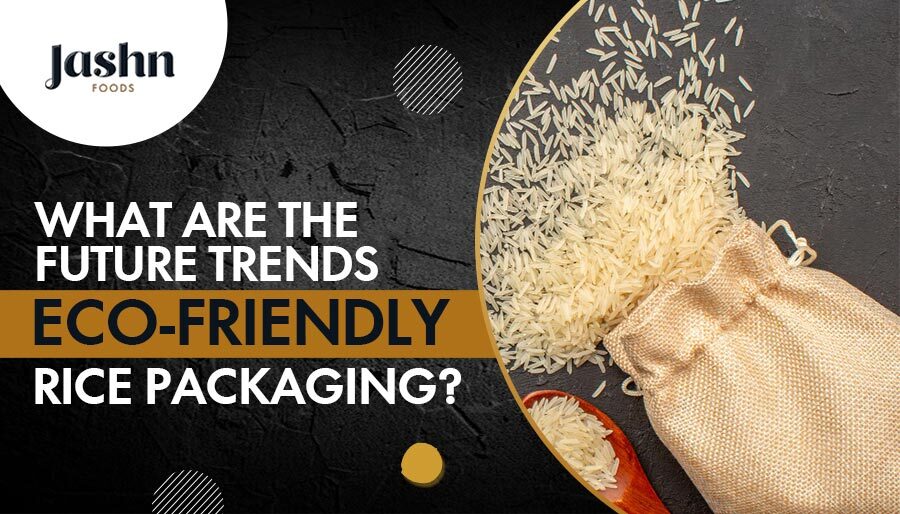
What Are the Future Trends in Eco-Friendly Rice Packaging?
The future of rice packaging will not be shaped by a single innovation. Instead, it will be influenced by a combination of changing regulations, consumer expectations, technological improvements, and business priorities.
Food companies are under pressure from multiple directions. Retailers want more sustainable products on their shelves. Consumers want less waste. Governments are introducing stricter environmental policies. At the same time, manufacturers still need packaging that protects rice from moisture, contamination, and damage during transportation.
The most successful packaging solutions will be the ones that balance sustainability with performance.
Biodegradable Materials Are Moving Beyond the Trial Stage
Many businesses experimented with biodegradable packaging in the past, but adoption was often limited by cost and availability. That situation is gradually changing.
Advances in material science have created new opportunities for packaging made from renewable resources. Plant-based materials are becoming stronger, more reliable, and better suited for commercial food applications. This means companies no longer have to choose between sustainability and product protection.
For rice packaging, biodegradable alternatives offer an attractive option because they help reduce long-term waste while maintaining the durability required during storage and distribution. As production volumes increase, these materials are likely to become more affordable and widely available.
Compostable Packaging Is Attracting Greater Interest
Consumers have become more informed about environmental issues than they were a decade ago. Many now understand that not all sustainable packaging works the same way.
This growing awareness is creating interest in compostable packaging solutions. Unlike conventional materials that remain in landfills for years, compostable packaging is designed to break down under appropriate conditions and return to the environment in a more natural form.
Food brands that target environmentally conscious buyers are paying close attention to this trend. While composting infrastructure still varies from region to region, the demand for packaging that leaves a smaller environmental footprint continues to increase.
Explore premium rice solutions backed by quality and responsible packaging choices.
Recyclable Mono-Material Packaging Will Become More Common
One of the biggest challenges in recycling is complexity. Many packaging formats contain multiple layers made from different materials. While these layers often improve performance, they can make recycling difficult.
This is why mono-material packaging is receiving attention from manufacturers and sustainability experts alike. Using a single recyclable material simplifies the recycling process and improves the chances that the packaging can actually be recovered and reused.
The approach is practical, scalable, and compatible with many existing recycling systems. For rice products that require reliable protection throughout the supply chain, recyclable mono-material packaging offers a promising middle ground.
Lightweight Packaging Will Deliver Practical Benefits
Not every sustainability improvement comes from a new invention. Sometimes meaningful progress comes from making existing systems more efficient.
Reducing packaging weight may sound like a small change, but the impact can be significant. Lighter packaging requires fewer raw materials and often lowers transportation-related emissions. When products move across thousands of kilometers, even modest reductions can add up quickly.
Many companies are already reviewing packaging designs to identify opportunities for material reduction without affecting product safety or shelf life. This trend is expected to continue as businesses look for practical ways to lower costs and improve environmental performance at the same time.
Smart Packaging Technologies Will Add More Value
Modern consumers want information. They want to know where products come from, how they were produced, and whether sustainability claims can be trusted.
Packaging is becoming an important tool for providing those answers. QR codes, traceability systems, and digital verification features allow brands to share detailed product information without overcrowding the package itself.
For rice exporters and premium product suppliers, this level of transparency can strengthen trust and help differentiate products in competitive markets. Smart packaging is likely to become more common as digital technologies become easier to implement and more affordable.
Discover how innovation and quality come together to create a better consumer experience.
Reusable Packaging Models Will Continue to Develop
The idea of using a package once and throwing it away is being challenged in many industries. Businesses are increasingly exploring ways to keep packaging in use for longer periods.
Reusable systems are already gaining traction in several product categories, and food packaging is beginning to follow the same path. Refill stations, returnable containers, and bulk purchasing programs are examples of approaches being tested in different markets.
Although these models may not replace conventional packaging entirely, they represent an important direction for businesses looking to reduce waste over the long term.
Sustainable Printing Will Become Part of Packaging Strategy
When people think about eco-friendly packaging, they usually focus on the material itself. Printing is often overlooked, even though it also affects environmental impact.
Traditional printing methods can involve chemicals that complicate recycling or increase environmental burdens. To address this issue, packaging suppliers are adopting alternatives such as water-based and plant-derived inks.
These solutions allow companies to maintain attractive packaging while reducing the environmental impact associated with production. As sustainability standards continue to evolve, printing practices are likely to receive greater attention.
Rice Manufacturers in India Are Responding to Global Expectations
International buyers are placing greater emphasis on sustainability than ever before. This trend is influencing packaging decisions throughout the global food supply chain.
As major exporters serving diverse markets, rice manufacturers in India are increasingly adapting to these changing expectations. Many businesses are evaluating packaging materials, reducing unnecessary waste, and exploring solutions that align with environmental requirements in key export destinations.
These efforts are not simply about compliance. They also reflect a broader understanding that sustainability is becoming an important factor in long-term competitiveness.
Sustainable Packaging Can Shape Basmati Rice Price Perception
Packaging does more than protect a product. It also influences how consumers perceive value.
Premium products often rely on presentation to communicate quality, and environmentally responsible packaging can strengthen that message. When buyers see evidence of thoughtful packaging choices, they may associate the product with higher standards and greater attention to detail.
For that reason, sustainability initiatives can contribute to how consumers interpret factors related to basmati rice price. While packaging is only one part of the equation, it plays a meaningful role in shaping purchasing decisions.
Why Rice Brands Are Focusing More on Eco-Friendly Packaging
Consumer expectations have changed dramatically over the past decade. Environmental responsibility is no longer viewed as a niche concern limited to a small group of buyers.
Many rice brands now recognize that packaging decisions can influence trust, loyalty, and purchasing behavior. A sustainable package sends a message that a company is thinking beyond short-term sales and considering its broader impact.
This does not mean consumers will choose a product solely because of its packaging. However, when quality, price, and availability are similar, sustainability can become an important deciding factor.
The Importance of Branding and Packaging Design in Rice Sales
Even the most environmentally friendly package must still communicate effectively. Shoppers often make purchasing decisions within seconds, which means packaging has a limited window to capture attention.
The importance of branding and packaging design in rice sales becomes clear when multiple products compete on the same shelf. Good design helps consumers recognize a brand, understand product benefits, and feel confident about their choice.
The challenge for the future will be combining sustainability with strong visual appeal. Companies that succeed in doing both are likely to stand out in increasingly competitive markets.
Challenges That Still Need Attention
Despite the progress being made, eco-friendly packaging is not a perfect solution to every challenge. Some sustainable materials remain more expensive than conventional alternatives. Others may require additional testing to ensure they provide adequate protection during storage and transportation.
Infrastructure also remains an issue in certain regions. Recycling systems, composting facilities, and waste management capabilities vary widely from one location to another.
These challenges are real, but they are not stopping innovation. Across the industry, businesses continue to invest in research and development aimed at making sustainable packaging more practical, affordable, and widely accessible.
Conclusion
The future of eco-friendly rice packaging is not defined by a single trend. It is being shaped by a series of changes that are gradually transforming the way products are packaged, distributed, and consumed. Biodegradable materials, compostable alternatives, recyclable structures, lightweight designs, digital technologies, reusable systems, and sustainable printing methods are all contributing to that shift.
For rice businesses, the conversation is no longer about whether sustainability matters. The discussion has moved toward how quickly companies can adapt and which solutions will deliver the greatest long-term value. As expectations continue to evolve, packaging will remain an important part of both environmental responsibility and business growth.
Partner with a trusted name committed to quality, consistency, and evolving market expectations.