
Rice reaches dining tables through a chain of activities that most consumers never see. Farmers grow it, millers process it, traders negotiate deals, transporters move it across states, and ports connect suppliers with buyers around the world. Among India’s major trade gateways, Kolkata Port has quietly played an important part in this process for decades.
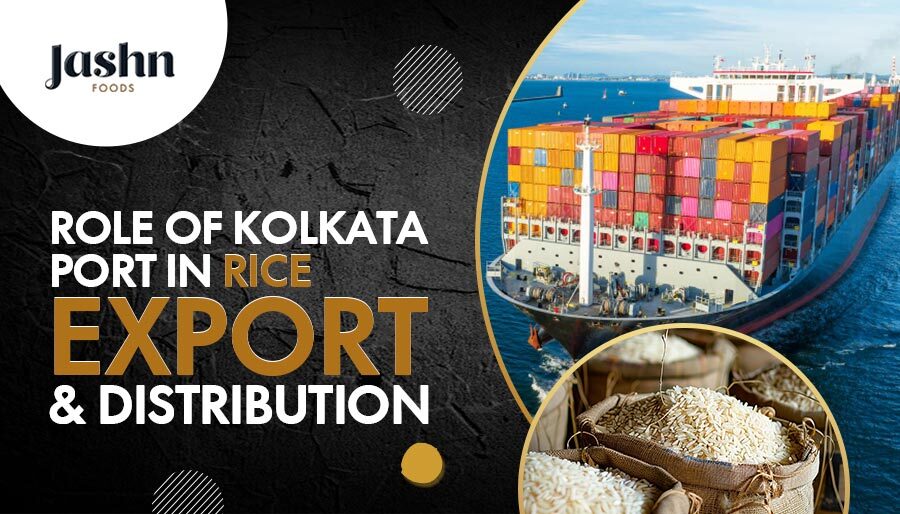
Today, the role of Kolkata port in rice export and distribution extends far beyond loading cargo onto ships. It helps move rice from producing regions in eastern and northern India to domestic markets as well as overseas destinations. For exporters, distributors, and food businesses, access to an efficient port can influence delivery timelines, freight costs, and customer satisfaction.
As international demand for Indian rice continues to expand, including premium varieties such as basmati rice, logistics hubs like Kolkata Port have become increasingly important in maintaining the flow of trade.
Partner with Jashn Foods for premium rice, consistent supply, and export-ready solutions tailored to global buyers.
Understanding the Role of Kolkata Port in Rice Export and Distribution
Ask any experienced exporter what separates a smooth shipment from a difficult one, and the answer often comes down to logistics. A quality product alone is not enough. Buyers expect timely deliveries, proper documentation, and reliable transportation from origin to destination.
Kolkata Port supports all of these requirements. It serves as a link between rice-producing regions and international shipping routes, allowing cargo to move from mills and warehouses to overseas markets with greater efficiency.
The port also supports domestic trade. Large volumes of rice travel through distribution channels connected to Kolkata before reaching wholesalers, retailers, food processors, and institutional buyers across the country. This steady movement helps businesses maintain inventory levels and respond to changing market demand.
What makes the port particularly valuable is its ability to connect multiple parts of the supply chain. Farmers, millers, transport operators, exporters, warehouse providers, and shipping companies all depend on infrastructure that keeps goods moving without unnecessary delays.
Overview of Kolkata Port and Its Strategic Location
Location has always been one of Kolkata Port’s biggest strengths.
Situated in eastern India, the port provides access to some of the country’s most productive agricultural regions. States such as West Bengal, Bihar, Jharkhand, Odisha, Chhattisgarh, and parts of Uttar Pradesh contribute significantly to rice production, creating a strong supply base within reach of the port.
The movement of rice in Kolkata is supported by an extensive network of roads, railway corridors, and inland waterways. This connectivity allows cargo to travel from processing centers to export facilities through multiple transportation options.
For exporters, shorter transportation routes can reduce handling requirements and simplify logistics planning. The location also supports trade with neighboring countries and key overseas markets that regularly import Indian rice.
Another advantage is the established commercial ecosystem surrounding the port. Freight forwarders, customs agents, transport providers, warehouses, and packaging companies operate within the region, making it easier for businesses to coordinate shipments.
Why Kolkata Port Is Important for Rice Exports
Many international buyers evaluate suppliers based on consistency rather than occasional large shipments. They want assurance that orders will arrive on time and in the expected condition.
Kolkata Port helps make that possible.
The port connects exporters with major shipping routes serving Africa, Southeast Asia, the Middle East, and neighboring South Asian markets. These trade links have helped strengthen India’s position as one of the world’s leading rice suppliers.
For businesses involved in international trade, efficient cargo handling can make a measurable difference. Reduced waiting times and smoother movement of goods help exporters manage commitments more effectively.
This is particularly beneficial for rice exporters in india such as Jashn Foods, who depend on dependable logistics networks to serve customers across multiple regions. Reliable export infrastructure allows businesses to focus on quality, customer relationships, and market expansion rather than shipment uncertainty.
Discover the quality standards and supply capabilities behind our growing customer base.
How Rice Reaches Kolkata Port
Long before a shipment reaches a vessel, it has already completed a detailed journey.
The process often begins in agricultural regions where paddy is purchased from farmers and transported to mills. After processing, rice is cleaned, graded, sorted, and packed according to customer specifications.
From there, the cargo moves through transportation networks toward logistics hubs and warehouses. Depending on the shipment size and destination, transport may involve trucks, railway wagons, or a combination of both.
Warehouses near the port play an important role in organizing inventory before export. Proper storage conditions help preserve quality and reduce the risk of moisture-related issues during transit.
Once documentation requirements are completed, containers or bulk cargo are prepared for loading and shipment.
Kolkata Port’s Contribution to Domestic Rice Distribution
Although export activity often attracts the most attention, domestic distribution remains equally important.
India’s rice consumption patterns vary from region to region. Urban markets, hospitality businesses, retailers, wholesalers, and institutional buyers all require regular supplies throughout the year.
Kolkata Port contributes to this movement by supporting transportation networks that connect producing regions with consumption centers. During periods of increased demand, strong logistics infrastructure helps prevent disruptions and supports market stability.
The result is a more efficient flow of goods across different parts of the country, benefiting both suppliers and buyers.
Benefits for Businesses Looking to Start Rice Trade Operations
Entrepreneurs planning to start rice business in Kolkata often find that the city’s logistics advantages create opportunities that may not exist in every market.
Access to transportation networks, warehousing facilities, freight services, and export support systems can simplify day-to-day operations. Instead of building an entire logistics framework from scratch, businesses can work within an ecosystem that already supports agricultural trade.
The city also offers access to domestic and international markets, making it easier for growing companies to expand their reach over time.
For new entrants, this combination of infrastructure and market connectivity can provide a strong foundation for long-term growth.
Access high-quality rice and reliable fulfillment before market demand rises further.
How Port Logistics Influence Market Competitiveness
In global trade, small operational differences often create significant commercial advantages.
A shipment that arrives on schedule helps buyers manage inventory. A shipment that arrives late can create challenges throughout the supply chain.
That is why logistics efficiency remains a major factor in competitiveness. Ports that handle cargo effectively help exporters reduce uncertainty and improve customer confidence.
Over time, reliable logistics can strengthen business relationships and increase opportunities for repeat orders.
The Connection Between Logistics and Basmati Rice Prices
Market prices are influenced by many factors, including production levels, demand trends, currency movements, and transportation costs.
Among these variables, logistics often receives less attention than it deserves.
Changes in freight expenses, shipping availability, and cargo movement efficiency can affect basmati rice prices in both domestic and export markets. When transportation systems operate smoothly, businesses are often better positioned to manage costs and maintain predictable supply schedules.
Efficient port operations therefore contribute indirectly to market stability by helping goods move through the supply chain without unnecessary delays.
Why Packaging and Brand Reputation Matter in Export Markets
International buyers rarely evaluate products based on price alone.
Consistency, presentation, and trust all influence purchasing decisions. A respected rice brand is often able to build stronger relationships because buyers know what to expect with every shipment.
Packaging plays an equally important role. It protects the product during storage and transportation while also helping communicate quality standards to customers.
When strong branding is combined with dependable logistics, suppliers are better positioned to compete in increasingly demanding global markets.
Future Opportunities for Rice Exports Through Kolkata Port
Global food demand continues to evolve, creating new opportunities for suppliers that can maintain quality and reliability.
Kolkata Port is well placed to support this growth. Improvements in infrastructure, technology adoption, cargo handling systems, and transportation connectivity are expected to strengthen the region’s trade capabilities in the coming years.
As export volumes increase and supply chains become more sophisticated, efficient logistics hubs will remain essential to the movement of agricultural commodities.
Conclusion
The success of the rice trade depends on much more than production alone. Every shipment relies on transportation networks, storage facilities, documentation processes, and export infrastructure working together.
Kolkata Port remains one of the most important links in that chain. Its location, connectivity, and trade capabilities help move rice efficiently across domestic and international markets.
For exporters, distributors, and businesses involved in the rice industry, the port continues to provide a practical advantage that supports growth, market access, and long-term competitiveness.
Secure consistent quality and dependable shipments before your next procurement cycle begins.