
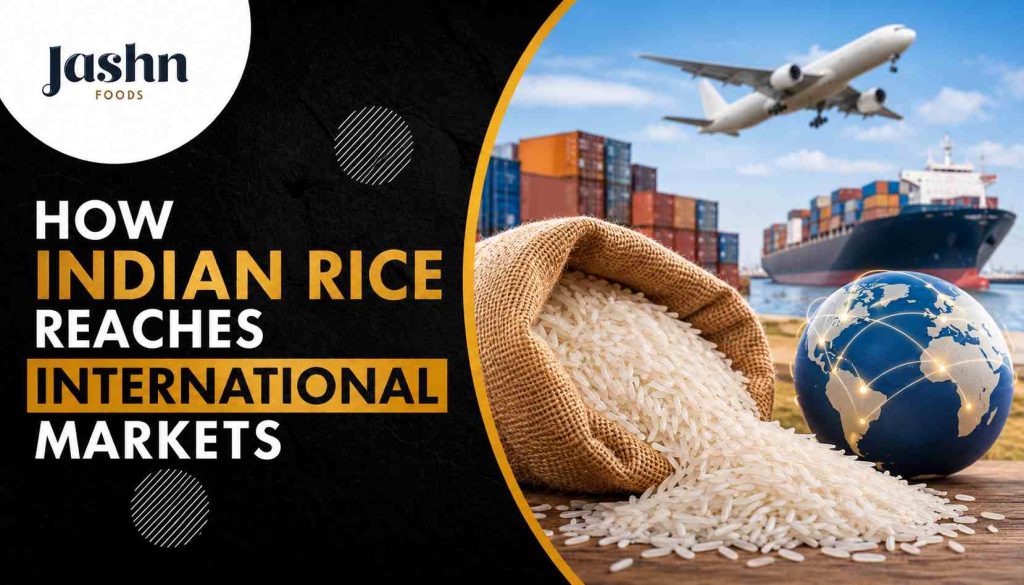
A bag of Indian rice may travel thousands of kilometres before it reaches a buyer. Farmers, mill workers, quality teams, transporters and customs officials all play a part. That is the story behind how Indian rice reaches international markets.
Overseas buyers look beyond the price. They want the variety and quality they ordered, the right packing, and documents that will pass inspection. This is why experienced basmati rice exporters in India pay attention to details that customers may never see. APEDA reports that India exported 20.19 million metric tonnes of rice in 2024–25, worth USD 12.47 billion. Its rice export guidance also outlines exporter registrations and destination requirements. The figures show the scale of the trade.
How Indian Rice Reaches International Markets: The Journey Behind a Shipment
Each order has its own requirements, but most consignments pass through the same stages: paddy procurement, milling, testing, packing, export clearance and delivery.
Before booking a container, the buyer and supplier agree on variety, grain length, broken percentage, moisture, processing style, quantity and bag size. The contract records those details.
It Starts with the Paddy
Rice quality is shaped in the field. Seed choice, weather, water management and harvest timing all matter. Harvesting too early or too late can affect the grain.
After harvesting, paddy needs proper drying. This step is easy to overlook, but excess moisture can cause trouble in storage. It may lead to mould, odour or insect activity. Poor handling can also increase broken grains during milling.
Punjab, Haryana, Uttar Pradesh, Telangana, West Bengal and Chhattisgarh are among India’s major rice-producing states. Basmati is closely associated with the north; non-basmati varieties grow across a wider area.
An exporter must source the crop that fits the order. A buyer who specifies 1121 basmati should not receive a substitute because another variety happens to be available. The name on the sample, contract and final bags must match.
What the Mill Does to the Grain
At the mill, machines remove stones, straw and other unwanted material. The husk is removed, and the rice may then be polished or parboiled.
Grading separates grains by size and length. Colour sorters remove discoloured kernels and visible foreign matter. Appearance, however, is only one part of quality.
The quality team checks the lot against the buyer’s specification. Common checks include moisture, broken grains, damaged kernels, foreign matter, infestation and grain length. Some orders also need laboratory tests for pesticide residues or other food-safety parameters.
A sample approved before production is useful. It does not replace checks on the packed batch. The final lot must remain consistent with the agreed sample. Jashn Foods handles several Indian rice varieties and gives attention to grading and quality checks before dispatch. For a wholesale buyer, consistency from one order to the next matters more than a good-looking sample alone.
Get the right variety, consistent specifications and bulk supply for your next order.
The Buyer’s Market Decides the Product
Buyers have different needs. Households may want long grains for biryani, restaurants need reliable cooking results, and food manufacturers may prioritise texture or cost. Understanding how Indian rice reaches international markets also helps buyers compare suppliers on more than price.
That is why rice export to international markets involves more than finding a buyer. Exporters need to understand how the rice will be used. Retail rice may not suit a catering kitchen.
Basmati orders may specify 1121, 1718, 1509, 1401 or Pusa Basmati. Buyers can also ask for raw, steam or sella processing. Non-basmati orders have their own specifications. These points should be settled before packing begins.
Jashn Foods supplies different rice options for commercial and wholesale requirements. Buyers can discuss variety, processing, order size and packing before confirming a purchase. A short conversation at this stage can prevent an expensive mismatch later.
Getting the Export Documents in Order
New traders often ask how to export rice from India. First, they need the right registrations and must check rules for the product and destination.
An exporter needs an Importer Exporter Code (IEC) from the Directorate General of Foreign Trade. APEDA also requires an e-Registration-cum-Membership Certificate for scheduled products. Its rice export guidance lists a phytosanitary certificate among the general requirements. It also explains the Registration-cum-Allocation Certificate process for rice export contracts.
A shipment file may include an invoice, packing list, shipping bill and bill of lading. The buyer may also request certificates of origin or analysis. Requirements depend on the destination.
Exporters should pay particular attention to contract registration. APEDA’s current guidance covers RCAC requirements for basmati and non-basmati rice. Trade notices and procedures can change. It is safer to check the latest DGFT notifications and APEDA notices before each shipment than to rely on a checklist saved from an earlier year.
The Destination Has Its Own Rules
Indian customs clearance does not guarantee entry elsewhere. The importing country sets its own food-safety and plant-health conditions. Some markets require tests, certificates or approved processing units.
APEDA publishes destination-specific instructions for certain markets. The buyer and exporter should check the current rules before the order is finalised.
Labels may need the product name, net weight, origin, batch number, packing and best-before dates, storage advice and importer details. Local law sets the language and format.
A missing certificate can delay a shipment. So can a mismatch between the invoice and the details printed on the bags. These errors are easier to fix before dispatch than after the vessel has sailed.
You need right sourcing partner. Discuss your destination, rice variety and supply requirements with Jashn Foods.
Packing for the Journey and the Customer
Packaging must protect rice from pressure, movement and temperature changes. It should also suit the buyer’s storage and sales channel.
Bulk customers may choose woven bags with inner protection. Retailers often need smaller printed packs. Hotels, restaurants and distributors may prefer larger bags that are easier to handle.
Some importers want private label rice and sell it under their own brand. The buyer and supplier need to approve the rice specification, bag material, weight, artwork and label details before packing. They should also check the label against the destination’s rules.
Jashn Foods provides packing options from 1 kg to 30 kg and above, for different orders. The company also handles private-label requirements. Its 25,000 MT storage facility supports planned inventory and bulk supply. Buyers can share their target pack size and order volume while discussing an arrangement.
The Road from the Mill to the Port
After approval and packing, the consignment moves to the nominated port or land customs station. Road or rail transport may be used, depending on the mill location and shipment plan. A freight forwarder coordinates the vessel booking.
Container inspection is a simple check with real consequences. The inside should be clean, dry and free of strong smells. Rice can absorb odours, while moisture can affect both the grain and the bags. The loading team must stack and secure the cargo so it does not shift at sea.
Delivery terms should be agreed before dispatch. They clarify who arranges freight, insurance and other costs, and when risk transfers from seller to buyer.
Sea freight is common for large overseas orders. Transit time varies with vessel schedules, port congestion, weather and transhipment. Buyers need realistic updates, not promises that leave no room for delays.
Arrival and Handover
At the destination port, the importer or broker handles clearance. Officials may review documents or inspect the cargo. The importer pays applicable duties, taxes and port charges before delivery.
The phrase rice import duty in India refers to a charge on rice entering India. A buyer importing Indian rice into another country must check that country’s tariff rules instead. Landed cost may include duty, taxes, freight, insurance, handling and local transport.
Once the goods are released, a local carrier takes them to the importer’s warehouse or distribution centre. Check the quantity, bag condition, labels and batch details. Record any shortage or damage promptly and follow the contract’s claims process.
What Buyers Remember After Delivery
Buyers remember more than arrival. They notice whether the rice matched the sample, the documents were correct and the supplier answered questions. These details influence repeat orders.
A wholesaler may need steady bulk availability. A supermarket buyer may ask for several pack sizes. A distributor may want regular deliveries of a few varieties. The supplier needs to understand the business behind the order.
Jashn Foods is based in Haryana and handles wholesale, distributor and private-label enquiries. Its stated certifications include ISO 22000:2018, HACCP, HALAL, FSSAI and GMP. Buyers can share their preferred variety, quantity, destination and packing requirements through the Jashn Foods website.
In the end, how Indian rice reaches international markets depends on decisions made at every stage. The crop must suit the order. The mill must process it to specification. Documents and destination rules must be checked. Packaging and transport must protect the grain.
One stage cannot make up for a mistake in another. Reliable supply means managing the whole chain. For an overseas buyer, that can turn a first purchase into a lasting relationship.
Looking for a dependable Indian rice supplier? Share your preferred variety, destination and order quantity with Jashn Foods.