
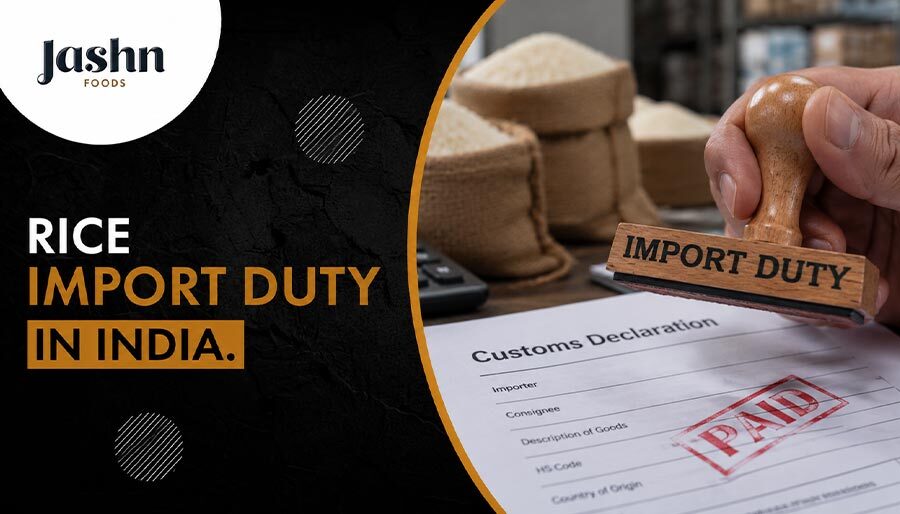
Let’s be honest, most people researching rice import duty in India are doing so because the numbers didn’t add up when they first ran the math. Rice is one of those commodities where the duty structure genuinely surprises people, especially traders more familiar with India’s reputation as a major rice exporter rather than an import destination.
India grows more rice than almost any other country, dominates global exports of premium basmati rice, and yet the customs framework for bringing rice in is just as detailed and demanding as you’d expect for any tightly protected agricultural sector. If you’re importing rice for specialized processing, re-export under bonding, research, or a niche consumer segment, knowing how the duty structure works isn’t optional, it directly determines whether the business case holds up.
This guide covers the full picture: duty rates, HS codes, landed cost components, required documentation, and the regulatory bodies you’ll be dealing with.
Discover the most cost-effective sourcing strategy for your destination market.
Rice Import Duty in India: Latest Rates and Regulations
Why Rice Import Duty Matters More Than Most People Expect
The phrase “rice import duty in India” sounds straightforward until you start pulling the numbers apart. There’s the basic customs duty, yes – but layered on top of that are a surcharge, an integrated GST component calculated on an inflated assessable base, logistics charges, port fees, and compliance costs that don’t show up in any tariff schedule.
Traders who’ve only looked at the headline BCD often find their landed cost estimate is off by a meaningful margin. That’s not a customs technicality, that’s money left unaccounted for in a business plan.
India applies high import duties on rice deliberately. Domestic farmers, particularly smallholders across eastern India, depend on price stability. A flood of cheap imported rice could devastate those margins in a bad season. So the duty structure acts as both a revenue instrument and a market buffer, and importers have to price that in from the start.
The Current Duty Structure on Rice
For the two most commercially relevant categories, HS Code 10063020 (Basmati Rice) and HS Code 10063090 (Other Milled Rice), the Basic Customs Duty has historically sat around 70%. That’s a substantial levy before anything else enters the picture.
Once you add the Social Welfare Surcharge (calculated as a percentage of BCD) and Integrated GST (applied on a combined assessable value that includes CIF value, BCD, and SWS), the effective total customs burden climbs noticeably above the 70% base.
A few important caveats:
Duty rates can change. The government issues notifications through CBIC that can modify rates, introduce exemptions, or apply additional conditions. Importers who relied on data from six months ago have been caught out by this more than once.
Trade agreements matter. If the rice originates from a country that has a preferential trade agreement with India, the applicable BCD may be lower, sometimes significantly so. This is where the Certificate of Origin earns its importance.
The Central Board of Indirect Taxes and Customs (CBIC) is the authoritative source. When in doubt, go there directly rather than relying on secondary summaries.
Getting the HS Code Right
HS code classification is one of those areas where a small error creates a disproportionately large problem. The customs duty, taxes, required documents, and regulatory treatment all flow from the classification, so misclassify your rice and you could face reassessment, penalties, or clearance delays that wipe out any margin you were banking on.
The commonly used codes for rice imports are:
| HS Code | Description |
| 1006 | Rice (general) |
| 100620 | Husked (Brown) Rice |
| 10063020 | Basmati Rice |
| 10063090 | Other Milled Rice |
| 100640 | Broken Rice |
For most conventional rice varieties, classification is fairly clear-cut. Where it gets complicated is with specialty or partially processed products, parboiled variants, fortified rice, or blended products that don’t sit neatly in one sub-heading. If there’s any ambiguity in your product, get a classification opinion from a licensed customs broker before the shipment leaves the origin port. Fixing it after arrival is far messier.
What Actually Goes Into the Landed Cost
Here’s where a lot of import calculations fall short. People focus on customs duty and treat everything else as a rounding error. In reality, the full landed cost has several components that compound on each other.
Most buyers only see the product price. Discover the complete landed cost.
Basic Customs Duty (BCD)
Basic Customs Duty (BCD) is the foundation, the primary tariff based on the HS code and assessable value.
Social Welfare Surcharge (SWS)
Social Welfare Surcharge (SWS) is added as a percentage of BCD. It’s not enormous, but it contributes to the base on which IGST is calculated.
Integrated GST (IGST)
Integrated GST (IGST) is where people often get surprised. It’s calculated on the assessable value after adding BCD and SWS, meaning the taxable base is higher than the invoice value. GST-registered importers can claim input tax credit on this, which helps, but the upfront cash outflow is real.
Logistics and port-side costs round out the picture:
- Customs broker and clearing agent fees
- Port handling and terminal charges
- Demurrage if clearance takes longer than expected
- Warehousing, particularly if the goods need FSSAI testing
- Inland freight to the final destination
None of these show up in the customs tariff, but collectively they can add several percentage points to the total cost. Any serious landed cost model needs to account for all of them.
Sample Cost Structure
To illustrate how the components stack up, here’s a simplified breakdown for a hypothetical shipment with a CIF value of ₹1,00,000:
| Cost Component | Amount |
| CIF Value | ₹1,00,000 |
| Assessable Value | Per customs valuation |
| Basic Customs Duty | Applicable rate |
| Social Welfare Surcharge | On BCD |
| IGST | On enhanced value |
| Total Landed Cost | Calculated final figure |
The actual numbers depend on current rates and applicable exemptions, which is why this is illustrative rather than prescriptive. Run the real calculation with current CBIC tariff data and a customs professional who handles agricultural imports regularly.
Regulatory Bodies You’ll Be Dealing With
Rice imports touch multiple government agencies, and clearance from one doesn’t substitute for clearance from another. Missing a step with any of these bodies can hold up an entire shipment.
DGFT (Directorate General of Foreign Trade)
DGFT (Directorate General of Foreign Trade) governs foreign trade policy, including any licensing requirements, import conditions, or restrictions on specific rice categories. Any changes to import policy come through DGFT notifications.
CBIC (Central Board of Indirect Taxes and Customs)
CBIC (Central Board of Indirect Taxes and Customs) manages the actual customs clearance process, tariff classification, duty assessment, valuation, and the legal framework importers operate within.
FSSAI (Food Safety and Standards Authority of India)
FSSAI (Food Safety and Standards Authority of India) is non-negotiable for any food product entering India. Rice must meet food safety standards, labeling requirements, and packaging norms. FSSAI inspection or testing may be required before goods can leave the port. Importers who aren’t FSSAI-registered or haven’t lined up this compliance in advance often face delays they didn’t budget for.
Getting ahead of regulatory requirements, rather than discovering them at customs, saves a lot of grief.
Documents You Need for Customs Clearance
Documentation errors are among the most common reasons rice shipments get delayed at Indian ports. The list isn’t complicated, but every item on it matters.
Commercial Invoice
Establishes the transaction value and goods description. Must be accurate and consistent with the other documents.
Packing List
Details packaging, weights, and quantities. Any discrepancy between this and what’s physically in the container will trigger inspection.
Bill of Lading or Air Waybill, the primary transport document, proving ownership and shipment of the goods.
Import Export Code (IEC)
Issued by DGFT, mandatory for any commercial import. Without it, there’s no customs clearance.
Certificate of Origin
Determines which country’s trade relationship with India applies to this shipment. Critical if you’re claiming preferential duty rates under any trade agreement.
Phytosanitary Certificate
Issued by the plant health authority in the exporting country, confirming the rice meets India’s agricultural import standards. Agricultural products arriving without this face immediate complications.
Get all of this organized well before the shipment departs. Chasing documents across time zones while a container sits at a port is an expensive problem.
What Affects Your Actual Import Cost
Beyond the duty rate itself, several factors shape what an importer ends up paying.
Country of origin: is probably the biggest variable after the product classification itself. If the rice comes from a country India has a preferential trade agreement with, the BCD can be significantly lower. Countries without any agreement face the full standard rate.
Rice variety and processing level: matters because different products fall under different sub-headings, and classification decisions aren’t always obvious for specialty products.
Government trade policy timing: is genuinely unpredictable. India has historically moved quickly on import and export policy when domestic market conditions change – raising duties to protect farmers, imposing export restrictions during supply crunches, or adjusting conditions mid-year. Importers who plan around current rates need contingency thinking for rate changes.
Shipment value: compounds everything, since duties and IGST are percentage-based. Larger shipments mean higher absolute duty liability.
Comparing Import Costs to Sourcing Rice From India
Anyone who’s spent time researching the cost of importing rice from India from the exporting side understands how competitive Indian pricing is internationally. Established Indian exporters, particularly in the basmati segment, have streamlined logistics, reliable documentation, and the economies of scale that come with decades of export-oriented operations.
This context matters for importers into India because it puts the duty structure in perspective. The economics of importing rice into India rarely pencil out for general commercial purposes, the duty is simply too high for it to compete with locally produced rice. Where imports make sense is in specific scenarios: re-export under customs bonding, research or testing purposes, or genuine product niches where Indian domestic supply doesn’t meet a specific requirement.
Rice Pricing and Market Trends
Global rice prices don’t move in isolation. Production in major growing regions, weather patterns across South and Southeast Asia, Indian export policy decisions, and freight market conditions all feed into what buyers pay internationally.
Basmati rice prices in India are watched closely by international traders because they serve as a benchmark for premium long-grain rice across multiple markets. When India imposes a minimum export price on basmati, which it has done periodically, global buyers feel it quickly. Conversely, a bumper crop year tends to ease prices across the supply chain.
For importers, tracking price trends helps identify better timing for purchases, assess whether a supplier’s quoted price is reasonable, and plan inventory levels against expected price movements.
The Value of Working With Experienced Trade Partners
International rice trade involves enough complexity, documentation, quality standards, phytosanitary requirements, customs procedures on both sides, that working with partners who do this regularly matters more than it might seem.
Experienced basmati rice exporters in India such as Jashn Foods bring something beyond just product availability. They understand the documentation chain, know what importing countries require at each step, can advise on packaging and labeling standards, and have established logistics relationships that reduce the likelihood of shipment problems. For buyers newer to India trade, that institutional knowledge is genuinely valuable.
Get premium-quality rice, export support, and competitive pricing in one place.
Evaluating Quality and Brand
When importers or buyers are selecting rice, the quality evaluation goes well beyond price per tonne. Grain characteristics, length, slenderness ratio, milling quality matter. Aroma is particularly important in basmati, where the specific fragrance associated with grains from the Indo-Gangetic belt is a key quality marker. Aging also factors in: well-aged basmati rice typically cooks better and commands higher prices.
Different basmati rice brands have built reputations around specific quality parameters, sourcing regions, and consistency. For importers who need to meet a defined specification for an end customer, evaluating brands on these dimensions, not just cost, is what keeps supply chain relationships intact over time.
Conclusion
The rice import duty in India reflects a deliberate policy choice to protect domestic agriculture, and it does so effectively. For importers, that means the cost structure is genuinely demanding, and the only way to manage it well is to understand all of its components, not just the headline rate.
Get the HS code right. Verify current duty rates before committing to a shipment. Build the full landed cost model, including IGST, SWS, logistics, and compliance costs. Have documentation sorted before the goods move. And work with customs professionals who handle agricultural imports specifically, because the agricultural trade regulatory environment has its own nuances that general customs agents don’t always navigate as smoothly.
For businesses that approach rice imports with that kind of preparation, the process, while expensive in duty terms, becomes manageable and predictable.
Get destination-specific pricing, duty insights, and shipping support from Jashn Foods.