
Want to start a small business but aren’t sure what to sell? Rice could be worth considering. There are several profitable rice business ideas you can start from home in India, even if you don’t own farmland or have the money to set up a mill.
You could buy rice from a local supplier and sell it to families, deliver regular orders to nearby customers, or create your own packaged brand. If you’re planning to sell high quality basmati rice, make sure the quality stays consistent, and the packaging gives customers the information they need. You don’t have to start big. In fact, testing one idea with a few customers is often a better way to begin.
10 profitable rice business ideas you can start from home in India
1. Sell Packaged Rice
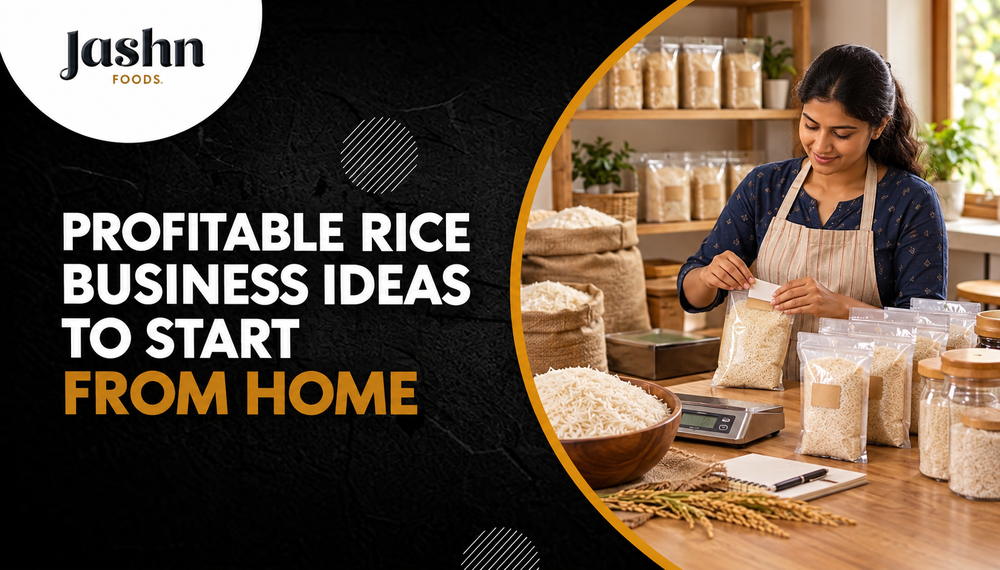
One practical option is to buy rice in bulk and sell it in smaller packs under your own label. You can start with one or two varieties that people in your area already buy regularly.
Think about what your customers need. A family might prefer a 10 kg pack, while someone living alone may want just 2 kg or 5 kg. Offering a few useful sizes is usually better than stocking too many products at once.
Before buying stock, speak to a couple of wholesalers or rice mills. Ask for samples and compare the grain quality, price, and delivery terms. Remember to include packaging and transport costs when setting your selling price.
You can also look at basmati rice manufacturers in India, such as Jashn Foods, while researching suppliers. Compare their offerings with other options before making a decision.
2. Sell Regional Rice Online
Rice preferences can vary considerably from one region to another. Some households regularly buy sona masoori, while others prefer ponni, gobindobhog, or Kerala matta rice.
This gives you an opportunity to build a small online shop around regional varieties. You don’t need dozens of products to make the idea work. Start with varieties you can source reliably and explain what makes each one suitable for different dishes.
Good product descriptions matter. Mention the pack size, cooking method, grain characteristics, and storage instructions. Clear photographs can also help customers understand what they’re buying.
You could begin by taking orders through WhatsApp or social media. Once you have regular customers, consider setting up a dedicated website.
3. Deliver Rice Regularly
Most households buy rice more than once a year, which makes repeat orders an interesting opportunity.
You could offer a simple monthly delivery service. Customers choose how much rice they need, and you deliver it on an agreed date. For example, one household might order 5 kg every month, while another might need 10 kg.
Start with customers close to home. This keeps delivery expenses under control and makes it easier to handle last-minute changes.
Ask customers about their preferred varieties and quantities before purchasing stock. You can also send a reminder before the next delivery, provided they have agreed to receive messages. Over time, regular orders can make stock planning much easier.
4. Prepare Gift Hampers
Rice might seem like an unusual gift, but a nicely presented pack of premium rice can work well in festive hampers and corporate gifts.
You could combine it with recipe cards, spices, or other pantry products. Such hampers may appeal to people buying gifts for Diwali, weddings, housewarmings, or business events.
Start by preparing a few samples rather than ordering hundreds of boxes. Show them to local companies, event planners, and housing communities to see whether there’s genuine interest.
Keep the pricing simple, with two or three options to suit different budgets. Since festive demand doesn’t last all year, confirm orders and delivery dates before purchasing packaging in large quantities.
5. Sell Rice Flour
Rice flour is used in plenty of Indian kitchens, from traditional snacks to sweets and dishes such as idiyappam. Home bakers and small food businesses may also be interested in buying it.
You don’t have to purchase grinding machinery to get started. One option is to buy finished flour from a suitable processor and pack it for resale. You could also arrange grinding and packing through an established processing unit.
Start with small quantities and find out how quickly customers use the product. Rice flour needs proper storage because moisture can affect its quality.
Before selling, check the relevant food-safety, hygiene, packaging, and licensing requirements. If customers begin ordering regularly, you can consider adding other products, such as dosa mixes.
6. Put Together Meal Kits
If you enjoy cooking, why not turn that interest into a small business?
A rice meal kit could include measured rice, selected dry ingredients, and a recipe card. Customers might use it to prepare pulao or another regional dish without having to buy every ingredient separately.
Keep the first few kits easy to prepare. Explain the portion size, cooking time, ingredients included, and anything the customer needs to add at home.
You’ll also need to pay attention to food safety and labelling. List ingredients accurately, identify relevant allergens, and follow the rules that apply to your products.
Before selling the kits, ask a few friends or neighbours to try them. Their feedback can help you improve the recipe, portion size, and instructions.
7. Supply Nearby Kitchens
Restaurants, caterers, hostels, and tiffin services may need rice in fairly predictable quantities. Supplying these businesses can be a good option if you prefer handling regular bulk orders.
Visit a few food businesses in your neighbourhood and ask about their current requirements. Find out which variety they use, how much they consume, and whether they’re happy with their existing supplier.
Don’t assume that the cheapest product will win them over. Many kitchens care about how the rice cooks, whether the quality stays consistent, and whether deliveries arrive on time.
Offer a sample and let the kitchen test it before discussing a regular order. Agree on quantities, payment terms, and delivery schedules in advance. A small trial order is a sensible way to build the relationship.
8. Work as a Sourcing Agent
You can also earn money by helping buyers find suitable rice suppliers.
Your job might involve contacting mills, comparing quotations, arranging samples, and coordinating orders. Instead of buying and storing rice yourself, you connect the buyer with the supplier and charge an agreed commission or service fee.
This can suit someone who is comfortable talking to people and following up on details. However, you’ll need to be organised. Buyers will expect accurate information about prices, quality, and delivery dates.
Be upfront about how you earn your fee. Put the agreed terms in writing and don’t promise anything the supplier hasn’t confirmed. Good communication can help you earn repeat business without investing heavily in stock.
9. Share Rice Tips Online
Another option is to create useful content about rice. You could publish recipes, make cooking videos, compare regional varieties, or share tips on storing rice properly.
Start with questions people actually ask. For example, you might explain why one variety works better for a particular dish or demonstrate how to cook rice without making it sticky.
As your audience grows, you could direct readers to your own shop or earn commissions through relevant affiliate links. Just remember that building an audience takes time. A few popular posts don’t necessarily translate into regular income.
Focus on being helpful rather than turning every post into an advertisement. If you use affiliate links, disclose that relationship clearly.
10. Build Your Own Brand
If you want to sell rice under your own brand but don’t want to operate a mill, consider working with a contract processor or packer.
The partner handles agreed activities, such as grading and packaging, while you manage product selection, branding, and sales.
Before committing, ask for samples and agree on the product specifications. Discuss minimum order quantities, packaging materials, quality checks, and what happens if a batch doesn’t meet the agreed standard.
Check the final packaging and required declarations before production begins. Starting with one or two products will also make it easier to manage your budget and understand what customers prefer.
Check Your Costs
Before choosing an idea, work out how much money you can comfortably invest. Include the cost of stock, packaging, transport, marketing, and unexpected expenses.
Here’s a simple example. Suppose a 5 kg pack costs ₹250 for the rice, ₹15 for packaging, and ₹25 for delivery. Your direct cost comes to ₹290. If you sell the pack for ₹330, you’re left with ₹40 before other expenses.
That amount may shrink further once you account for advertising, payment charges, returns, or unsold stock. So, don’t judge the business by sales figures alone.
When comparing basmati rice prices, check that you’re comparing similar products. Variety, grade, age, broken-grain percentage, order quantity, and delivery terms can all affect the quoted price. Ask for samples and written specifications before placing a large order.
Choose Your Suppliers
Spend some time comparing suppliers before making your first purchase. Research basmati rice manufacturers in India and contact several businesses to understand their products and commercial terms.
Ask about minimum order quantities, product origin, quality consistency, and replacement policies. If you’re buying in bulk, find out whether future batches will meet the same specifications.
Keep invoices and records of the stock you purchase. Avoid spending your entire budget on inventory just to receive a bulk discount. Unsold rice can tie up money that you may need for delivery or restocking popular products.
Check the Rules
Before selling packaged rice or other food products, find out which registrations, licences, and labelling requirements apply to your business.
Revised FSSAI turnover thresholds took effect on 1 April 2026. Registration applies up to ₹1.5 crore in turnover, a State licence applies above ₹1.5 crore and up to ₹50 crore, and a Central licence applies above ₹50 crore. Other eligibility conditions may affect the category you need, so verify the current requirements through the official FoSCoS portal before applying.
Store rice in a clean, dry place away from pests, moisture, chemicals, and strong odours. Keep purchase invoices and batch records, and make sure your labels accurately describe the products.
If you plan to export, check APEDA requirements and the regulations of your destination country before accepting international orders.
Think About Expansion
Some business owners eventually want to start a rice mill in India, but milling requires a different level of investment and planning.
You’ll need to consider premises, machinery, electricity, maintenance, staff, working capital, and a steady supply of raw grain. For most beginners, setting up a mill isn’t the easiest way to test whether there’s demand for their products.
You could first gain experience by reselling rice or working with an established processor. This gives you a better understanding of customer preferences, pricing, and the quantities you might realistically sell.
Once you have regular buyers and a clearer picture of the market, you’ll be in a better position to decide whether a larger operation makes sense.
Start Small
You don’t need to try all ten ideas at once. Pick one that suits your budget and identify a specific group of customers.
Talk to potential buyers before spending money on stock. Find out what they currently purchase, what problems they face, and what might convince them to try your product.
Keep track of your expenses, customer feedback, and repeat orders. If something isn’t selling, make changes before investing more money.
A home-based rice business can begin with just a few products and a small group of customers. Focus on reliable quality, fair pricing, and dependable service. Once you understand what people want and the numbers start working, you can build from there.