
If you’ve been comparing broken rice vs long grain rice: which is better for your family’s plate, you’re not alone. It’s a question many home cooks, restaurant buyers, and families eventually ask. Home cooks, hostel mess owners, restaurant buyers, everyone hits this question eventually. Both grains start life in the same paddy field. But they cook differently, cost differently, and honestly, they sit in your body a little differently too. Some people won’t touch anything but the fluffy, fragrant bite of basmati rice. Others reach for the softer, quicker-cooking broken grains on a regular weekday. This guide breaks down the real differences using recognized standards and reliable data. That way, you can choose the rice that fits your cooking needs instead of relying on marketing claims.
Explore quality rice varieties with reliable sourcing and consistent standards for everyday healthy cooking.
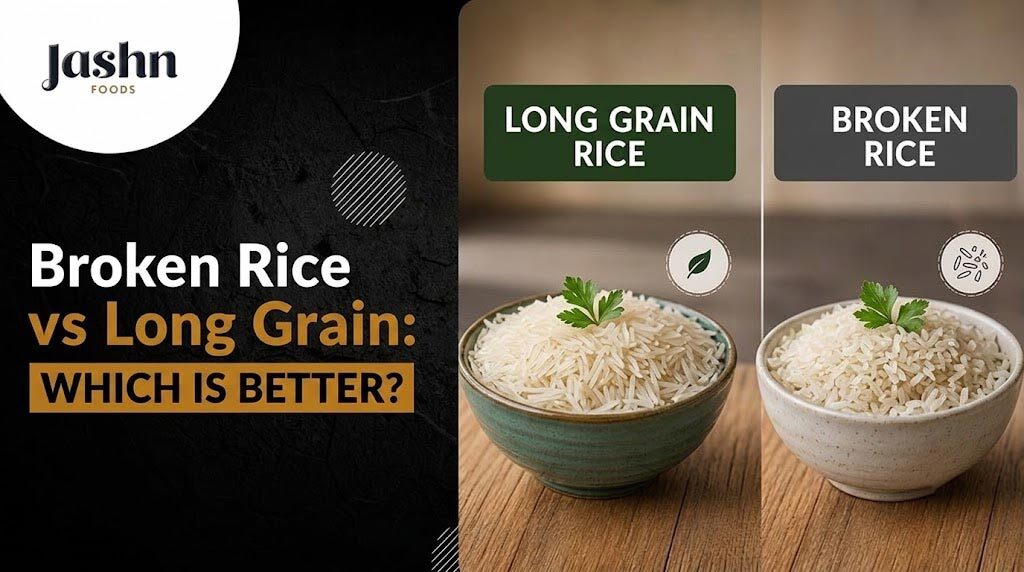
Broken Rice vs Long Grain Rice: Which Is Better for Everyday Cooking?
Short answer first, since you’re probably in a hurry. Broken rice cooks quicker, costs less, and does a great job in khichdi, congee, and idli batter. Long grain rice has a pleasant aroma and stays fluffy instead of turning sticky. That’s exactly why so many people use it for biryani and pulao.
There isn’t one grain that wins outright. It comes down to what you’re cooking, your health priorities, and what your monthly grocery bill can absorb. The finer points below are where the real decision usually gets made.
Most Indian households don’t actually pick just one. A mess kitchen feeding a few hundred students a day will stock broken rice to keep costs sane. A family gearing up for a wedding feast wants nothing except aged, full-length grain in the biryani pot. Once you understand why each rice behaves the way it does, the guesswork mostly disappears.
What Exactly Is Broken Rice?
Broken rice happens when paddy grains crack during milling, harvesting, or transport, it’s not a separate crop, just a byproduct. Under India’s food safety rules, kernels shorter than three-quarters of a whole grain get classified this way. For years, millers treated these fragments as leftovers. Not anymore. Broken rice now shows up in South Indian idli and dosa batter, in Chinese congee, even in craft beer brewing. It soaks up water quickly and softens within minutes. That’s why it’s the go-to choice for porridge, baby food, and dinners that need to come together quickly. It’s also one of India’s largest low-cost food exports, feeding millions of people across Africa and Southeast Asia every year.
Where Basmati Rice and Long Grain Rice Fits In
Long grain rice is any variety with a length-to-width ratio above three. Cooked properly, it stays separate and fluffy rather than clumping into a sticky mass. Basmati is the celebrity of this category. Grown mostly in Haryana, Punjab, and parts of Uttar Pradesh, long grain basmati rice has built a global reputation on its nutty aroma and delicate bite. It also elongates noticeably during cooking, sometimes nearly doubling in length. Genuine basmati commands a premium price, so India’s food regulator has set strict identity standards for grain size and aroma. These standards help prevent cheaper rice from being passed off as authentic basmati.
Nutrition Face-Off: Fibre, Glycemic Index, and Blood Sugar
Nutritionally, these two grains aren’t as far apart as people assume, since both begin as the same milled white rice. But the question people are really typing into Google is whether is white rice healthy at all, and that answer shifts depending on variety and portion size. Tufts University’s nutrition research notes that longer-grain rice tends to carry more amylose, a starch that digests slowly. That puts basmati’s glycemic index somewhere around 50 to 58, meaningfully lower than short-grain white rice, which can climb past 70. Broken rice, on the other hand, has more exposed starch surface from milling, so it digests faster and can spike blood sugar sooner. If you’re managing diabetes or just watching your weight, whole basmati grains are the gentler pick most days. A plate of dal or vegetables alongside either rice helps slow that sugar spike regardless.
Source premium rice directly from Jashn Foods, a trusted manufacturer for better taste, quality, and value.
Cooking Time, Texture, and Daily Use
For most homes, the real question isn’t which rice sounds fancier, it’s which rice is best for daily use when you’ve got twenty minutes and a hungry family. Broken rice wins that race easily. It’s ready in ten to twelve minutes and needs less water to get there, which is exactly why it works for tiffin prep, rushed mornings, and dishes like pongal or khichdi where a soft texture is the point.
Long grain rice takes its time and usually needs eighteen to twenty minutes to cook. In return, it gives you distinct, non-sticky grains that suit guests and festive spreads far better than a Tuesday lunch.
Water ratios differ too. Broken rice needs less water because it breaks down faster, while long grain rice needs a little more to elongate properly without turning mushy.
Plenty of kitchens simply keep both varieties on hand. They decide which one to use based on the guest list and how much time is actually left before dinner.
Price Comparison: Why the Gap Is So Wide
Cost tends to be the deciding factor for most buyers, and here the gap is real. The price of basmati rice sits well above broken rice, largely because of longer growing cycles, careful aging, and tighter quality checks before it ever reaches a shelf. Export figures show basmati consistently pulling premium rates abroad, while broken rice moves as a bulk, budget commodity, often destined for animal feed or processed foods overseas. Domestically, broken rice can run at roughly half the price of packaged basmati per kilo, sometimes less. For a large household or a mess kitchen, that gap adds up fast, month after month. It’s also why some restaurants quietly blend a small ratio of broken grains into everyday rice preparations to keep food costs under control.
How Quality Standards Ensure Better Rice
India is still the world’s biggest rice exporter, and Indian basmati rice manufacturers go through a fairly demanding set of checks before any grain leaves the mill. Anyone shipping rice abroad needs APEDA registration, an FSSAI license, and phytosanitary certification, no exceptions. Domestic manufacturers have started following similar internal checks too, testing moisture content, foreign matter, and grain length before the rice is even packaged. This is a big reason branded basmati costs more than loose rice sold in open markets. Yes, certification is expensive for manufacturers to maintain, but it’s also what protects buyers from adulterated or mislabeled stock landing in their kitchen.
Choose rice that’s tested for purity, grain length, and freshness. Find the right variety for your kitchen today.
How to Read a Rice Label Like a Pro
Picking from the well known rice brands lining supermarket shelves can get overwhelming fast. A useful shortcut: look for brands that state grain length, aging period, and FSSAI compliance right on the pack. Aged basmati, rested for twelve months or longer, cooks up longer and fluffier than anything milled fresh. Broken rice works differently, freshness and low moisture matter more than the brand printed on the bag, since it’s sold as a functional staple rather than a showpiece grain. Reading the label properly, rather than trusting the packaging design, saves you from paying premium prices for pretty average rice.
A Quick Note on Storage
Neither grain keeps well in humid conditions, so store both in airtight containers away from direct sunlight. Basmati actually improves with age when stored correctly, sometimes for a year or more, while broken rice is best used within a few months since it has more exposed surface area and turns stale faster. A few neem leaves or dried red chillies tucked into the container are an old trick against weevils, and it still works.
Broken Rice vs Long Grain Rice: The Final Verdict
There’s no single winner here, and that’s fine. Reach for broken rice when speed, softness, and savings matter most, think khichdi, congee, dosa batter, or feeding a large family without stretching the budget. Reach for long grain basmati when the occasion calls for aroma, fluffy separate grains, and a gentler effect on blood sugar. Plenty of smart home cooks just keep both varieties in the pantry and choose based on the meal, not out of habit. Your kitchen, your schedule, and your health goals should make that call, not the packaging on the shelf.
Whichever grain ends up in your kitchen this week, buying from a trusted, quality-checked source makes the real difference to taste and nutrition. At Jashn Foods, every batch is sourced, cleaned, and packed with exactly that standard in mind.
Choose premium-quality rice that’s carefully sourced, quality tested, and packed for consistent taste.