
Rice buyers often focus on grain length, aroma, and price when comparing different products. However, there is another detail worth checking before making a purchase: how the rice has been processed. The Difference Between Raw, Steam & Sella Basmati Rice becomes noticeable during cooking, particularly in grain texture, appearance, and expansion.
You may have noticed that two bags of basmati rice look quite similar before cooking but produce different results on the plate. There is a reason for that. Although both products may come from the same variety, their processing methods can change how they behave in the kitchen.
This matters to households as well as restaurant owners, wholesalers, retailers, and importers. The right choice depends on the dishes being prepared and the kind of rice customers expect.
Understanding the Three Processing Methods
Raw, steam, and sella are not separate rice varieties. They are different processing forms. A variety such as 1121, 1509, 1718, or 1401 can be available in different processing forms, depending on the mill and product range.
The difference begins before the rice reaches the milling stage.
Raw basmati follows the conventional milling process without pre-milling steam treatment. Steam rice receives controlled steam treatment before milling. Sella rice, meanwhile, goes through parboiling, which involves soaking, steaming, and drying the paddy.
These steps affect the grain’s starch structure and physical strength. As a result, each type develops its own characteristics during cooking.
For buyers, this is an important distinction. Ordering only by variety name may not be enough. Always mention the required processing form when discussing an order with a supplier.
Jashn Foods helps buyers explore different rice options based on their product requirements, intended market, and cooking applications.
What Happens Before the Rice Reaches the Market?
The processing journey explains why these three products behave differently.
Raw basmati starts with cleaned paddy. The outer husk and bran layers are removed during milling, followed by grading and sorting. Since the paddy does not receive the additional heat treatment used for parboiled rice, the finished grains retain their familiar white appearance and natural aroma.
Steam basmati goes through a controlled steaming stage before milling. This treatment makes the kernel firmer while generally maintaining a white or creamy-white colour. The exact result depends on factors such as temperature, moisture, and processing time.
Sella follows a more involved process. Paddy is first soaked in water and then exposed to steam. Afterward, it is dried before milling begins. This process changes the starch structure inside the grain and makes the kernel harder.
That added strength can help reduce grain breakage during milling. Depending on the treatment, the finished product may be white, creamy, or golden.
The Central Pollution Control Board and other relevant authorities publish information on environmental and industrial practices. However, buyers should obtain product-specific processing and quality details directly from their suppliers.
One thing worth remembering is that processing standards can vary between mills. If you are purchasing rice in large quantities, request a sample and agree on the specifications before confirming the order.
How to Recognise Each Type
Looking at the grains is a useful starting point, although appearance alone does not tell the whole story.
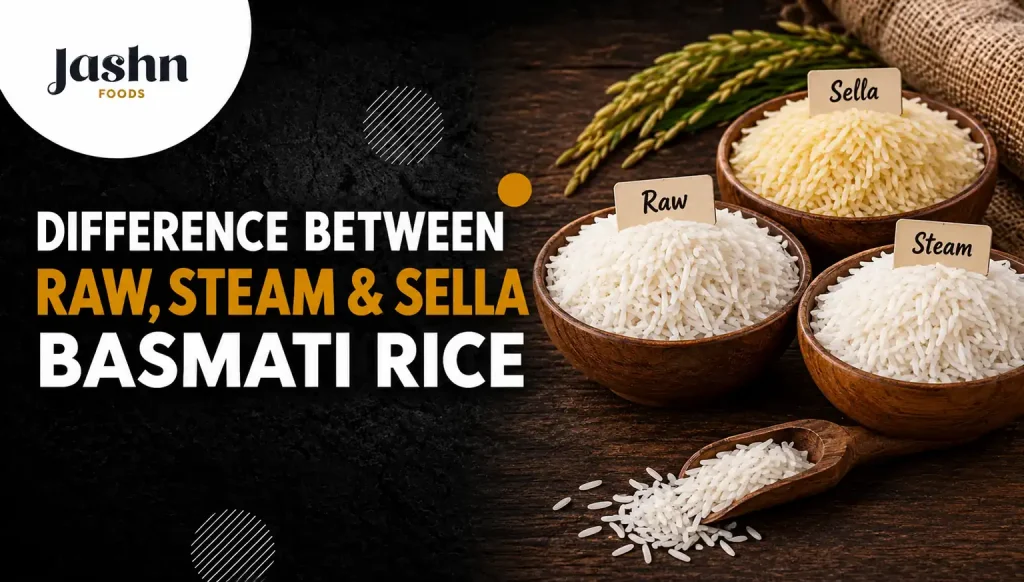
Raw basmati generally has a white or creamy-white appearance. Its slender grains and characteristic aroma make it easy to recognise. The grains are relatively delicate, so careful handling is important.
Steam basmati usually has a similar light colour. However, its grains feel firmer, which helps them retain their shape during cooking. Buyers who prefer white rice but want slightly stronger grains often consider this option.
Sella is usually easier to distinguish. Its grains tend to look firmer and more translucent. White sella has a pale cream appearance, while golden sella carries a deeper yellow shade because of the parboiling treatment.
Do not judge a complete shipment by colour alone. Grain uniformity, aroma, moisture, broken percentage, and cleanliness are equally important. A physical sample gives a much clearer picture than a photograph on a product catalogue.
What Changes When You Cook Them?
This is where the Difference Between Raw, Steam & Sella Basmati Rice becomes particularly important.
Raw basmati generally produces soft, aromatic rice when prepared correctly. Its delicate texture works well for plain steamed rice, light pulao, and everyday meals. However, adding too much water can make the grains sticky. Frequent stirring can also damage their shape.
Steam basmati offers a middle ground. The grains are firmer than raw basmati but still have a familiar white appearance. This makes them suitable for several household and commercial applications, including pulao and selected biryani preparations.
Sella has a noticeably firmer bite. Its grains tend to remain separate after cooking, which is one reason restaurant kitchens often use it for biryani, buffet service, and large food preparations.
It may require a different soaking period or cooking time compared with raw basmati. Following the supplier’s cooking instructions is a good starting point.
For a proper comparison, try preparing all three types in your own kitchen. Use similar quantities and follow the recommended cooking instructions for each sample. Note the cooking time, water absorption, grain expansion, and final texture.
Also, check the rice after it has rested for a few minutes. Some differences become more noticeable once the initial steam has settled.
A small kitchen trial can prevent an expensive mistake, particularly when purchasing rice for commercial use.
Compare raw, steam, and sella options before making your next purchase.
Which Option Is Suitable for Everyday Meals?
For household buyers, the decision often comes down to taste and convenience. Some families enjoy soft, fragrant rice, while others prefer grains that remain separate even when served with curries or vegetables.
When choosing the best rice for daily use in India, think about what you normally cook at home.
Raw basmati is worth considering if you enjoy a softer texture and noticeable aroma. Steam basmati may suit families who prefer firmer grains without moving away from the traditional white appearance.
Sella can be a practical option for households that regularly prepare biryani or prefer a firmer bite.
Your cooking equipment also makes a difference. Rice prepared in an open pot may not turn out exactly like rice cooked in a pressure cooker or electric rice cooker.
Start with the recommended water ratio rather than following the same measurements for every product. Once cooking is complete, allow the rice to rest briefly before serving. This helps the grains settle and makes serving easier.
Proper storage matters too. Keep rice in a dry, clean place, away from moisture and strong odours. Close the packaging properly after every use.
What Should Restaurants and Bulk Buyers Consider?
A household may prepare rice once or twice a day. A restaurant, on the other hand, may need to cook several batches during a single service period.
That changes the buying decision considerably.
Commercial kitchens need consistent results. Grain separation, cooked length, aroma, texture, and holding quality can all affect customer satisfaction.
Raw basmati works well for menus where fragrance and a softer finish are important. Steam offers a balance between appearance and grain strength. Sella is frequently considered for biryani outlets, catering businesses, banquet kitchens, and buffet operations.
However, the most expensive option is not automatically the best one.
Restaurant owners should test samples using their regular recipes and equipment. Check how the rice behaves during cooking, mixing, serving, and holding. A product that performs well in a small home-style preparation may produce different results in a large commercial batch.
Jashn Foods works with different rice requirements, helping buyers explore suitable varieties and packaging options for their business applications.
Explore rice options for biryani, catering, restaurants, and bulk supply.
What Should You Check Before Placing an Order?
Choosing a processing form is only one part of the buying process. The actual quality of the lot deserves equal attention.
Before confirming an order, check the following:
- Variety: Confirm whether the product is 1121, 1509, 1718, 1401, or another variety.
- Grain length: Check the specified average grain length and cooked expansion.
- Moisture: Ask for the moisture level mentioned in the product specification.
- Broken percentage: Compare the allowed broken grain content across quotations.
- Ageing: Find out whether the rice has been aged and how it was stored.
- Purity: Check for foreign matter, damaged grains, and unwanted mixing.
- Packaging: Confirm bag sizes, labelling, and private-label requirements.
Buyers sourcing from basmati rice manufacturers in India should also discuss minimum order quantities, production timelines, payment terms, and transportation arrangements.
For international shipments, destination-market requirements deserve attention from the beginning. Packaging details, product documentation, and applicable quality standards should be confirmed before dispatch.
Always compare the approved sample with the final shipment. Keeping written specifications with the purchase order can help avoid disagreements later.
Jashn Foods offers rice options for domestic and international buyers. Sharing your preferred variety, processing form, quantity, and intended application can make the sourcing discussion more productive.
How Do Prices and Overall Value Differ?
There is no fixed rule that makes raw, steam, or sella the cheapest option in every market.
The quotation depends on several factors. These include the rice variety, grain length, ageing period, crop quality, broken percentage, sorting requirements, packaging, and order volume.
Processing also involves additional resources. Parboiling and steaming require equipment, water, energy, drying facilities, and handling. These expenses can influence the final selling price.
When checking the latest rice price, compare products with similar specifications. A cheaper quotation may involve a different grade, higher broken content, or a different packaging arrangement.
Restaurants should look beyond the purchase price as well. Cooking performance, wastage, and the number of servings obtained from a particular quantity all affect the actual cost of using rice.
A slightly higher purchase price may offer better value if the product delivers more consistent results and less wastage.
Get in touch to discuss rice varieties, quality specifications, and pricing for your requirements.
How Is Basmati Different From Regular Rice?
The comparison of basmati rice vs regular rice involves more than grain length.
Basmati is recognised for its characteristic aroma, slender grains, and elongation during cooking. Regular white rice covers a much wider range of varieties, including short, medium, and long-grain types with different textures.
Raw, steam, and sella describe processing methods rather than rice varieties. This distinction is important because not every long-grain rice has the same characteristics as basmati.
Even within the basmati category, cooking results can vary. The variety, processing method, ageing, and preparation technique all contribute to the final result.
Understanding these differences makes it easier to compare products without relying entirely on packaging descriptions.
Make Your Choice Based on Your Requirements
The Difference Between Raw, Steam & Sella Basmati Rice comes down to the treatment of paddy and the cooking characteristics that follow.
Raw basmati is a good choice for buyers who enjoy soft, fragrant rice. Steam offers a balance of grain firmness and familiar white appearance. Sella is worth considering when firm texture and separate grains are important, particularly for biryani and large-scale food service.
There is no universal winner. What works for a restaurant may not be the first choice for a household, and a product preferred in one market may have different customer expectations in another.
Take time to compare samples, check specifications, and discuss your requirements with the supplier before placing a bulk order.
At Jashn Foods, buyers can explore different basmati rice varieties and processing options for retail, restaurants, wholesale distribution, and international supply. A clear understanding of your requirements is the first step towards choosing the right rice.
Connect with Jashn Foods to explore suitable rice varieties and sourcing options for your business.