
Rice appears simple, but one small preparation step can change the final eating experience. Washing rice removes loose surface particles before cooking. So, what happens if you don’t wash rice before putting it into the pot? You may notice cloudy cooking water, a different texture, and more surface starch after cooking.
For everyday meals, skipping the wash does not automatically make rice unsafe. However, rinsing can improve cleanliness and help control the amount of loose material on the grains. The right approach also depends on the rice variety, processing method, and cooking style.
For Indian kitchens and global consumers, this simple habit deserves a closer look. It can influence the appearance, texture, and preparation of Indian basmati rice, as well as some nutrient levels.
Discover carefully processed rice from Jashn Foods and make every grain count.
What happens if you don’t wash rice before cooking?
When you skip rinsing, loose starch, milling dust, and tiny surface particles remain on the grains. These materials can move directly into the cooking water.
The result often looks like cloudy or milky water during the first stages of cooking. Some rice may also appear more clumped after cooking.
That does not mean every unwashed batch will become sticky. Research has found that washing frequency does not always produce major changes in hardness or stickiness. Rice variety and cooking method can matter more.
Still, washing remains a useful preparation habit for many households. It helps remove materials left around the grain during handling and milling.
FSSAI standards also describe rice as food that should be clean, wholesome, and free from unwholesome substances.
The cooking water may become cloudier
The first obvious difference appears in the pot itself.
Unwashed rice releases more surface material into the cooking water. That material includes loose starch and particles created during milling and handling.
Cloudy water does not necessarily signal spoiled rice. It mainly shows that more material remains on the grain surface.
For dishes where clear grains matter, this visual difference can become noticeable after cooking.
The cooked grains may feel different
Texture depends on several factors, including grain variety, amylose content, water ratio, and cooking technique.
Skipping the rinse can leave more loose surface starch available during cooking. This may contribute to a heavier or more coated mouthfeel in some preparations.
However, scientific evidence does not support the idea that washing always makes rice dramatically less sticky. A 2019 study found no significant overall effect on cooked hardness or stickiness from different washing treatments.
That distinction matters because online advice often presents rice washing as a guaranteed texture fix. The reality is more nuanced.
Surface particles remain on the grain
Rice passes through milling, processing, packaging, transportation, and storage before reaching your kitchen.
During these stages, small particles can collect around the grain surface. Proper packaging reduces contamination risks, but household rinsing provides another practical cleaning step.
Jashn Foods focuses on controlled milling, processing, quality control, and packaging across its rice operations. That attention to production quality supports a cleaner and more consistent cooking experience.
For consumers, choosing a reliable packaged product still matters. Washing should complement good sourcing rather than replace it.
You may retain more added nutrients
Washing is not completely neutral from a nutrition perspective.
Research has shown that washing can remove some water-soluble vitamins and minerals from rice. One study found significant losses in vitamin B compounds and several minerals after washing.
This becomes especially relevant for enriched or fortified rice.
A study led by FDA researchers found that rinsing had a minimal effect on arsenic levels. At the same time, rinsing washed some iron, folate, thiamine, and niacin from polished and parboiled rice.
So, rinsing rice and nutrient loss should be considered together. Washing may improve preparation, but excessive washing can reduce certain nutrients.
Skipping the wash does not remove the need for safe cooking
Some people assume washing rice makes it completely safe. Others believe unwashed rice automatically creates a health problem.
Neither idea is accurate.
The bigger food-safety factors include safe water, proper cooking, hygienic handling, and suitable storage. FSSAI recommends safe water, thorough cooking, and preventing cross-contamination during food preparation.
This means washing should be viewed as one kitchen practice rather than a complete food-safety solution.
Always use clean water when rinsing and cooking rice. Contaminated water can introduce unwanted substances instead of removing them.
Switch to quality-focused rice from Jashn Foods before your next grocery purchase.
Why rinsing changes the cooking experience
Many rice grains carry a thin layer of loose material after milling. This material can include free starch released when grains rub against one another.
That is why removing starch from rice can make the washing water progressively clearer.
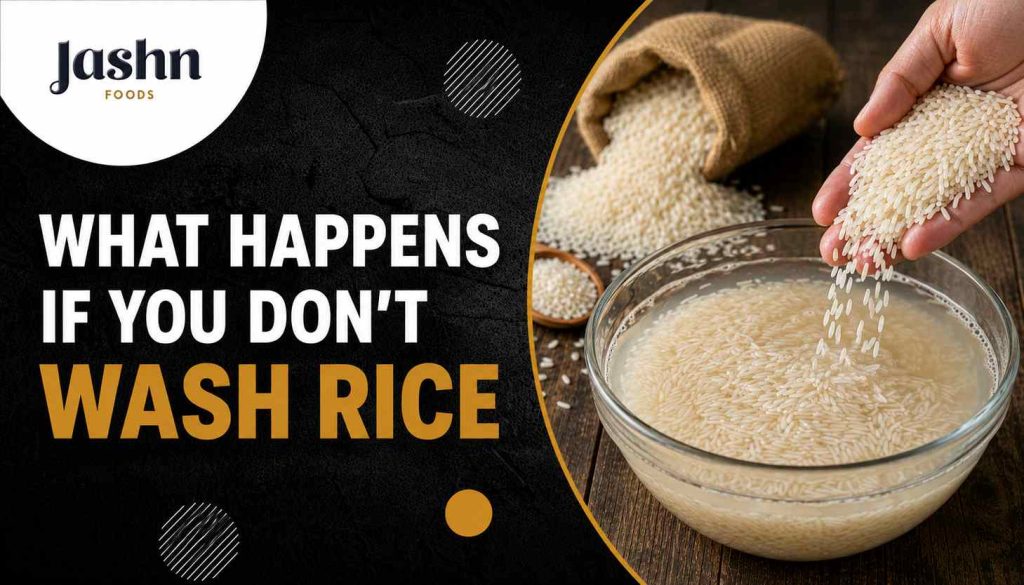
The process is simple. Place the rice in a bowl, add clean water, swirl gently, and drain. Repeat until the water becomes noticeably clearer.
You do not need to scrub the grains aggressively. Excessive rubbing can waste water and increase the loss of water-soluble nutrients.
The ideal number of rinses also varies by rice type. Some varieties need less rinsing because manufacturers process them differently.
For delicate dishes, consistency matters more than following an arbitrary number of washes.
When washing can matter more
Some recipes benefit more visibly from rinsing than others.
Steamed rice, pulao, fried rice, and biryani-style preparations often look better when individual grains remain distinct.
For these dishes, surface starch can affect the finished appearance. Washing may therefore become more useful before cooking.
The same principle applies across different cuisines. Rice dishes from India, the Middle East, Southeast Asia, Europe, and North America can use different cooking techniques.
Jashn Foods offers multiple rice varieties designed for different everyday and specialty preparations. Choosing the right grain for the recipe can make a bigger difference than simply changing the number of rinses.
Consumers searching for the best basmati rice brand should also consider grain quality, processing consistency, packaging, and intended use.
A strong brand should provide reliable product information instead of relying only on marketing claims.
Does washing rice reduce arsenic?
This question needs careful explanation.
Rice can absorb arsenic from soil and irrigation water more readily than many other crops. This issue has received attention from organizations including the FDA and WHO.
However, ordinary rinsing is not a guaranteed arsenic-removal method.
FDA research found that rinsing rice before cooking has only a minimal effect on arsenic content. Cooking rice in excess water can reduce inorganic arsenic more effectively, although it can also reduce certain nutrients.
WHO materials also describe traditional cooking practices in West Bengal, India, where washing followed by cooking in excess water reduced arsenic under suitable water conditions.
The key lesson is simple. Use clean cooking water and choose varied grains as part of a balanced diet.
For households concerned about long-term dietary exposure, relying on one preparation technique alone is not enough.
What about rice sold in India and abroad?
Indian consumers have access to many rice varieties, processing styles, and pack sizes.
Retail shoppers should check the package for product identity, processing details, date information, and storage instructions. Quality-focused manufacturers also maintain controls during milling, packaging, and distribution.
For businesses and bulk buyers, working with established basmati rice suppliers in India can simplify sourcing and quality consistency.
Jashn Foods operates from Haryana and supplies Indian rice to domestic and international markets. Its portfolio includes multiple rice varieties and processing forms for different culinary needs.
For global buyers, traceability and dependable specifications can matter as much as price.
A consistent grain profile helps restaurants, caterers, retailers, and foodservice operators maintain predictable cooking results across large batches.
Jashn Foods brings carefully processed rice for consistent taste, texture, and cooking results.
How should you wash rice correctly?
A simple rinsing method works well for most household cooking.
Start by measuring the required rice quantity. Place it inside a clean bowl and add enough drinking water.
Swirl the grains gently with your fingers. Drain the cloudy water carefully without losing too many grains.
Repeat the process one or two more times when appropriate. Stop when the water looks noticeably clearer rather than perfectly transparent.
Avoid washing rice repeatedly for long periods. Excessive rinsing can remove some nutrients and wastes both water and time.
Use fresh, safe water for the final cooking stage. Then follow the cooking instructions recommended for that specific rice variety.
This balanced approach avoids two common mistakes. You do not need to leave every grain completely untouched, but you also should not over-wash it.
So, should you always wash rice?
For many everyday dishes, rinsing rice is a sensible and practical habit.
It can remove loose surface material and improve the appearance of cooking water. It may also support the texture you prefer for certain rice dishes.
However, skipping the rinse once does not automatically turn a meal into a health hazard.
The bigger priorities remain quality sourcing, clean water, hygienic preparation, correct cooking, and proper food storage.
The evidence also shows that washing has trade-offs. It can remove some nutrients, while ordinary rinsing does not meaningfully reduce arsenic.
So, what happens if you don’t wash rice? Usually, you get more surface starch and a cloudier cooking process, while the nutritional impact depends on the rice and preparation method.
Jashn Foods encourages consumers to begin with quality rice and then use a cooking method suited to the grain. Good ingredients and sensible preparation work best together.
For home cooks, the goal should not be excessive washing. Instead, aim for clean preparation, consistent cooking, and the right rice for each meal.
Final takeaway
What happens if you don’t wash rice depends on the rice variety, processing, recipe, and cooking method.
Unwashed rice may release more surface starch into the pot. The cooking water can become cloudier, and the finished grains may feel different.
Yet washing is not a universal rule for every rice product. Scientific studies show that excessive washing can reduce certain nutrients, while ordinary rinsing has limited impact on arsenic.
The smartest approach combines trusted sourcing with sensible preparation.
Choose quality rice from a dependable producer such as Jashn Foods. Then rinse according to the variety and dish you plan to prepare.
That simple approach helps you balance cleanliness, texture, nutrition, and cooking convenience without turning rice preparation into a complicated routine.
Quality grains, consistent processing, and trusted rice for better everyday cooking.