
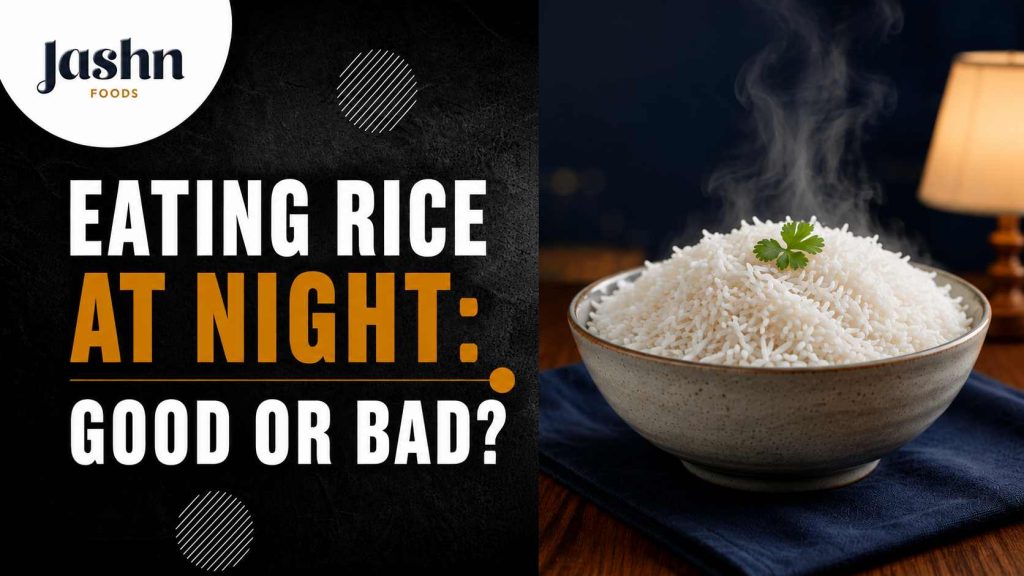
For most Indian households, rice at dinner is nothing unusual. It often sits on the table alongside dal, sabzi, curd, pickle, or even a comforting bowl of khichdi. At Jashn Foods, we know how closely rice is tied to everyday Indian food habits. But there is still one question people often ask: should you really be eating rice at night?
There is no simple “yes” or “no” answer. Eating rice after sunset does not automatically make it unhealthy. Your overall meal, the amount of rice you eat, how active you are during the day, and even the time you have dinner can matter much more.
Your dinner starts with better grain quality. Explore Jashn Foods rice varieties today.
Rice mainly provides carbohydrates, which your body uses for energy. Carbohydrates are an important part of a balanced diet, and WHO recommends choosing them largely from foods such as whole grains, vegetables, fruits, and pulses.
So, does rice have to disappear from your dinner plate? Not necessarily. India’s Dietary Guidelines for Indians 2024 include rice among cereal foods and recommend eating a varied diet that includes cereals, pulses, vegetables, fruits, dairy, and other food groups.
The bigger picture matters. Instead of worrying about whether rice is “bad” at night, look at how much you are eating and what you are eating with it. A balanced dinner can include rice too—something that fits comfortably into the way many Indian families have eaten for generations.
Eating rice at night good or bad: what really matters?
There is no strong scientific rule saying that rice must be avoided after 7 p.m. The bigger issue is usually the pattern around dinner.
Think about a typical late meal. You may come home hungry, serve yourself a large portion, add a rich curry, then finish with something sweet. The rice gets blamed, although the whole meal is responsible for much of the excess energy.
Meal timing can still matter. Research on late eating has found changes in hunger, energy expenditure, and metabolic responses under controlled conditions. One controlled study found that later meals increased hunger and reduced energy expenditure in adults with overweight or obesity.
That does not mean a bowl of rice at 9 p.m. automatically causes weight gain. It means your overall eating pattern deserves more attention than the clock alone.
A plate matters more than a food
A dinner made entirely of rice is not the same as rice served with dal, vegetables, and protein. The second plate has more variety and is usually more filling.
Portion size matters too. A small bowl can fit easily into many diets. A mountain of rice beside fried sides is another story.
This is where everyday habits make a difference. People often eat quickly at night because they are tired or extremely hungry. That can make a sensible serving look surprisingly small.
Try serving your rice first in a moderate quantity. Then fill more of the plate with vegetables and add a protein source. You may find that you feel satisfied without needing a second helping.
What rice does provide
Rice mainly gives you carbohydrates, which your body uses for energy. What you get from it can vary depending on the type of rice you choose. Brown rice, for instance, keeps more of the bran and germ, so it has more fibre than regular white rice. But that does not mean white rice has no place in your diet.
When you eat it with dal, vegetables, curd, eggs, fish, paneer, or another protein source, it can easily be part of a balanced meal. So when looking at the health benefits of rice, it makes more sense to consider the variety, portion and overall meal rather than deciding that rice is simply healthy or unhealthy.
Can rice at dinner affect blood sugar?
Yes, it can raise blood glucose because rice contains a substantial amount of carbohydrate. The size of the response varies from one person to another. Rice variety matters. So does portion size.
The rest of the plate matters as well. Adding vegetables, pulses, or protein can change the overall composition of the meal. Eating a smaller amount of rice can also reduce the total carbohydrate load.
Harvard reports that the glycemic index of rice varies substantially across varieties and processing methods. White rice generally has a higher glycemic index than brown rice, although individual values can vary.
For people managing diabetes, the answer should be personal rather than based on a blanket food rule. Meal plans may need to consider medication, glucose targets, exercise, age, and other health factors.
A qualified healthcare professional or dietitian can help make those decisions.
Wondering what to serve at night? Explore rice options suited to everyday meals.
Rice versus roti is not a simple competition
The debate over roti or rice which is better has been going on for years in Indian homes. There is no universal winner.
A whole-wheat roti can provide fibre, while white rice is easy to digest and often works well with Indian curries. Brown rice offers another option for people who prefer a whole-grain choice.
Your portion can easily matter more than the name of the staple.
Two large rotis with a heavy curry are not automatically lighter than a moderate serving of rice with dal and vegetables. Likewise, a small rice serving is not automatically healthier than any roti.
Choose based on your preferences, nutritional needs, and how the meal is prepared.
When dinner becomes too late
Late dinners deserve some attention, especially when they happen most nights.
Suppose you finish dinner moments before getting into bed. You may feel heavy, uncomfortable, or simply too full to sleep well. Some people notice this more than others.
The issue may not be rice at all. Oily gravies, fried foods, oversized portions, and desserts can add more difficulty.
A practical routine is to leave some time between dinner and bedtime. When your schedule does not allow that, keep the meal reasonably light.
There is also a bigger lifestyle point here. Sleep, movement, meal timing, and total calorie intake often overlap. Focusing on one ingredient while ignoring everything else can lead to the wrong conclusion.
What about rice for weight management?
If weight loss is your goal, you do not necessarily need to remove rice from dinner. Instead, look at your total intake across the day.
Breakfast, lunch, snacks, drinks, desserts, and dinner all contribute. A modest rice serving can fit into a calorie-controlled diet when the rest of the meal is sensible.
The problem often starts when rice becomes the largest part of the plate and vegetables or protein become side notes.
You can change that without giving up foods you enjoy. Use a smaller rice serving, add plenty of vegetables, and include a protein-rich food.
It is a simple adjustment, but simple habits are often easier to maintain.
Choosing the right rice for your routine
Rice does not have to look the same at every meal. Some days call for soft, comforting rice with dal, while other evenings suit pulao, biryani, lemon rice, or a simple rice bowl with vegetables.
If you are comparing rice brands in India, look beyond the price and packaging. Grain length, aroma, texture, consistency, cooking performance, and the type of dish you usually prepare can all help you make a better choice.
For everyday meals, you may prefer a rice that cooks easily and works well with dal and curries, while special dishes such as biryani or pulao may call for a more aromatic, long-grain variety. Jashn Foods offers different basmati rice options for everyday cooking as well as specific culinary preparations.
Simple ways to make a rice dinner lighter
You do not need complicated diet rules. A few everyday changes can be enough.
Start by serving a moderate quantity of rice. Keep vegetables visible on the plate rather than treating them as decoration.
Add dal, beans, curd, eggs, fish, chicken, paneer, or another suitable protein source. This can make the meal more satisfying.
Be careful with the extras. A bowl of plain rice is very different from rice cooked with generous amounts of oil, butter, or creamy sauces.
Drinks matter too. Sugary beverages can quietly add substantial calories without making you feel equally full.
And remember leftovers. Chilled cooked rice is often reused for the next meal, but food safety matters. Cooked rice should be cooled and stored promptly rather than left at room temperature for long periods.
Indian dinner habits deserve some context
Food habits are rarely identical across the country.
In South India, rice may appear with sambar, rasam, curd, or vegetables. In eastern India, rice often sits at the centre of a traditional fish-and-dal meal. In northern regions, roti may dominate, while rice still appears with rajma, chole, biryani, or pulao.
That variety is important.
A healthy eating pattern does not need to erase local foods. WHO notes that healthy diets vary with cultural traditions, food availability, individual needs, and dietary preferences.
The goal is to build a balanced pattern around foods people can realistically keep eating.
When you should take extra care
Some people need more personalized advice.
Those managing diabetes, kidney disease, obesity, or other medical conditions may need specific meal plans. Pregnancy, medication use, and certain digestive issues can also affect food choices.
In those situations, internet advice should not replace professional guidance.
For everyone else, an occasional late rice dinner is unlikely to define your health. Your routine across weeks and months matters far more than one plate.
So, should you eat rice at night?
The better answer to eating rice at night good or bad, is this: rice can be part of a healthy dinner when the overall meal and portion make sense.
There is no magic hour when rice suddenly changes from food into something harmful. Evidence around late eating suggests that timing can influence appetite and metabolism, but that is not the same as proving that night-time rice itself causes weight gain.
If you enjoy rice at dinner, there is usually no reason to fear it. Focus on the amount you serve and what you put beside it.
Keep vegetables and protein on the plate. Avoid turning every dinner into a very large meal. Give your body some time before sleep when possible.
Most importantly, judge your diet as a whole.
For Indian households, rice is not simply another carbohydrate. It is part of everyday food culture. With sensible portions and a varied plate, it can remain exactly that: a familiar, enjoyable part of dinner.
Disclaimer: This article is for informational and educational purposes only and does not constitute medical or dietary advice. The information provided should not be used as a substitute for professional medical consultation, diagnosis, or treatment. Always consult a qualified healthcare professional or registered dietitian before making significant changes to your diet, particularly if you have an existing medical condition or take medication.
Eating rice at night? Start with a rice variety that fits your daily meals.