
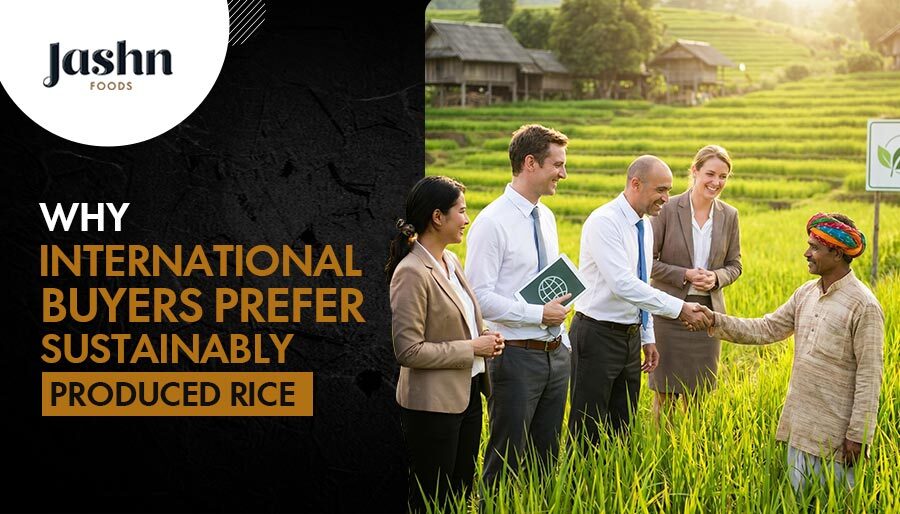
International rice trade has changed quietly but significantly over the past decade. Earlier, buyers were mainly focused on price, availability, and grain quality. Today, the conversation is broader—sometimes even messy in how it plays out in real procurement meetings. Sustainability, sourcing ethics, and long-term supply stability keep coming up again and again.
This is exactly why international buyers prefer sustainably produced rice when selecting long-term suppliers. It’s not really a trend anymore. In most contracts now, it’s just part of the checklist.
And honestly, a lot of importers will tell you privately—it’s about avoiding uncertainty later. Sustainable sourcing reduces the chances of sudden variation in crop output or shipment quality. That matters when you are moving containers every month, not just buying once.
In this shifting setup, exporters offering basmati rice from Jashn Foods are already operating closer to what global buyers are asking for, even if they don’t always say it directly.
Secure consistent quality and dependable global supply before peak demand cycles begin.
Understanding Why International Buyers Prefer Sustainably Produced Rice
There isn’t a single clean explanation for this. If you talk to different buyers, you’ll get slightly different answers.
Some will say it’s compliance pressure. Others will say it’s customer demand. A few will just say “less risk.” But underneath all of that, the pattern is the same.
Sustainably produced rice is seen as more stable over time. Not perfect. Not necessarily cheaper. Just more predictable. And predictability is something international buyers value more than anything else right now.
Retailers are also tightening sourcing policies, which pushes importers to be more careful. That pressure eventually reaches exporters.
So even when sustainability is not loudly discussed, it is still influencing decisions quietly in the background.
What Is Sustainably Produced Rice?
At ground level, it simply means rice grown without pushing the land too aggressively.
Farmers manage water more carefully. Soil is not treated like something that can be exhausted every cycle. Inputs are controlled instead of being pushed for maximum yield every season.
It sounds simple, but in reality it changes a lot over time.
The biggest difference shows up in consistency. Some years are good, some are not disastrous. That middle ground matters for exporters and importers dealing with bulk supply.
And it doesn’t stop at farming. Even storage and milling practices start affecting how “sustainable” the final export actually is.
Rising Global Demand for Sustainable Food Products
There’s no doubt demand is rising. But what’s more interesting is how buying decisions are changing alongside it.
Procurement teams are not just comparing suppliers anymore. They are also being asked to justify sourcing decisions internally.
That is one of the reasons why rice demand is growing worldwide, but procurement itself has become more complex, not simpler.
Supermarkets, hotel chains, and large food distributors are adding sustainability clauses into contracts. Sometimes strict, sometimes flexible—but they are there.
So suppliers are no longer just competing on availability. They are competing on “how responsibly can you supply at scale.”
Better Food Safety Standards Increase Buyer Confidence
Food safety used to be a compliance step. Now it’s more like a trust filter.
If a supplier fails at safety consistency, nothing else really matters.
Sustainable farming often reduces variability in chemical usage and field conditions. That indirectly improves final output consistency. Importers notice that quickly, especially those handling large retail supply chains.
Because once a shipment fails inspection or triggers doubt, it’s not just that order—it affects future orders too.
So buyers tend to stick with suppliers who don’t create surprises.
International Buyers Prefer Suppliers With Traceability
Traceability sounds technical, but in trade it’s very practical.
Buyers want to know: where did it come from, who handled it, and can that be proven if someone asks later?
That’s it.
This becomes even more important when dealing with reliable basmati rice manufactuers supplying multiple countries with different documentation requirements.
If traceability is weak, everything else becomes harder—clearance, audits, even negotiations. So buyers naturally lean toward suppliers who can show the chain clearly without hesitation.
Work with an exporter focused on quality stability, traceability, and long-term partnerships.
Sustainability Enhances Brand Reputation for Importers
Importers are under more pressure than people realize. They are not just moving goods. They are also defending sourcing decisions in their own markets.
Retailers, especially, use sustainability as part of how they position themselves. It shows up on packaging, websites, sometimes even in marketing campaigns.
That’s why private label rice programs are growing. Retailers want control over both product and narrative.
Sustainability fits into that because it’s easy to explain and increasingly expected.
Certifications Matter in Global Rice Trade
Certifications are not everything—but they help remove doubt early.If a supplier doesn’t meet basic standards, the conversation usually ends there.
But once that box is checked, buyers start looking deeper—delivery consistency, communication, pricing stability.
Even basmati rice price discussions happen after trust is partially built, not before.So certification is less about winning deals and more about staying in the room.
Why India Is Becoming a Preferred Source for Sustainable Rice
India has always been a major rice exporter, but expectations have shifted. It’s not just about volume anymore. Buyers want structure—documentation, consistency, accountability.
Many importers researching how to import rice from India are now focused more on process than product.
They want to know how stable supply will be across months and seasons, not just whether rice is available today. That shift is slow, but it’s real.
How Jashn Foods Supports Sustainable Rice Supply
In real trade, consistency matters more than positioning statements.
At Jashn Foods, the focus is on keeping supply steady and predictable for export buyers who don’t want variation between shipments.
Among its offerings, 1121 basmati rice remains one of the most consistently demanded varieties in international markets, mainly because it fits established cooking and trade expectations.
The goal is simple: fewer surprises, more repeat orders.
Explore rice solutions designed for wholesalers, distributors, and importers worldwide.
Conclusion
The rice trade is slowly moving into a more disciplined phase. Less guessing. More verification. Less transactional buying. More structured supply relationships.
Sustainability is part of that shift, but not as a buzzword—as a practical filter for risk and reliability.
And once buyers start thinking in those terms, the entire sourcing model changes with them.