
If you live in Chennai, rice is not something you think about much. It just sits at the center of almost every meal. Breakfast, lunch, dinner — it’s always there in some form. Over time, that simple daily habit has built a very large and active trade around it.
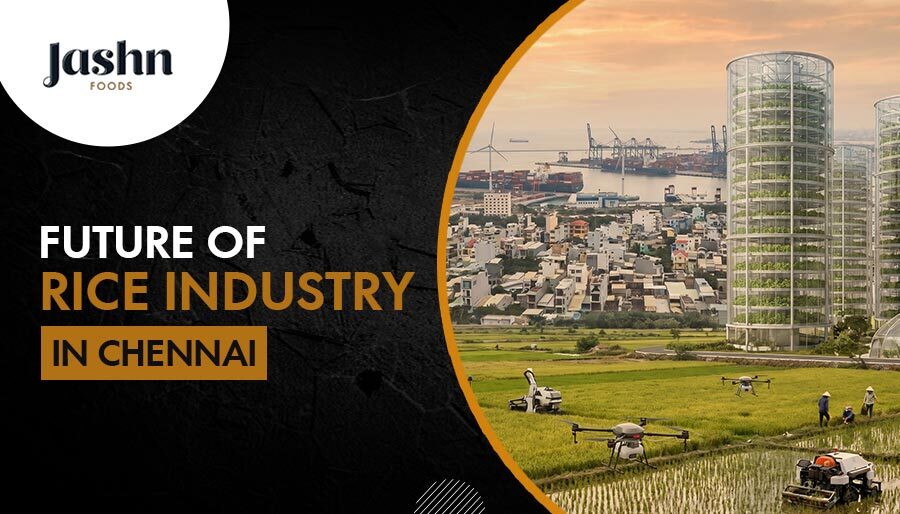
And now, that trade is changing in a way that is hard to ignore. The future of rice industry in Chennai is no longer just about wholesale buyers and local markets. It is being shaped by retail chains, online delivery systems, changing customer habits, and export demand that keeps growing quietly in the background.
Earlier, rice buying was straightforward. Most families had a fixed shop. They would buy the same rice again and again without thinking too much about it. If it looked fine and cooked well, that was enough. Packaging didn’t matter. Branding was not even part of the decision.
That is not how it works anymore. People look at rice differently now. They notice how clean it is, how it smells, how it cooks, and whether it feels consistent from one purchase to the next. Some are even willing to spend more just to avoid uncertainty. Because of this shift, suppliers have also changed how they work. Even premium players, including businesses offering basmati rice from Jashn Foods, are seeing more attention from buyers who don’t want surprises with quality.
Future of Rice Industry in Chennai: Growth, Innovation, and Changing Consumer Demand
The rice market in Chennai is still large and active, but it doesn’t move the way it used to.
Wholesale markets are still there and still important, but they are no longer the only source. Supermarkets have taken a strong position. Online grocery apps have added another layer. And now even small buyers compare options before deciding.
Chennai has always had an advantage because of its geography. Ports, road networks, storage facilities — everything supports movement of rice in and out of the city. That’s one reason suppliers here can handle both local and export demand without too much friction.
But the real change is coming from customers.
Restaurants don’t want variation anymore. One batch slightly different from the next is enough to affect food quality. Households are more aware too. They don’t just buy what is available; they look for what feels reliable. Even packaging has become part of that judgment.
So the pressure is clear — consistency matters more than ever.
Chennai’s Growing Demand for Quality Rice
Rice is still eaten every day in Chennai, but people are not as casual about buying it as they used to be.
Earlier, most people didn’t think too much. Whatever was available locally was fine. Now there is comparison. Some people want soft rice for daily meals. Some want longer grains that stay separate after cooking. Restaurants are even more specific because their reputation depends on it.
The importance of rice in Chennai hasn’t reduced at all. If anything, attention around it has increased. People now notice freshness, aroma, how it cooks, and whether it feels clean.
Packaging is another quiet change. Loose rice was normal earlier. Now many families prefer sealed packs. It feels safer and more reliable, even if the rice itself is similar.
In simple terms, buyers have become more careful. And that has changed the entire supply chain slowly.
Rise of Branded Rice in Chennai Market
Branded rice is no longer a “special category” in Chennai. It’s just part of normal shopping now.
People tend to stick with what works. Once they find a rice that cooks well for their taste, they usually don’t change it often. That habit alone has helped branded rice grow steadily.
At the same time, people compare more than before. Grain size, cooking result, packaging, even how long it stays fresh — all of that gets noticed now. Demand for the top rice varieties in Chennai has gone up simply because people are paying more attention to everyday food choices.
Supermarkets and mobile apps have made this even easier. Everything is visible at once, so comparison happens naturally.
Branding today is less about advertising and more about recognition. People just want something they already trust.
Technology Transforming the Rice Industry
The interesting thing about this industry is that it still looks traditional from outside, but inside, it has changed quite a bit.
Modern rice mills don’t rely only on manual work anymore. Machines handle cleaning, sorting, and grading. That has improved consistency and reduced a lot of variation that used to happen earlier.
Storage is also different now. Better warehouses, moisture control, and handling systems have reduced waste and damage.
Even small suppliers now track stock and dispatch using digital tools. It sounds simple, but it has made operations more stable and less messy.
Customers don’t see this part directly, but they feel it in the form of better quality and fewer issues.
Growth of Online Rice Delivery in Chennai
Online rice buying was not common earlier. People preferred to see what they were buying.
That mindset is still there, but it is not as strong anymore. If customers get consistent quality once or twice, they usually start trusting online orders.
Convenience is a big reason for this change. Carrying rice bags in a busy city is not easy. Home delivery makes life simpler.
Even small restaurants and hostels now depend on regular online supply because it saves time and effort.
And unlike before, buyers can now compare everything in minutes — price, brand, reviews, quantity. That transparency has changed behaviour quite a bit.
Export Opportunities for Chennai Rice Businesses
Chennai has always been naturally strong in trade because of its port.
Indian rice has steady demand in many countries. Buyers outside India usually care less about variety and more about consistency and cooking quality.
That opens space for rice exporters in India who can maintain standards without variation.
For suppliers in Chennai, exports are no longer limited to big companies. Even mid-level businesses are entering this space because logistics and communication are easier now.
But exports are simple in one sense — if quality slips, opportunities disappear quickly.
From retail shelves to exports, choose rice prepared for evolving demand.
Sustainability and Eco-Friendly Practices
Sustainability is slowly becoming part of conversations in this industry, though not in a loud way.
Customers are more aware now. They ask where products come from and how they are packed.
Some suppliers are trying to reduce packaging waste. Some are improving storage and transport efficiency.
Water usage in rice farming is also being discussed more seriously because it is a major issue in cultivation.
These changes are still early, but they are becoming part of how decisions are made.
Challenges the Rice Industry May Face
The industry is growing, but pressure points are also real. Transport costs are going up. Weather conditions are less predictable than before. Both affect supply and pricing.
Another issue is fluctuation in basmati rice price, which creates uncertainty for traders and exporters.
Competition is also wider now. Buyers have more choices, including alternatives they didn’t consider earlier.
Because of this, businesses cannot rely on old patterns anymore. Adaptation has become necessary, not optional.
Future Trends That Will Shape Chennai’s Rice Industry
Consumer behaviour is slowly but clearly changing the direction of the market.
More people are shifting toward healthier and less processed food options. At the same time, convenience-based food habits are growing in urban households.
Some suppliers are also observing the feature of rice industry in Kolkata and Hyderabad to understand how similar changes are playing out in other cities.
What stands out is that this is not local anymore. The shift is happening across India.Digital presence, consistency, and trust are becoming the real drivers of growth.
Opportunities for Rice Brands and Suppliers
There is still room in the market, but the way to grow has changed.Customers compare everything now — packaging, quality, reviews, and reliability.
This is especially true in premium segments where buyers compare multiple basmati rice brands before making a decision.
For suppliers, the focus has shifted. Selling once is not enough. Repeat trust matters more. And with online platforms, even smaller suppliers can reach far beyond their local area.
Conclusion
The rice industry in Chennai is not changing in one big moment. It is changing slowly, through everyday decisions made by buyers and suppliers.
Traditional trade is still present, but it now sits alongside modern retail, online systems, branding, and export demand.
Customers are more aware than before, and that alone is reshaping how the industry behaves.
And as long as rice remains a daily essential in Chennai, this market will keep evolving quietly in the background.
Partner with a rice brand focused on quality, consistency, and timely delivery.