
A buyer can approve a sample and agree on a price, yet still have questions about the shipment. Where was the paddy sourced? Does the test report refer to the lot being loaded? If a customer raises a concern later, can the supplier identify the batch?
Rice passes through procurement, milling, grading, packing, storage and transport before reaching an overseas warehouse. An importer may deal with one exporter, even though several people and facilities have handled the product.
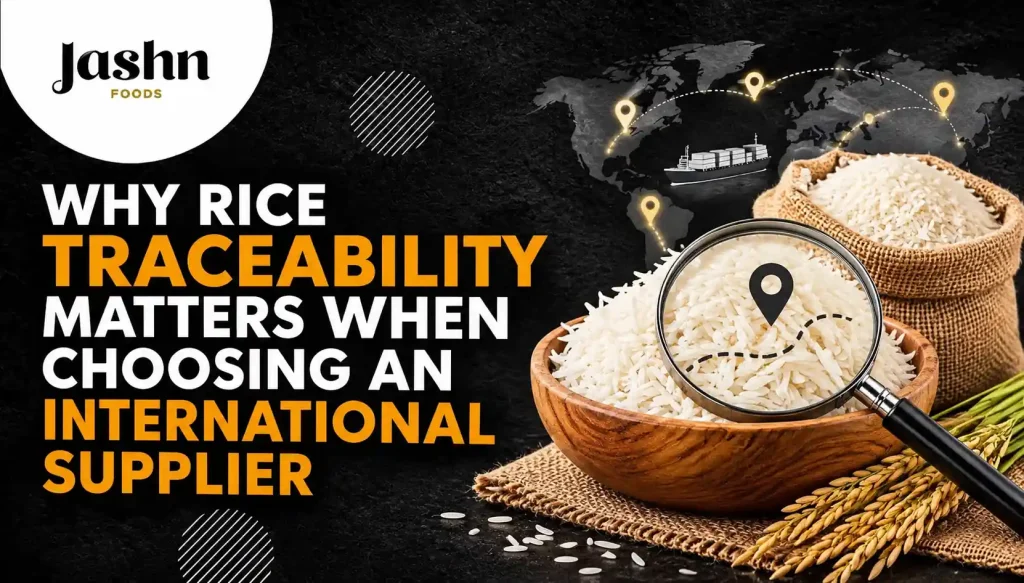
Traceability connects those stages. For buyers working with basmati rice exporters in India, it offers a clearer way to check product details and discuss a shipment. That matters whether the order is for retail packs, restaurant supply or bulk distribution.
What traceability should tell a rice buyer
In everyday terms, traceability means being able to follow a product through the supply chain. A supplier may record where paddy was procured, when it was milled, which grade was produced, how it was packed and when the finished lot was dispatched.
Records can be digital or paper-based. The format matters less than whether the information is organised and linked to the shipment. A batch number is useful only when the supplier can explain what it identifies.
A company profile may list 1121 basmati, 1509 basmati or steam rice. That tells buyers what the company offers. It does not confirm which variety or processing type is in a particular container. The purchase order, specification sheet and shipment documents should describe the same product.
Consider a wholesaler who receives two consignments a month apart. The first cooks well. The second has more broken grains than the buyer expected. If the lots are identified, the importer can raise a specific question. Without that link, it may be difficult to establish which shipment needs attention.
Origin is more than a line on the bag
Origin can affect how a product is sold, labelled and understood by customers. This is especially relevant to basmati, where buyers may be sourcing for a market that recognises the product by its name and expects particular characteristics.
An importer can ask where the paddy was sourced and what information supports the declared origin. For basmati, it is also sensible to confirm the variety and the basis for the product description. A familiar name printed on a bag is not, by itself, a complete record of origin.
India has an official initiative relevant to this subject. APEDA developed Basmati.Net to help record activities across the basmati value chain and support the authenticity of basmati rice traded in India and overseas. Buyers can read about it on the APEDA Basmati.Net page.
Check the consignment details against the product description in the documents.
Read the export documents as a set
Paperwork can look routine until two documents describe the goods differently. A product name on the invoice may not match the packing list. A laboratory report may show test results but leave the sample identity unclear. Those small gaps can lead to questions when the shipment is already moving.
A shipment may require a commercial invoice, packing list, certificate of origin, phytosanitary certificate, laboratory report and transport documents. Each serves a different purpose: the packing list describes packages and quantities, while the laboratory report records specified test results.
Importers researching how to import basmati rice from India should discuss destination-market requirements before confirming an order. Rules differ between countries and can change, so check current requirements with the relevant authority or a customs broker.
Agree on the product specification before production. Put the variety, processing type, grade, broken percentage, packing size, labelling and required tests in writing. Compare the final documents with that description before dispatch.
Get the right rice specifications and discuss your import needs with Jashn Foods.
The second shipment is the real test
A supplier can make a good first impression. The longer-term question is whether the next consignment will match the product the buyer approved.
A restaurant supplier needs rice that cooks consistently. A distributor wants the same grain appearance and pack details as before. A private-label buyer must protect the product promise printed on the bag. Changes in grain length, moisture or broken percentage can affect those expectations.
Not every variation means something has gone wrong. Crop conditions, sourcing, processing and storage can influence rice. But when a buyer notices a difference, lot-level records help narrow down the discussion: which batch was supplied, what specification applied and what checks were recorded?
Keep the approved sample and purchase order details for repeat orders.
At Jashn Foods, buyers can discuss basmati and other rice options based on their market, intended use and order requirements. Discussing variety, grain specifications, processing type and packaging before an order is placed helps establish what the buyer expects.
Ask what the quality report actually covers
A laboratory report is useful only when the buyer understands what was tested. Depending on the agreement, checks may cover moisture, broken grains, foreign matter, grain dimensions, pesticide residues or other parameters. Different markets and buyers may require different checks.
Check the sample or lot reference, test date, laboratory details and results. A report for an earlier lot should not automatically be treated as evidence for a new consignment.
Buyers sometimes ask whether Indian rice meets international quality standards. The answer depends on the destination country, product category and intended use. There is no single checklist for every shipment. Importers should identify the rules for their market and agree with the supplier on the checks and documents needed.
Raise these requirements before the goods are packed. If a buyer needs a particular test or certificate, discussing it after dispatch can complicate matters.
Compare suppliers on the same basis
Price matters, particularly on a large order. But quotations are useful only when they describe comparable goods. One offer may cover a specific variety, grade and packing size. Another may use a broad product description and leave those details open.
When businesses choose the right rice manufacturer for bulk orders, they should look beyond the rate per tonne. Consider the product range, ability to handle the required volume, communication, packaging options, export documentation and experience with the destination market.
Ask how the supplier identifies lots and who handles a discrepancy. Clarify responsibility for testing, labelling, packing, transport, port handling and export documents. The agreed Incoterm should make costs and risks clear.
Jashn Foods works with buyers sourcing rice from India for different business requirements. Importers can share their target variety, quantity, preferred packaging and destination market when discussing an order. These details help establish whether the proposed product is suitable before commercial terms are finalised.
Share your bulk requirements and get suitable rice sourcing options.
Put the price in context
The latest basmati rice prices can move with paddy availability, crop conditions, demand, processing expenses, freight and currency changes. The quotation may also reflect variety, ageing, grade, broken percentage, packaging, order volume and delivery terms.
Check the quotation date, validity, stock position, quantity and packing details. A price for a different specification is not a reliable comparison.
Traceability does not promise a lower price. It helps connect the agreed description with the shipment, especially when quotations cover different grades or processing types.
Keep the records after delivery
The work does not end when the container arrives. Retain the specification, invoice, packing list, test report and lot details with the receiving records. If a retailer or food-service customer raises a concern, the importer can refer to the shipment rather than trying to reconstruct the order from memory.
Lot identification also helps businesses track goods across warehouses and distributors.
Traceability is not a guarantee that every shipment will be problem-free. It cannot replace inspection, laboratory testing or compliance with local import rules. It does, however, give the buyer and supplier a shared set of facts when a question comes up.
Before ordering, ask what records will help identify the shipment later.
Choose a supplier you can question
Buyers should be able to ask about origin, variety, grade, processing, testing, packaging and shipment records—not just receive a general sales description.
At Jashn Foods, the discussion can start with the buyer’s requirements: preferred variety, quantity, packaging, quality specifications and destination market. Importers can share these details with our team to discuss suitable rice options and the information to review before confirming an order.
Traceability is more than a document requirement. Ask for records tied to the actual lot, check that they match the order and retain them after delivery. That gives both sides a sound reference for the next shipment.
Tell us your requirements and explore suitable rice options with Jashn Foods.