

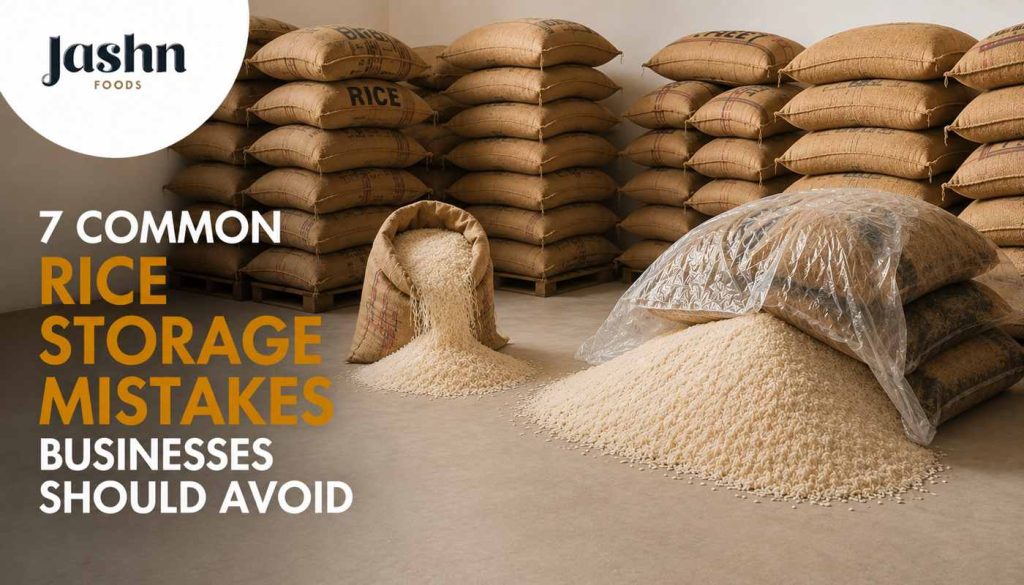
Rice storage looks straightforward until a warehouse starts losing stock, dealing with pests, or receiving quality complaints. The trouble often begins with small habits that nobody notices at first. A wet corner, a torn sack, or an old batch hidden behind new stock can slowly become an expensive problem.
That is why 7 common rice storage mistakes businesses should avoid matter to restaurants, wholesalers, distributors, retailers, caterers, and foodservice buyers. Proper storage protects more than rice. It protects margins, kitchen performance, customer trust, and purchasing budgets.
Indian basmati rice also needs careful storage because buyers expect clean grains, pleasant aroma, good texture, and consistent cooking results.
Choose quality you can trust with Jashn Foods.
7 common rice storage mistakes businesses should avoid
Rice does not usually spoil because of one dramatic mistake. Storage problems tend to build quietly.
A stack stays in the wrong place for weeks. Staff stop checking one corner. New stock keeps arriving. Eventually, someone opens a bag and notices something is not right.
Here are seven mistakes worth catching early.
1. Storing rice in a damp area
Moisture is one of the biggest enemies of stored rice. A warehouse can look dry while certain sections quietly collect humidity.
This becomes more important in India during the monsoon season. Rain enters through loading areas, doors stay open longer, and damp air can settle inside poorly ventilated rooms.
Check the less obvious places first. Look near walls, ceilings, windows, doors, and corners that receive little airflow.
A simple walk-through after heavy rain can reveal plenty. Watch for condensation, damp patches, musty smells, wet flooring, or bags that feel different from the rest.
Good ventilation helps keep conditions more stable. Regular inspections also give staff a chance to spot trouble before it reaches a large portion of the inventory.
2. Keeping rice bags directly on the floor
A clean-looking floor does not make direct storage a good idea.
The floor can transfer moisture to the packaging. Dust can collect around the bags. Insects and rodents may also find easier access to food stored at ground level.
Use sturdy pallets or suitable racks instead. Keep stacks raised and leave enough room for people to move around them.
The Food Safety and Standards Authority of India advises keeping food materials above the floor and away from walls. Its foodgrain warehouse guidance also recommends regular inspection, stock rotation, and pest-control measures.
This small adjustment improves both hygiene and visibility. Staff can clean around the stacks without shifting every bag
3. Ignoring temperature differences inside the warehouse
Many managers use one thermometer and assume it tells the whole story.
That works only when the warehouse has uniform conditions. Most do not.
A section under a metal roof can become far warmer during the afternoon. The area near an open loading gate may behave differently. A corner beside machinery can also trap heat.
Walk through the warehouse at different times of day. Notice which areas feel warmer or more humid.
Simple temperature and humidity meters can help staff track these changes. The goal is not to build a complicated laboratory. It is to catch unusual conditions before they become routine.
Keep rice away from direct sunlight and equipment that produces heat. A stable storage area usually creates fewer surprises.
4. Mixing older stock with fresh deliveries
This mistake happens in busy warehouses more often than people admit.
A fresh shipment arrives. Workers need space quickly. The new bags go wherever there is room. A week later, nobody remembers which batch was received first.
That creates a basic inventory problem.
Older stock can remain hidden while newer stock moves out. Later, staff may discover bags that have been sitting untouched for much longer than planned.
Mark receiving dates clearly. Give every batch an identifiable location. Arrange the storage area so older stock moves first.
FSSAI’s warehouse guidance recommends FIFO or FEFO rotation with appropriate records.
Good post harvest management in rice does not end when the product leaves the mill. Storage, handling, and stock movement still influence the condition of the product.
Avoid costly storage mistakes and start with professionally processed, quality-assured rice.
5. Selecting rice only because the quotation is cheaper
Price matters, especially when a business buys rice in large quantities. Still, a low purchase price can hide other costs.
Think about rejected bags, inconsistent cooking results, extra wastage, customer complaints, and unreliable deliveries. Those expenses rarely appear on the original quotation.
Before committing to a large order, look beyond the number on the invoice. Check grain appearance, packaging, consistency, supplier communication, and delivery reliability.
Businesses can compare rice quality before buying instead of judging the offer from price alone.
A sample order can be useful here. It gives kitchens and purchasing teams a chance to see how the product performs in actual use.
Jashn Foods supports commercial buyers looking for dependable rice quality and regular supply. A consistent source can make purchasing decisions easier from one order to the next.
6. Treating pest control as a once-in-a-while job
Pest problems rarely start with a warehouse full of insects.
Usually, the first signs are much smaller. You may notice a damaged bag, a few droppings, webbing, insects near a corner, or spilled grains under a rack.
Those signs deserve attention.
Clean spills as soon as they happen. Inspect doors, cracks, drains, pallets, and difficult corners. Keep waste away from stored food and avoid leaving unused material piled around the warehouse.
Staff should know what they need to report. A worker who notices a damaged bag should not assume someone else will handle it later.
Regular checks create a much better chance of finding an issue while it is still manageable.
FSSAI’s guidance also calls for hygienic storage conditions, pest prevention, and regular checks for contamination or deterioration.
7. Handling bags roughly and overlooking packaging damage
Rice can lose value without any visible spoilage.
A bag dragged over a rough surface may tear. A poorly stacked pile can crush lower sacks. Repeated rough handling can weaken packaging and increase grain breakage.
The solution starts with simple staff training.
Workers should know how to lift, stack, move, and load bags safely. Stacks should remain stable and manageable rather than reaching heights that make everyday handling awkward.
Check packaging at receiving. Check it again when the stock changes location. Give bags another quick inspection before dispatch.
When businesses evaluate rice brands, packaging deserves attention alongside grain quality and pricing. A strong pack gives the product better protection throughout storage and transport.
Reduce avoidable losses with the right rice supply and smarter storage practices.
Building a storage routine that staff can actually follow
The best storage system is usually the one people can maintain every day.
Start at receiving. Staff should check the quantity, packaging condition, batch details, and visible signs of moisture or pest activity. Anything unusual should get recorded before the stock moves deeper into the warehouse.
Next, give every product a defined location.
Different grades and varieties should not sit in a confusing mix of stacks. Clear labels save time during picking and reduce accidental product mixing.
Keep walkways open. Workers need space to inspect bags, clean the area, count stock, and move products safely.
Weather also deserves attention. During India’s monsoon months, humidity checks may need greater frequency. In hotter periods, warehouses with metal roofs can develop much warmer zones during the afternoon.
Exporters and international distributors should think further ahead. Rice may spend longer in storage or move through climates very different from the original warehouse.
A little planning at the beginning can prevent a lot of corrective work later.
Supplier quality and storage go hand in hand
Storage teams cannot fix every issue that begins before delivery.
When rice arrives with inconsistent quality or damaged packaging, warehouse staff inherit the problem. Purchasing decisions therefore have a direct connection with storage performance.
Businesses should buy rice from a credible rice manufacturer when they need dependable supply, clear specifications, and repeatable quality.
A reliable manufacturing partner can make receiving checks easier. It can also reduce uncertainty when the same products need to be reordered regularly.
Jashn Foods offers rice supply solutions for restaurants, retailers, distributors, caterers, and other commercial buyers. Consistent sourcing can help businesses plan inventory with greater confidence.
Why these mistakes affect more than the warehouse
A storage mistake may begin in one corner. Its impact can reach much further.
Imagine a restaurant receiving rice that behaves differently during cooking. The kitchen adjusts water levels, cooking times, and portioning. That creates extra work for staff.
A distributor faces another problem. Customers expect the next order to perform like the previous one. Inconsistent quality can quickly lead to complaints or product returns.
Retailers also depend on packaging appearance. A torn or dirty sack can influence how customers view the product before they even open it.
Storage, therefore, is part of the customer experience.
It is also part of cost control. Every damaged bag represents more than the value of the rice. There may be labour, handling, replacement, disposal, transport, and customer-service costs behind it.
That is why 7 common rice storage mistakes businesses should avoid should be treated as an operational issue rather than a housekeeping topic.
A practical approach for Indian and global businesses
Start with the basics and make them routine.
Keep the storage area clean and dry. Raise rice bags above the floor. Leave inspection space around stacks. Keep products away from heat and direct sunlight.
Record incoming batches and receiving dates. Rotate stock consistently. Inspect older inventory before dispatch, especially after long storage periods.
Review warehouse records every few weeks. Look for repeated patterns.
Are bags from one location getting damaged more often? Is one section becoming unusually humid? Are older batches repeatedly getting missed?
These patterns can reveal problems that a quick visual inspection will not.
For international operations, add shipment planning to the process. Consider transit times, destination climate, packaging strength, and expected storage duration before dispatch.
A strong supply partner makes this process easier. Jashn Foods can support businesses that require reliable rice for recurring commercial orders.
Final thoughts
Good rice storage is mostly about consistency.
The right warehouse does not need to look perfect every minute. It needs practical systems that workers can follow without confusion.
Control moisture. Keep stock off the floor. Watch temperature changes. Rotate older batches first. Stay alert for pests. Handle bags carefully. Choose suppliers with the same attention you give to price.
These habits protect the quality you paid for and reduce avoidable losses.
More importantly, they make daily operations calmer. Staff know where products belong. Purchasing teams know what needs replenishing. Managers can identify problems before they spread.
For businesses building dependable rice supply chains, Jashn Foods can be a practical sourcing partner for regular requirements.
Good storage protects the product. Good sourcing gives that storage a better starting point.
Planning your next bulk order? Choose rice built for quality, consistency, and reliable business supply.