
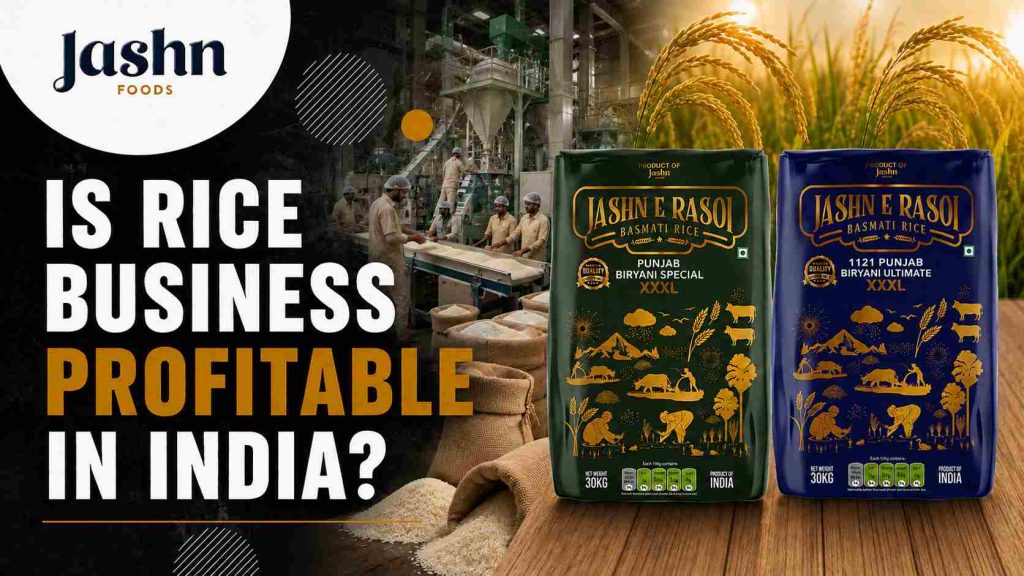
Rice is more than a staple food in India. It is also one of the country’s strongest agricultural industries. Millions of farmers, traders, processors, and exporters depend on it every year. Many entrepreneurs now ask, is rice business profitable in India before investing in this growing market.
The answer depends on your business model, product quality, target customers, and supply chain. India remains the world’s largest rice exporter and one of the biggest producers. Demand continues to grow across domestic and international markets. Businesses that maintain consistent quality and understand market trends often build stable and profitable operations.
The opportunity becomes even stronger when companies supply high quality basmati rice that meets buyer expectations and international standards.
According to the Ministry of Commerce and Industry and APEDA, India’s rice exports continue to contribute significantly to agricultural trade. Rising demand from Asia, the Middle East, Europe, Africa, and North America creates long-term opportunities for businesses that focus on quality and reliability.
Partner with Jashn Foods for premium-quality rice, competitive bulk pricing, and a reliable supply chain
Is Rice Business Profitable in India? A Complete Guide for Entrepreneurs and Exporters
Yes, the rice business offers strong profit potential for businesses that plan carefully and operate efficiently.
India produces more rice than almost any other country. This creates a steady supply for domestic consumption and exports. Demand remains stable because rice serves as a daily food for billions of people worldwide.
Profitability varies across different business models. Some entrepreneurs earn by trading rice locally. Others focus on processing, packaging, wholesale distribution, or exports. Premium varieties generally provide higher margins than standard grades.
Government support also strengthens the sector. Better infrastructure, export promotion, improved logistics, and digital marketplaces make business expansion easier than before.
However, success does not happen automatically. Companies must manage procurement costs, storage, transportation, quality control, and customer relationships carefully. Businesses that build trust usually achieve sustainable growth over time.
Get premium-quality rice, competitive pricing, and dependable supply from Jashn Foods.
Why Demand Continues to Grow
Rice consumption keeps increasing because of population growth and changing food preferences.
India’s population continues to expand every year. Urban households also purchase more packaged food products than before. This creates additional demand for branded rice across supermarkets and online platforms.
International demand remains equally encouraging. Many countries depend on Indian rice because of its consistent availability and competitive pricing.
Consumers now pay closer attention to food safety, packaging quality, and product traceability. Companies that invest in these areas often gain loyal customers.
The premium segment also continues to expand. Buyers increasingly choose trusted products from a recognized basmati rice brand because they associate branding with quality and consistency.
These market shifts create attractive opportunities for new and existing businesses alike.
The Market Offers Several Revenue Opportunities
The rice industry supports many profitable business models instead of only one.
Some businesses purchase paddy directly from farmers before selling processed rice. Others specialize in milling, grading, packaging, or distribution. Several companies focus entirely on exports.
Value addition increases earning potential. Better packaging, customized branding, premium varieties, and specialized products often command higher prices.
Many entrepreneurs also enter the market through private label rice production. They manufacture rice for retailers, supermarkets, and international buyers under customized brand names.
This approach reduces marketing expenses while creating recurring business relationships with large buyers.
Businesses can also diversify by supplying hotels, restaurants, institutions, and food processing companies.
Multiple revenue channels reduce dependence on a single customer segment.
Factors That Influence Business Success
Several practical factors determine whether a rice business remains profitable over the long term.
The first factor is raw material quality. Better paddy usually produces higher milling recovery and improved customer satisfaction.
Processing efficiency also matters. Modern machinery reduces grain breakage and improves output quality. Lower wastage directly improves profit margins.
Storage conditions deserve equal attention. Proper warehouses protect rice from moisture, insects, and contamination. Good storage helps maintain quality throughout the supply chain.
Pricing strategy also plays an important role. Businesses should balance competitive pricing with sustainable profit margins instead of chasing short-term sales.
Reliable supplier networks create another advantage. Long-term relationships with farmers and procurement partners improve consistency and reduce operational risks.
Technology now supports business growth as well. Inventory management software, digital payments, customer relationship systems, and online marketing improve efficiency while reducing manual work.
Finally, reputation influences repeat business. Buyers prefer suppliers that deliver consistent quality, transparent communication, and timely shipments.
One example includes experienced basmati rice manufactuers in India such as Jashn Foods, which focus on quality control, modern processing, and reliable supply for domestic and international buyers.
Understanding Costs Before Investing
Every business requires careful financial planning before operations begin.
Investment requirements vary according to the business model. Trading requires lower capital than manufacturing or exports. Processing facilities involve machinery, land, labor, utilities, and storage expenses.
Working capital also remains essential. Businesses must purchase inventory before receiving payments from customers. Cash flow management therefore becomes equally important.
Transportation costs fluctuate throughout the year because of fuel prices and seasonal demand. Packaging materials also influence the overall cost structure.
Insurance, certifications, quality testing, and compliance expenses should never be ignored. These investments protect the business while increasing buyer confidence.
Entrepreneurs should prepare realistic financial projections instead of relying on optimistic estimates. Conservative planning usually creates stronger long-term businesses.
Government schemes, bank financing, and agricultural business loans may reduce the financial burden for eligible entrepreneurs.
Careful budgeting helps businesses survive market fluctuations while maintaining healthy profit margins.
Request a customized quote and discover margins designed for bulk buyers.
Profit Margins Depend on the Business Model
Profit margins vary because every segment operates with different costs and customer expectations.
Rice traders usually earn moderate margins through high sales volumes. Their profitability depends on procurement prices and efficient distribution.
Processors often achieve better returns because they add value through cleaning, grading, polishing, and packaging. Modern equipment can also improve recovery rates and reduce grain losses.
Branded retail businesses generally enjoy stronger margins than bulk suppliers. Customers willingly pay more for trusted quality, attractive packaging, and consistent taste.
Exporters can also generate healthy profits when they build long-term relationships with overseas buyers. Stable contracts reduce uncertainty and support predictable revenue.
Businesses that diversify across multiple customer segments often reduce financial risks while maintaining steady cash flow.
Building a Successful Milling Business
Many entrepreneurs consider processing because it creates additional value before the product reaches the customer.
Anyone researching how to start rice mill business in India should first evaluate raw material availability, electricity supply, transportation access, and local market demand.
Modern milling equipment improves efficiency and reduces broken grains. Better recovery directly supports higher profitability over time.
Location also influences operational success. Mills located near farming regions often reduce transportation costs and maintain fresher inventory.
Food safety certifications strengthen buyer confidence. They also improve opportunities in organized retail and international trade.
Business owners should invest in skilled staff, preventive maintenance, and quality inspection. These practices reduce operational disruptions and improve customer satisfaction.
International Markets Create New Opportunities
Global demand continues to strengthen India’s position in the rice industry.Many importers choose Indian suppliers because they offer diverse rice varieties, competitive pricing, and reliable production capacity.
Businesses planning to export rice from India should understand destination country regulations before signing contracts.
Each market has different requirements for packaging, labeling, phytosanitary documents, and quality standards. Meeting these requirements improves buyer confidence and reduces shipment delays.
Digital communication has simplified international business development. Companies can now reach overseas distributors through trade fairs, B2B marketplaces, and direct marketing.
APEDA also supports exporters through market development initiatives and export promotion activities.
A strong export strategy allows businesses to diversify revenue beyond domestic demand.
Global Buyers Compare More Than Product Prices
International buyers evaluate several factors before selecting a supplier.
Consistent quality usually ranks above short-term discounts. Buyers also examine production capacity, delivery timelines, certifications, and communication standards.
Currency fluctuations influence purchasing decisions throughout the year. Freight rates and logistics conditions also affect final landed prices.
Many overseas businesses compare the cost of importing rice from India with sourcing options from other exporting countries before making procurement decisions.
Indian suppliers remain competitive because of large production volumes, established export infrastructure, and extensive experience in international trade.
Companies that respond quickly and maintain transparent communication often secure repeat orders.
Challenges Every Business Should Prepare For
Every profitable industry also presents operational challenges.Raw material prices can change during different harvest seasons. These fluctuations affect procurement planning and inventory management.
Weather conditions sometimes influence crop production. Lower harvests may increase market prices and reduce supply availability.
Transportation delays can also disrupt delivery schedules. Businesses should therefore maintain realistic inventory planning and reliable logistics partners.
Competition continues to increase across domestic and export markets. Companies must differentiate themselves through quality, service, and consistency instead of price alone.
Changing government regulations may also influence trade policies and export procedures. Business owners should monitor official updates regularly.
Successful companies prepare for these risks instead of reacting after problems occur.
Long-Term Outlook Remains Positive
The future of India’s rice industry continues to look encouraging.
Population growth supports domestic consumption. International demand also remains strong across several major importing regions.
Consumers increasingly prefer packaged, traceable, and premium food products. This trend creates opportunities for businesses investing in quality assurance and branding.
Technology will further improve production efficiency, inventory management, and customer engagement. Businesses adopting digital tools may gain a competitive advantage.
Sustainability is becoming another important factor. Responsible farming practices, efficient water use, and environmentally friendly packaging are attracting greater attention worldwide.
Companies that adapt to these changing expectations will likely remain competitive for many years.
Final Thoughts
The Indian rice industry offers significant opportunities for entrepreneurs willing to build a well-managed business.
Strong domestic demand, expanding exports, and growing interest in premium rice continue to support long-term market growth. Success, however, depends on careful planning rather than quick decisions.
Businesses should focus on quality, operational efficiency, customer relationships, and market understanding. These factors create sustainable profitability over time.
Whether you plan to trade, process, package, or export rice, long-term success comes from delivering consistent value instead of competing only on price.
With the right strategy, disciplined operations, and continuous improvement, the rice business can become a rewarding and scalable venture in both Indian and international markets.
Partner with a trusted manufacturer before the best market opportunities pass you by.