

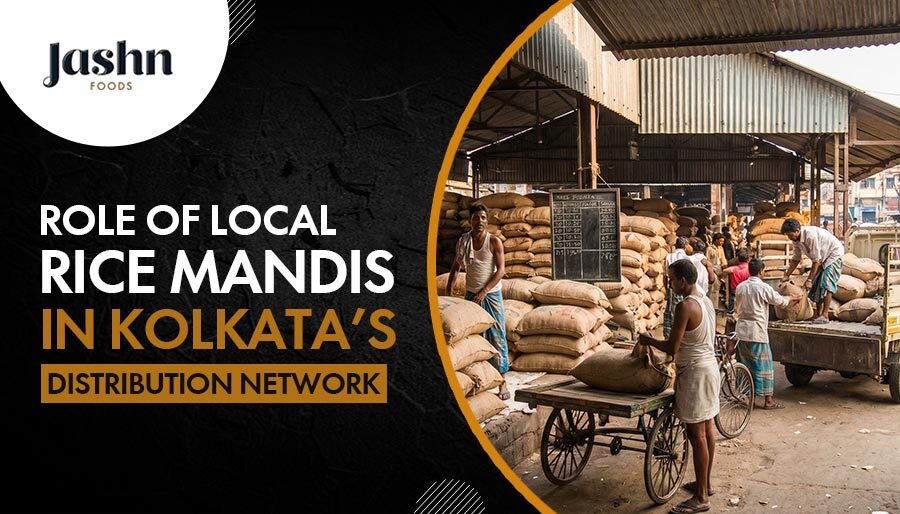
If you stand near any rice wholesale market in Kolkata early in the morning, you don’t need an explanation of how important it is. You can see it.
Trucks come in before the city fully wakes up. Sacks are dragged across wet ground. Someone is already arguing about rates while someone else is checking grain by hand, letting it slip through fingers the way traders have done for years.
The role of local rice mandis in Kolkata’s distribution network isn’t something that sits neatly in theory. It is visible in this everyday chaos that somehow keeps the entire city supplied with rice without interruption.
Even now, despite supermarkets and app-based grocery delivery, these mandis still handle a huge share of bulk movement. The system is old, yes—but it hasn’t stopped working.
Suppliers dealing in premium rice categories, including basmati rice from Jashn Foods, still move through this same channel because it reaches buyers in a way no centralized system fully replaces.
Secure dependable supply before seasonal demand starts affecting your business margins.
Understanding the Role of Local Rice Mandis in Kolkata’s Distribution Network
Rice in Kolkata doesn’t behave like a seasonal commodity. It behaves like a constant requirement.
The demand for rice in Kolkata is steady enough that wholesalers rarely get a “quiet” day. Even when business slows slightly, the next wave of buyers is already forming—small retailers, hotel suppliers, catering units, and neighborhood grocery shops.
Walk inside any mandi and you’ll notice something interesting: most transactions are not formal. There’s no long decision-making process. Buyers already know who they want to deal with.
It’s not written anywhere, but everyone understands it—trust matters more than anything else here.
A retailer usually returns to the same trader not because they have to, but because they already know what to expect in terms of quality and price behavior.
And for small shops especially, this system works because they don’t need bulk pressure. They buy what they can sell quickly and come back again when needed.
How Rice Mandis Keep Supply Moving
Rice doesn’t magically appear in Kolkata’s markets. It moves through a long chain—farmers, mills, transporters, warehouses, and finally wholesale mandis.
But the mandi is where things actually get organized.
Without it, retailers would have to deal with multiple suppliers scattered across regions. Instead, they come to one place and choose from whatever is available that day.
There’s a kind of rhythm to it. Stock arrives, gets checked, gets priced, and moves out again—sometimes within hours.
When demand spikes—festivals, weddings, or sudden bulk orders—this rhythm speeds up. Nobody waits for perfect conditions. Traders adjust in real time.
A restaurant owner, for example, doesn’t want paperwork or delay. They want to see the grain, decide quickly, and move on. Mandis allow exactly that kind of transaction.
Price Regulation and Market Competition
Prices in this system don’t sit still. They react to everything—rainfall patterns, transport fuel costs, arrival of fresh stock, even sudden demand from outside regions.
Inside mandis, you rarely hear “fixed price” conversations. It’s more like ongoing negotiation that changes slightly throughout the day.
The movement in basmati rice price is usually picked up first by people inside the market itself. Traders don’t wait for official updates—they see it in incoming supply and buyer behavior.
Competition is constant, and that is what keeps things balanced.
A buyer doesn’t feel trapped. If one trader’s rate feels high, they move a few steps and check elsewhere. That simple mobility is what keeps pricing in check.
There is no central control here. Just constant comparison.
Explore premium rice varieties suitable for retailers, distributors, and restaurants.
Why Traders and Commission Agents Still Matter
If you remove traders and commission agents from this system, it would stop functioning properly within days.
They are not just middlemen. They are the people who remember patterns—who buys what, in what quantity, and at what time of year.
A good trader doesn’t just sell rice. They manage flow.
Commission agents help connect supply gaps. When one trader runs out, they already know who might still have stock available. When delivery needs coordination, they step in without formal instructions.
Most of this doesn’t happen through systems or software. It happens through phone calls, quick conversations, and long-standing familiarity.
It’s not structured—but it works because everyone involved understands the unspoken rules.
Transportation and Storage Support
Rice movement into Kolkata is constant, and it depends heavily on timing.
Trucks arrive from different production regions every day. Some come early, some get delayed, some arrive just in time for peak market activity.
Storage nearby keeps things stable. Not everything gets sold immediately, so traders hold stock until demand catches up.
During monsoon season, this becomes more important than usual. Roads slow down. Deliveries become uncertain. But markets don’t stop—they adjust.
Fuel prices and traffic congestion inside wholesale zones add another layer of pressure. Sometimes delays are expected; they’re just part of the system now.
Still, supply continues because the network is flexible rather than rigid.
Quality Control and Changing Buyer Preferences
Buying rice today is not what it used to be.
Earlier, most buyers cared mainly about price. Now they look at grain shape, aroma, consistency, and how it cooks.
Inside mandis, traders separate stock almost instinctively. Good grain, mixed grain, lower-grade stock—it’s all sorted quickly because experienced buyers notice everything.
Restaurants are usually the most careful buyers. Especially those preparing Kolkata biryani rice, where even small variations in grain can affect the final dish.
And customers are more aware too. They notice quality differences faster than before, which pushes traders to be more careful in handling and storage.
Clean storage isn’t optional anymore. It has become part of reputation.
Consistent grain quality can make a noticeable difference in repeat customer satisfaction.
Challenges Faced by Traditional Rice Mandis
This system is not untouched by change.
Supermarkets, online grocery apps, and branded retail chains have changed how urban buyers behave. Convenience is a strong competitor now.
Inside mandis, however, many processes are still traditional—manual checking, physical billing, verbal negotiation.
That slows things down when pressure is high.
Price swings also create uncertainty. A sudden transport cost increase or supply disruption can change margins overnight.
Smaller traders feel this more sharply because upgrading systems or adopting technology isn’t always easy for them.
Still, mandis survive because they offer something simple: direct access and immediate trade without layers in between.
The Future of Rice Distribution in Kolkata
The change happening here is not loud. It’s gradual.
Digital payments are becoming normal. Messages and phone calls now replace some of the earlier face-to-face dependency.
But relationships still matter. Many buyers continue dealing with the same traders they have known for years.
At the same time, packaged rice demand is rising, and that is pushing visibility of basmati rice brands across both retail and wholesale spaces.
So the system is slowly splitting into two layers—traditional physical trade and lightweight digital support around it.
But the mandi itself is still central.
Why Reliable Rice Suppliers Matter in This Network
No distribution system works without consistency.Retailers need steady supply. Restaurants need predictable quality. Wholesalers need uninterrupted flow.
That’s where rice manufacturers in India play a stabilizing role. They maintain production consistency and support bulk distribution that feeds into wholesale networks.
When supply is stable, everything downstream becomes easier. When it isn’t, the entire chain feels it immediately.
Discover rice solutions designed for wholesale buyers and food service businesses.
Conclusion
Kolkata’s rice mandis are not just marketplaces. They are working systems that run every day without needing attention from the outside world.
They connect production to consumption through movement, trust, and constant adjustment.
Even as retail formats evolve, these mandis continue to stay relevant because they solve a very basic problem in a very direct way—getting rice where it needs to go, without delay, and without unnecessary complexity.