
The global rice industry is undergoing a remarkable transformation. Ask anyone who’s worked in rice trading for more than ten years and they’ll tell you the same thing the job barely resembles what it used to be.
From cultivation and processing to distribution and international trade, digital innovations are changing the way rice moves across borders and reaches consumers. How technology is reshaping the rice trade isn’t really up for debate anymore. The harder question is who’s keeping up and who isn’t.
Buyers expect more now faster answers, clearer sourcing, fewer surprises. Whether it’s a premium export variety or an everyday staple, including basmati premium rice, the companies still doing things the old way are starting to feel it in lost deals and slipping margins.
Discover premium varieties and streamlined procurement solutions for international markets.
Understanding How Technology is Reshaping the Rice Trade
Farming Changed First
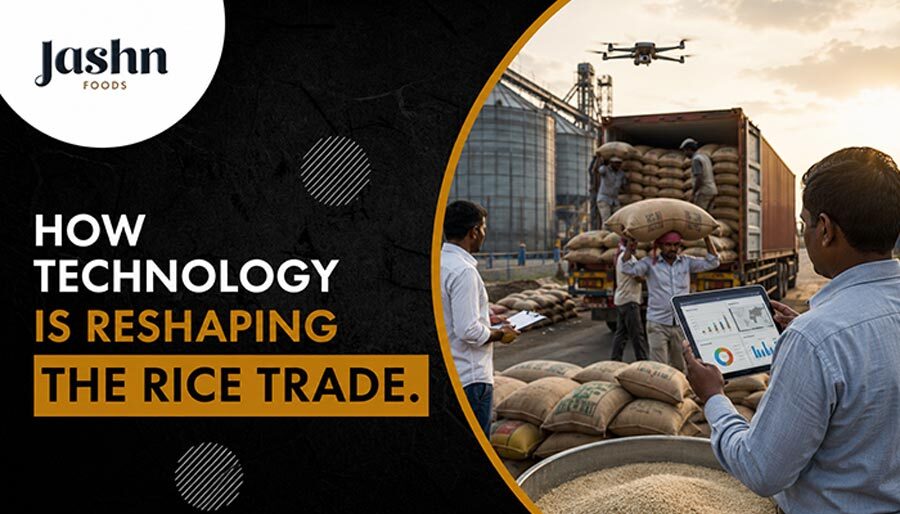
Drones, soil sensors, satellite imagery none of this is new technology anymore, but it’s only recently become normal on actual working farms rather than just demo plots run by agritech startups. A farmer checking soil moisture on a phone instead of guessing based on feel sounds small. It isn’t. Multiply that decision across thousands of acres and you get real differences in yield, real reductions in wasted water and fertilizer, and noticeably fewer crop losses during unpredictable weather seasons.
This matters more than it sounds like it should. A more efficient farm at the bottom of the chain means a more stable, more predictable supply at the top of it which is exactly what processors and exporters downstream depend on to plan inventory and meet contracts on time.
Supply Chains Got Transparent
Ask any exporter about the worst part of the job ten years ago and most will mention the same thing: not knowing where a shipment actually was, or why it was stuck. Digital tracking fixed a lot of that. Warehouse automation fixed more of it, cutting down on misplaced inventory and the kind of manual counting errors that used to throw off entire orders. Suppliers, logistics companies, and buyers can now coordinate in something close to real time instead of waiting on phone calls, faxed documents, and paperwork that took days to clear.
It sounds boring. It’s not fewer delays means fewer spoiled shipments, fewer angry buyers, fewer margins eaten by mistakes nobody caught in time. Over a year of shipments, that adds up to real money saved.
Data Beats Guesswork
Rice demand isn’t stable. It shifts by region, by season, by currency swings nobody saw coming, and by local harvest conditions halfway around the world. Analytics platforms exist because guessing wrong is expensive, and the industry has gotten tired of guessing. Companies now study things like the global rice market size alongside much narrower local signals weather patterns, import regulations, even social trends around food to figure out where stock actually needs to go and when.
Quality Control Got Objective
Optical sorters catch broken or discolored grains faster and more consistently than a person staring at a conveyor belt for eight hours straight. Moisture sensors keep storage rooms exactly where they need to be, which matters enormously over months of warehousing before a shipment even leaves port. None of it replaces human judgment entirely it just removes the kind of inconsistency that used to slip through on a tired shift or a rushed inspection.
Buyers notice. Consistency is, frankly, what keeps them coming back order after order.
Exports Got Less Painful
Nobody’s claiming export documentation is fun. But digital platforms have cut down a lot of the back-and-forth fewer forms get rejected, fewer shipments get held up at customs over something that could’ve been caught earlier in the process. And for buyers trying to understand the cost of importing rice from India, more transparent data on freight rates, tariffs, and currency fluctuations makes the whole negotiation less of a guessing game and more of an informed conversation.
Buying Rice Got Easier
Compare a few suppliers, check reviews, place the order what used to take weeks through agents and middlemen now takes an afternoon, sometimes less. That shift has put more pressure on suppliers to actually compete on value, not just on long-standing relationships. Buyers go looking for basmati rice price at best price because, for the first time, they actually can compare offers side by side instead of relying on a single contact’s word.
Connect with a trusted rice partner and ensure uninterrupted inventory throughout the year.
Trust Became Verifiable
Buyers don’t have to take a supplier’s word for where the rice came from anymore they can trace it back, field by field if they want to. That’s part of why sourcing through a name like Indian basmati rice supplier such as Jashn Foods feels lower-risk than working with an unfamiliar name with no verifiable track record. The information is just there, available, instead of taken on faith or a handshake.
Competition Got Faster
It’s about how fast a company can act on what customers are actually telling them, and how quickly they can turn feedback into changes. The brands earning a reputation as some of the best Indian rice brands right now generally aren’t the ones spending the most on advertising they’re the ones paying the closest attention to feedback loops and adjusting their offerings fast.
What’s Next, Already Here
Blockchain traceability is past the experimental stage in a handful of exporting regions, with pilot programs already showing measurable gains in buyer confidence. AI demand forecasting is further along than a lot of people assume, increasingly capable of flagging shifts weeks before they show up in sales data. IoT-monitored storage is becoming standard rather than a selling point, and sustainability has stopped being a marketing line buyers are actually asking pointed questions about it now, which means companies have to make it real rather than just claim it.
The Bigger Picture
The companies adjusting now aren’t doing it because it’s trendy. They’re doing it because buyers already expect this level of visibility, and the ones who can’t provide it are going to lose deals to the ones who can. Five years from now, the gap between the two will probably be obvious to anyone paying attention to who’s still in business and who isn’t.
Explore premium rice solutions that help you stay competitive in a rapidly evolving trade landscape.