
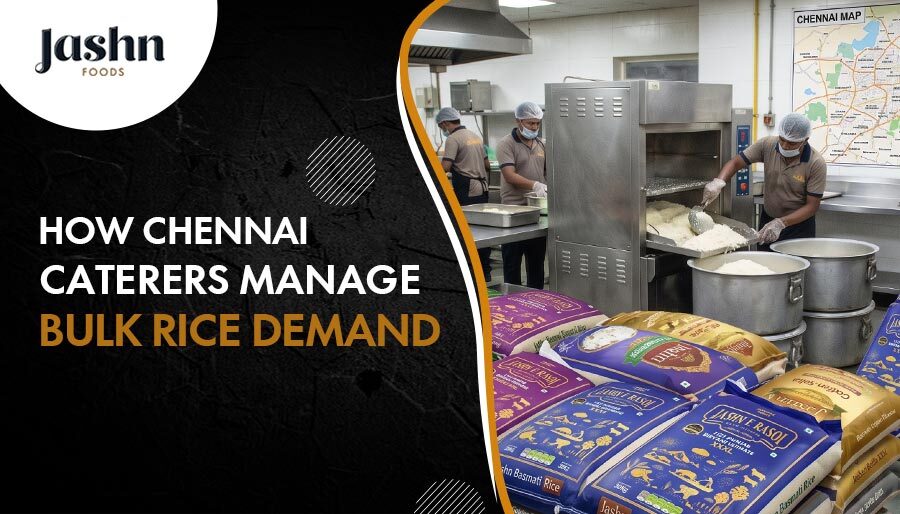
Spend a little time around any large-scale food setup in Chennai and you start noticing a pattern—nothing really happens by chance. Especially not rice. On the plate it may look simple, but getting it there in the right way takes a lot of quiet preparation. When you look at How Chennai Caterers Manage Bulk Rice Demand, it comes down to staying steady even when the scale is high.
There’s no room for shortcuts here. Most caterers depend on what they’ve learned over years of handling different kinds of gatherings. One of the first things they sort out is where they’re sourcing their rice in Chennai, because once the cooking begins in bulk, there’s no easy fix if something goes wrong. Getting that part right early makes the rest of the process much smoother.
How Chennai Caterers Manage Bulk Rice Demand Through Strategic Planning
Before any cooking begins, there’s always a bit of quiet groundwork. Caterers try to understand the full picture—how many people are expected and what the menu looks like.
They don’t just take a rough guess and move ahead. Most of the time, they think about similar events they’ve handled in the past. That helps them arrive at a number that feels realistic. Even then, they leave some room for variation, because guest counts don’t always stay fixed.
They also think about timing. Rice has to be ready when it’s needed. If it’s cooked too early, it doesn’t hold up well. If it’s rushed, the quality suffers. Planning this in advance makes a big difference.
Understanding Guest Volume and Consumption Patterns
Over time, caterers start to notice how people actually eat. Some take smaller portions, while others go back for more without thinking twice.
In certain setups, rice is served more than once, which naturally increases how much is needed. In others, people serve themselves, but having more dishes often leads to higher overall consumption anyway.
They also factor in the time of day. Meals served in the middle of the day usually see more intake compared to early morning or late evening. These small observations help them plan without going overboard.
Selecting the Right Type of Rice for Each Dish
Choosing the right grain is something caterers don’t take lightly. Different dishes need different textures, and matching the two matters.
For simpler preparations, softer rice tends to work better because it mixes easily. But when a dish needs a bit more structure and aroma, something like basmati rice is often the better choice.
Once large-scale cooking starts, there isn’t much scope to adjust. That’s why this decision is made ahead of time.
Working Closely with Reliable Suppliers
Most caterers prefer sticking with people they already trust. Working with dependable rice suppliers in Chennai helps them avoid unnecessary issues.
It’s not just about getting enough quantity. They also need the quality to stay the same every time. Even small differences can become noticeable when cooking in bulk.
Some also keep a backup option ready. It’s a simple step, but it helps if something unexpected comes up.
Bulk Procurement and Advance Booking
Caterers usually don’t wait until the last moment to arrange their supplies. Once the details are clear, they move ahead with securing what they need.
Buying early helps them avoid sudden price changes, especially during busy periods. It also ensures the required stock is already in place.
This gives them one less thing to worry about later.
Storage and Inventory Management Practices
After the rice is delivered, proper storage becomes important. Large quantities need clean and dry spaces with good airflow.
Most caterers follow a simple habit—older stock gets used first. This keeps everything fresh and reduces the chances of spoilage.
They also keep an eye on basic things like moisture. These checks may seem routine, but they help maintain consistency.
Efficient Cooking Methods for Large Gatherings
Cooking in large quantities is less about speed and more about control. Caterers usually work in batches instead of doing everything at once.
This helps them maintain the same texture across all servings. Each batch is checked before moving on.
Timing is handled carefully. Rice is generally prepared closer to serving so it doesn’t lose freshness. Teams with experience know how to manage this without rushing.
Logistics and On-Site Coordination
Getting everything to the venue is another step that needs attention. From raw materials to equipment, everything has to arrive on time.
Once there, work is divided clearly. Some focus on cooking, others handle serving, and a few manage coordination.
When roles are clear, things run smoothly without confusion.
Handling Last-Minute Changes and Demand Surges
Even with careful planning, changes can still happen. Extra guests or timing shifts can increase demand suddenly.
To manage this, caterers usually keep a small buffer. They also stay in touch with suppliers who can arrange quick deliveries if needed.
The idea is to adjust quietly so the flow of service isn’t disturbed.
Balancing Cost and Quality
Managing cost while keeping quality intact is always part of the process. Caterers try to get this balance right through planning.
Buying in bulk helps control costs, and accurate estimates reduce waste. At the same time, they avoid cutting corners where it matters.
This balance helps them deliver consistent results.
The Role of Market Awareness in Decision-Making
Caterers who keep track of the rice market in Chennai usually plan better. They know when it’s the right time to buy.
They’re also familiar with different rice varieties in Chennai, which helps them choose what fits each dish.
This kind of awareness builds over time.
Why the Right Supplier Makes a Difference
In the end, the source of the rice plays a direct role in the final outcome. Consistency matters more when cooking in large quantities.
Many caterers prefer working with names like Jashn Foods because they know what to expect every time.
In some cases, they also work with basmati rice exporters to source specific grains when needed.
Conclusion
If you look closely at How Chennai Caterers Manage Bulk Rice Demand, it really comes down to doing the basics properly. There’s no single formula—just planning ahead, choosing the right sources, and staying ready for changes. Over time, these practices become part of how caterers work, and that’s what allows them to handle large numbers without letting the pressure show.