
Rice packaging used to be an afterthought. In many wholesale markets, it still was until recently. Buyers would open a sample, check grain length, maybe smell it, and move on. That was the decision-making process for years.
Now it’s not that simple.
Walk into any modern store and you’ll notice something subtle has changed. People turn the packet around. They press it slightly. They look at how tightly it’s sealed. Some even check how “fresh” the rice feels just by holding it. That behaviour alone explains why the benefits of vacuum packaging for premium rice are being talked about more seriously across the industry.
Rice is sensitive in ways people don’t always think about. Once it starts interacting with air and moisture, even slowly, the quality begins to drift. Aroma fades. Texture becomes inconsistent. And in long storage cycles, especially during transport, even a decent batch of basmati rice can lose the character it had at the milling stage.
Customers remember products that stay fresh longer.
Understanding the Benefits of Vacuum Packaging for Premium Rice
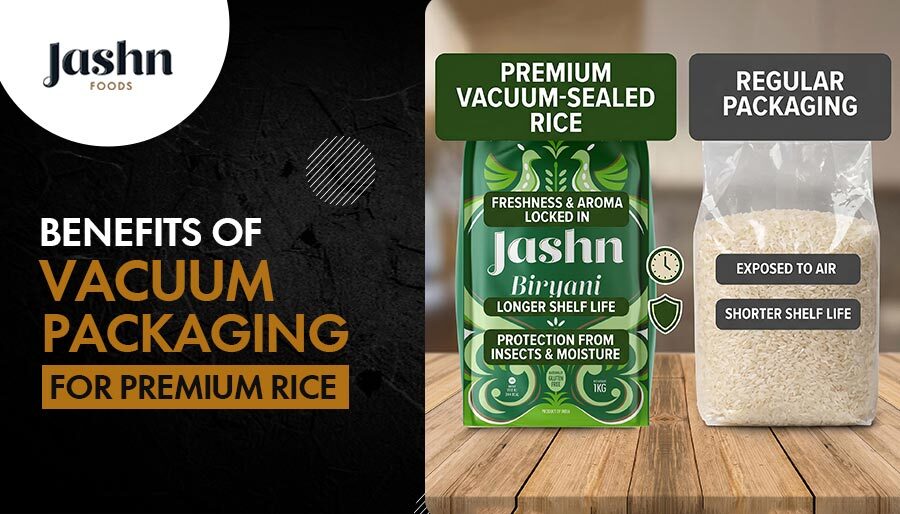
Vacuum packaging is not complicated in principle. Air is pulled out of the pack, and the bag is sealed tightly so that outside elements don’t keep interacting with the grain.
That’s really the core idea.
What changes after that is time. Rice behaves differently when it’s not constantly exposed to oxygen and humidity shifts. It stays more stable. It doesn’t age in the same unpredictable way that loosely packed rice does.
In practice, this matters most when stock sits in warehouses or moves through long supply chains before reaching a kitchen.
Helps Maintain Freshness for Longer
Freshness in rice is not always obvious at the store. It shows up later, when it’s cooked.
If rice has been properly stored, it behaves differently in the pot. The grains separate better, the aroma feels natural, and the texture doesn’t feel “flat”.
Vacuum sealing helps preserve that behaviour by limiting how much the grains interact with air over time. It’s not about making rice “better” than it is—it’s about slowing down the small losses that happen during storage.
That difference becomes noticeable in premium categories where customers expect consistency every time they open a pack.
Reduces Moisture-Related Damage
Moisture is one of the quiet problems in rice storage. It doesn’t always show up immediately, which is why it causes trouble later.
Even small exposure over time can affect how rice behaves when cooked. In humid regions, this risk increases during monsoon months or in poorly controlled storage spaces.
Vacuum packaging helps reduce that exposure simply by tightening the environment around the grain. There’s less room for moisture exchange, which keeps the rice closer to its original state.
It’s not a perfect shield, but it does make the storage conditions far more predictable.
Cleaner Packaging Improves Buyer Confidence
People respond to packaging faster than they respond to labels or brand claims. That’s just how food buying works now.
If a packet looks loose, dusty, or poorly sealed, it creates hesitation—even if the rice inside is good.
Vacuum packaging removes a lot of that doubt. The sealed structure signals care and control. It also reduces the chances of contamination during handling, especially in long distribution chains where products change hands multiple times.
That “clean” impression is often enough to influence purchase decisions.
Modern buyers expect freshness, hygiene, and safer storage.
Supports Longer Shelf Stability
Shelf life is not just a technical detail for retailers—it directly affects how much stock can be managed without loss.
Rice that stays stable for longer gives distributors breathing space. It doesn’t force quick liquidation or frequent stock rotation due to quality concerns.
Vacuum packaging helps extend that stable window. The rice doesn’t degrade as quickly in storage, which reduces waste and improves planning across supply chains.
For businesses handling bulk volumes, that stability quietly matters more than most people realise.
Packaging Now Shapes Brand Image
In many ways, packaging has become part of the product identity itself.
That’s why the importance of branding and packaging in rice business has increased so sharply in the last few years.
A well-packed product doesn’t just protect rice—it changes perception. It feels more controlled, more reliable. On a crowded shelf, that perception often decides what gets picked up first.
Vacuum packs, in particular, tend to look more “finished”. That visual consistency helps brands stand out without changing the product inside.
Useful for Long-Distance Export Shipments
Export logistics are tough on food products. Rice may travel through multiple ports, containers, and storage yards before it reaches its final destination.
Every stage adds risk—temperature changes, humidity shifts, rough handling.
Vacuum packaging reduces some of that uncertainty by keeping the product sealed more tightly through the journey. It doesn’t eliminate all risk, but it helps maintain a more consistent condition until delivery.
This is also why many importers prefer sourcing from a reliable manufacturer of Indian basmati rice who understands how packaging impacts real-world shipping outcomes.
Packaging Can Influence Product Value
Pricing in rice markets isn’t just about grain quality anymore. Presentation plays a subtle role in how value is perceived.
A tightly sealed, clean-looking packet naturally feels more premium. It signals better handling and control.
In some retail environments, that perception even affects how customers interpret the Indian basmati rice price, especially when comparing similar-looking products side by side.
It’s not always rational, but it is consistent.
Easier Storage and Better Handling
From a logistics perspective, vacuum packs are simply more manageable.
They stack more cleanly, take predictable shapes, and reduce small handling issues like leakage or spillage.
For warehouses and distribution centres, that predictability reduces friction. It makes large-scale movement smoother and less error-prone.
These are not dramatic improvements, but they add up in bulk operations.
Why Rice Brands Are Upgrading Packaging Standards
The rice market has become more competitive, but also more informed.
Buyers are not just comparing taste anymore. They are comparing consistency, packaging quality, and trust signals.
Vacuum packaging helps brands meet those expectations without changing the rice itself. It protects what is already there and reduces variation between batches in real-world conditions.
That consistency is becoming a key part of competitiveness.
How Jashn Foods Focuses on Product Protection
In rice distribution, what happens after processing is just as important as the milling stage itself.
Jashn Foods focuses on maintaining product integrity through careful packaging and handling practices that support stable quality during storage and transport.
The goal is simple—what leaves the facility should reach the customer in the same condition, without unnecessary degradation along the way.
Stronger packaging can improve customer trust instantly.
Conclusion
Vacuum packaging has become less of a “modern option” and more of a practical requirement for premium rice handling.
It supports freshness, reduces moisture exposure, stabilises shelf life, and improves how the product holds up during transport.
But beyond the technical side, it also changes how customers perceive the product. And in today’s market, that perception is often just as important as the rice itself.