
Durga Puja has a way of taking over everyday life in Bengal. Even before the actual days begin, there is a different rhythm in homes. Someone is buying groceries, someone is deciding the menu, and someone is already talking about which pandal will serve the best bhog this year.
Food becomes part of all these conversations, almost automatically. And somewhere in all of this, rice ends up being the quiet constant. The role of rice in Durga Puja feasts and offerings is not something people usually write about in detail, but it is something everyone experiences.
It shows up in bhog, in home-cooked meals, in offerings during prayers, and in those simple plates people share after coming back from pandal hopping. In many homes, basmati rice also makes its way into festive cooking, especially when guests are expected.
Sourced the right rice for this festive season before demand peaks.
Understanding the Role of Rice in Durga Puja Feasts and Offerings
If you’ve ever been in a Bengali home during Durga Puja morning, you’ll know how early things start. The kitchen light is usually on before the rest of the house wakes up properly. Rice is washed and kept aside without much discussion. It’s just part of the routine.
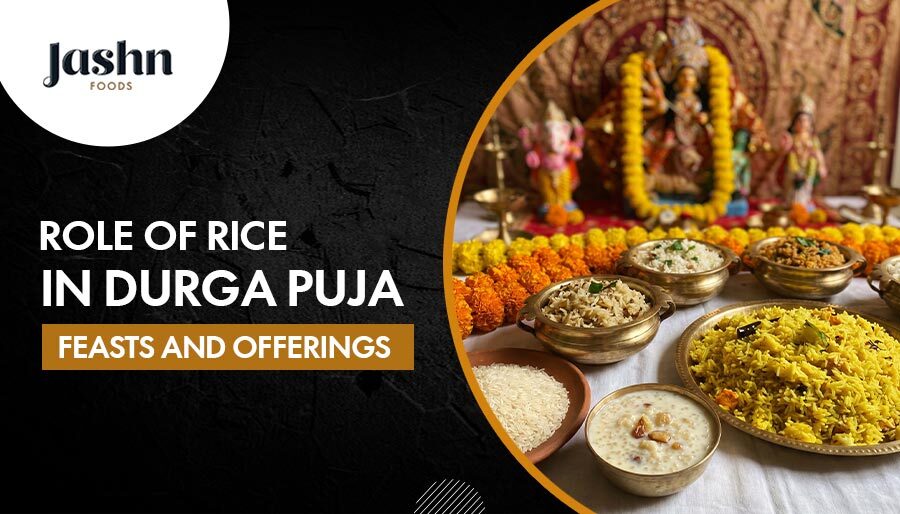
Nobody really announces it, but rice decides the base of most meals during these days. Khichuri for bhog, plain rice for lunch, maybe payesh if someone feels like making it that day. And somehow, all of it feels right only during Puja.
There’s also a strange emotional layer to it. People don’t talk about it much, but food during Durga Puja carries memories. A plate of khichuri eaten at a pandal, standing in a long queue, or rice and curry eaten at home after returning tired in the evening. These things stay longer than the festival itself.
Rice fits into rituals too, not just meals. It is used during prayers and offerings, almost like it belongs everywhere without needing attention.
Historical and Cultural Connection Between Rice and Durga Puja
In Bengal, rice was never just food. It was life in a very direct sense. Most families depended on it, lived around it, and planned their year based on harvests.
Durga Puja usually came around a time when homes felt a little fuller, both with people and with stored grains. Relatives would visit without much planning. Guests staying for meals was normal, not something special.
So food naturally became the centre of the festival. And rice was the easiest way to feed everyone together. One pot could become many plates.
Over time, this habit turned into tradition. Even now, even in cities, the pattern remains the same in many homes.
These days, with bigger gatherings and organised community cooking, many organisers depend on leading basmati rice suppliers in India such as Jashn Foods, simply because feeding large crowds needs consistency more than anything else.
But the feeling around rice hasn’t really changed. It still feels like home food during Puja.
Rice as a Sacred Offering in Durga Puja Rituals
Rice also shows up in rituals, not just in cooking. It’s there in small ways that people almost stop noticing after a point.
During pushpanjali, people offer rice along with flowers. At home pujas, rice is kept near the deity before the rituals begin. Priests use it in different parts of the ceremony too.
In Kolkata’s bigger pandals, you’ll notice how bhog distribution becomes almost like a system running in cycles. Cooking, serving, finishing, starting again. Rice is always part of that flow.
The interesting thing is, nobody really stops to think about it during the festival. It’s just there, like incense smoke or the sound of the dhaak.
And maybe that’s why it feels so natural.
Popular Rice Dishes Served During Durga Puja
Ask anyone what they remember about Durga Puja food, and rice dishes will come up almost immediately.
Khichuri Bhog
This one is everywhere during Puja. Simple, warm, slightly spiced. Eaten fast when you’re hungry after standing in a queue. Somehow it never feels heavy even when you’re full.
Mishti Pulao
This usually shows up at home lunches. A bit sweet, a bit rich. Some families use 1121 basmati rice because it gives that soft, separate grain texture that looks good on a festive plate.
Payesh
Payesh is slow food. It takes time, patience, and someone standing near the stove more than once to check if it’s done. And still, it disappears quickly once served.
Choose rice varieties ideal for khichuri, payesh, and festive pulao.
Simple rice meals
Honestly, not everything during Puja is elaborate. Many days it’s just rice, fried potatoes, maybe a vegetable curry, eaten together before heading out again.
Community Feasts and Shared Moments
One thing that doesn’t really change in Durga Puja is the bhog experience.
At pandals, you can see long queues forming without anyone complaining. Volunteers are busy, steam rises from big pots, and people wait with plates in hand. It doesn’t feel formal. It feels familiar.
You end up eating with people you don’t know. That part is normal. Nobody thinks too much about it.
And rice is right at the centre of all that. It’s simple enough for large groups and comforting enough for everyone.
Later, people remember the experience more than the food itself.
How Rice Quality Impacts Festive Cooking
During Puja, even people who don’t usually care about cooking details suddenly start paying attention to rice.
Because it shows.
If the grain breaks, you notice. If it sticks too much, you notice. If it cooks right, you also notice.
Pulao needs long grains. Payesh needs softness. Khichuri needs balance.
And somewhere in the middle of shopping, people also start comparing basmati rice prices, especially when buying in larger quantities for guests or community cooking.
It’s not complicated. But it matters more during festivals than on normal days.
Changing Food Habits During Durga Puja
Food habits have changed, no doubt about that.
Earlier, everything was cooked at home. Now there are catering services, restaurant deliveries, pre-packed ingredients, everything.
But during Durga Puja, people still go back to certain foods without planning it too much.
Khichuri at a pandal. Payesh at home. Rice with simple sides after a long day outside.
Modern or traditional, the pattern repeats itself every year.
Choosing the Right Rice for Durga Puja Celebrations
Most families already know what works for what dish. It’s usually learned over time, not from recipes.
Long grains for pulao. Softer rice for desserts. Something reliable when guests are coming.
That’s why many households stick to a trusted basmati rice brand during festivals. Nobody wants surprises when cooking for a crowd.
Even small things like aroma or grain suddenly matter more during these days.
Choose grains that deliver consistency, aroma, and traditional taste.
Conclusion
Durga Puja is a mix of noise, food, people, and memories that don’t always form a clear pattern.
And in between all of it, rice quietly stays present.In rituals, in meals, in pandals, in homes.
Not highlighted. Not discussed much. Just there, year after year, as part of how the festival feels.