
If you walk into two different homes in Kolkata around lunchtime, chances are both kitchens are cooking rice—but not the same kind.
That’s the thing about rice in Kolkata. It’s not just a staple, it’s a choice people care about. The variety changes depending on what’s being cooked, who’s eating, and sometimes even the day of the week.
In some homes, you’ll still find the same rice their parents used. In others, there’s a mix—something traditional for comfort meals, something lighter for everyday use, and something premium kept aside for dishes like biryani rice.
And if you compare that with food habits in other cities—say, how rice in Chennai is often paired with more fermented or soupy dishes—you start to see how regional preferences shape everything.
Rice Varieties Popular in Kolkata: An Overview of What People Actually Use
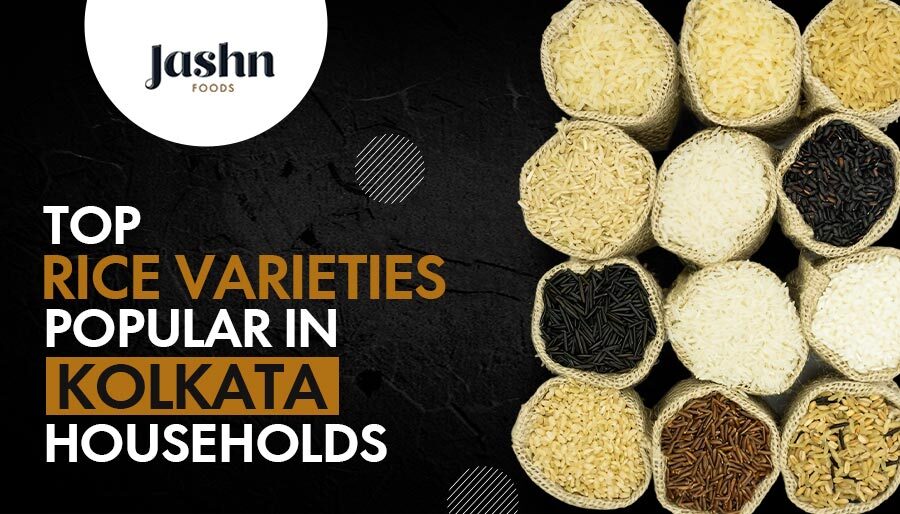
Most Kolkata households rotate between a few common types:
- Gobindobhog rice for traditional dishes
- Basmati rice for biryani and special meals
- Sona Masoori for regular cooking
- Atop rice for simple daily food
- Parboiled rice in more traditional setups
- Brown rice in health-conscious homes
That mix usually covers everything from weekday lunches to festival cooking.
The Rice That Feels Like Home: Gobindobhog
There’s a reason this one keeps coming up whenever Bengali food is mentioned.
Gobindobhog is short-grain, slightly sticky, and has a very distinct aroma. It’s the kind of rice you notice the moment it’s cooked. Not overpowering—just… familiar.
People usually bring it out for:
- Khichuri during the monsoon
- Payesh on special occasions
- Puja bhog
It’s not everyday rice in every household, but when it’s used, it’s intentional.
Basmati Rice and Kolkata Biryani—Hard to Separate the Two
You can’t really talk about biryani in Kolkata without talking about basmati.
Long grains, light texture, that aroma when the lid comes off—it all matters. Good biryani rice isn’t just about length; it’s about how the grains stay separate and still carry flavor.
That’s where sourcing becomes important. Experienced basmati rice manufacturers in India focus heavily on aging and consistency, because even a slight difference shows up on the plate.
At Jashn Foods, that’s exactly where the attention goes—making sure the rice doesn’t just look good uncooked, but performs the way people expect when it’s actually used.
What Gets Used Every Day: Sona Masoori and Atop Rice
Not every meal is a celebration, and most homes aren’t cooking biryani every day.
That’s where simpler varieties come in.
Sona Masoori is one of those practical choices—light, easy to cook, and works with almost anything. It doesn’t demand attention, which is exactly why people like it.
Atop rice, on the other hand, is more traditional. It’s raw rice (not parboiled), cooks soft, and goes well with the kind of meals people eat daily—dal, sabzi, fish curry.
If you’ve ever had a basic Bengali lunch, chances are it was one of these.
Parboiled Rice: Still Preferred in Many Homes
Parboiled rice doesn’t get talked about as much, but it’s still widely used.
It has a firmer texture and holds nutrients better because of the way it’s processed. Some people prefer it simply because it feels heavier and more filling.
It’s also one of those habits that tends to stick—if a household has used it for years, they usually don’t switch.
Brown Rice Is Slowly Finding Its Place
This is more recent.
You’ll see brown rice mostly in urban households where people are trying to make small dietary changes. It’s not replacing traditional rice completely, but it’s becoming part of the mix.
Usually for:
- Lighter dinners
- Diet-focused meals
- People managing sugar intake
It’s less about tradition and more about lifestyle.
Choosing the Right Rice Isn’t Random
If you ask around, most people won’t explain it in technical terms—but they do notice differences.
Things like:
- Whether the rice smells right while cooking
- If the grains stay separate or turn mushy
- How it feels after eating (light vs heavy)
That’s why consistency matters so much. Established suppliers, including large-scale rice manufacturers in Hyderabad, often focus on standardizing quality so people get the same result every time.
A Few Things People Do (But Rarely Talk About)
Not rules—just habits you’ll see in many kitchens:
- Basmati gets soaked before cooking (helps it elongate)
- Rice is rinsed more than once (to remove extra starch)
- People eyeball water instead of measuring it exactly
- Cooked rice is left to sit for a bit before serving
None of this is complicated, but it makes a difference.
Where Brands Fit Into All This
Most people don’t think about brands first—they think about the result.
But over time, they stick with what works.
That’s where Jashn Foods comes in. The idea isn’t just to offer variety, but to make sure whichever rice someone picks—whether it’s for daily meals or biryani rice – it behaves the way they expect.
Because once a household gets used to a certain texture or aroma, switching becomes difficult.
Final Thought: It’s Not Just Rice, It’s Preference
The more you look at it, the clearer it becomes—there’s no single “best” rice in Kolkata.
There’s just:
- What works for a specific dish
- What a family is used to
- And what feels right on a given day
That’s why kitchens don’t stick to one type. They adapt.
And that’s probably what keeps Kolkata’s food culture as rich as it is.