
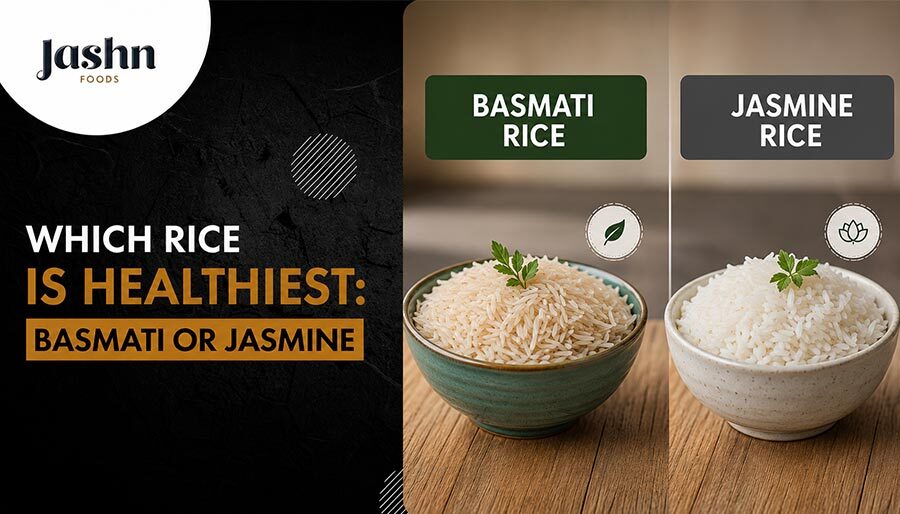
A customer messaged us asking, basically, which rice is healthiest, basmati or jasmine. Not the first time someone’s asked. Probably won’t be the last either. It’s a fair thing to wonder about, because on a shelf they look almost interchangeable. Long grains, good smell, both turn up in kitchens from Lucknow to Bangkok. But your body doesn’t treat them the same way once you’ve actually eaten them.
If you’re tracking blood sugar, or just trying to stop guessing your way through grocery shopping, this matters more than people assume. At Jashn Foods we source high quality basmati rice straight from farmers in Punjab, so I’ve had this conversation more times than I can count, and no, there isn’t a one-line answer. It really comes down to what you’re making, and why you’re making it.
Discover varieties that complement your wellness goals without compromising flavor.
Which Rice is Healthiest: Basmati or Jasmine – The Basics First
Basmati comes from the foothills of the Himalayas, mostly Punjab, Haryana, and a few pockets of Pakistan. Long, slender grains. That nutty smell that fills the kitchen before the lid even comes off. Jasmine rice is a different story altogether, it’s from Thailand, softer, a little sticky, with a light floral note that’s hard to mistake for anything else.
They look almost the same sitting on a shelf. They are not the same once cooked, and they’re definitely not the same once digested. Starch makeup, growing conditions, even how each one’s milled, it all adds up to a real nutritional gap, not just a flavor thing.
Comparing the Two on Actual Health Markers
Most comparisons between basmati vs jasmine rice come down to one number: glycemic index. Basmati usually sits in the 50–58 range. Jasmine can climb up to 68–80, sometimes higher depending on how it’s cooked. That’s not a small gap. It means jasmine spikes blood sugar noticeably faster.
Calorie-wise, the two are nearly identical, around 200 to 210 per cooked cup, give or take a little. So calories aren’t really the deciding factor here. What matters more is the starch type. Jasmine carries more amylopectin, a starch that breaks down fast during digestion. Basmati has slightly more fiber, plus a starch structure the body just works through more slowly.
None of this makes Jasmine the villain. If blood sugar isn’t something you’re tracking closely, it’s a perfectly good rice. But if steady energy matters to you, basmati tends to be the safer pick, especially paired with protein or vegetables that slow digestion down even further.
The Region Behind the Grain
There’s a reason basmati from certain pockets of India tastes and behaves so differently than rice grown elsewhere. Indian basmati rice manufacturer is concentrated almost entirely in the north, Punjab, Haryana, parts of western UP, where soil, water table, and growing season all shape how the grain develops. Basmati also goes through an aging process after harvest that most other rice skips entirely, and that’s a big part of why it cooks up fluffy instead of clumpy.
This isn’t just marketing language, by the way. India’s basmati carries an actual GI (Geographical Indication) tag, the same kind of protection Champagne gets in France. The region genuinely changes what ends up on your plate.
How to Tell a Good Brand From a Bad One
This is where a lot of people get tripped up. The best brand of basmati rice isn’t necessarily the one with the prettiest bag, it’s the one that’s upfront about the grain’s age, its region, whether it’s been aged at all. Aged basmati, somewhere between six months and two years, loses moisture over time, and that’s exactly what gives it the long, separate-grain texture once cooked.
Watch for anything labeled “basmati style” or “basmati blend.” That phrasing usually means it’s been cut with cheaper long-grain rice, and you lose both the flavor and the health upside that comes with the real thing. If a brand won’t tell you where the rice comes from, that’s usually your answer.
Upgrade to premium rice and enjoy better flavor in every bite.
Understanding the Price Tag
Ever compared two bags of basmati and wondered why one’s nearly double the other? You’re not imagining it. Pricing depends heavily on the age of the grain, where it’s grown, whether it’s organic, and how it’s packaged, Indian basmati rice price can swing quite a bit based on these factors alone. Rice that’s aged past a year simply takes longer to process and store, and that cost gets passed along.
Yes, premium basmati costs more than your average grocery-store long grain. But once you taste the difference, and notice how your body responds to it differently, most regular buyers will tell you it’s worth the extra few rupees.
A Quick Word on Gluten
One thing both varieties have going for them: they’re naturally gluten free rice options. Neither basmati nor jasmine contains the proteins found in wheat, barley, or rye, so both work fine if you’re avoiding gluten. Doesn’t mean portion size stops mattering, though, especially if blood sugar’s still on your radar.
The Longest Grain in the Game
If you’ve shopped for basmati before, you’ve probably noticed a number printed somewhere on the bag, 1121 basmati rice. That refers to the longest-grain basmati variety around, often stretching past 8mm even before cooking, and longer still once steamed. Chefs love it because the grains barely break apart during cooking and hold their shape beautifully.
Nutritionally, it lines up with other aged basmati varieties, nothing dramatically different there. The real draw is texture and presentation, which is exactly why it’s the go-to for biryani and pulao, where every grain needs to stay distinct.
So, Which One Should You Actually Buy?
If blood sugar control matters to you, go with basmati, ideally aged, and pair it with vegetables or lean protein. If you’re making something that needs a softer, stickier bite, like a Thai curry or certain stir-fries, jasmine genuinely works better for the dish, higher GI or not.
And honestly, no matter which one you pick, portion size still does most of the heavy lifting. Half a cup of cooked rice next to a balanced plate beats obsessing over rice type alone, every time.
Discover premium rice varieties trusted for authentic taste and everyday nutrition.
Bottom Line
So, which rice is healthiest: basmati or jasmine? Looking purely at glycemic index, fiber, and digestion speed, basmati comes out ahead for most people. Jasmine still earns its spot in the kitchen, some dishes genuinely need that texture and aroma. But as your everyday staple, especially if health’s the priority, well-sourced basmati is usually the smarter call long-term.
Looking for authentic, aged basmati rice sourced directly from trusted Indian growers? Check out Jashn Foods’ rice collection and taste the difference good sourcing makes.
Find the perfect grain for your lifestyle before your next grocery refill.