

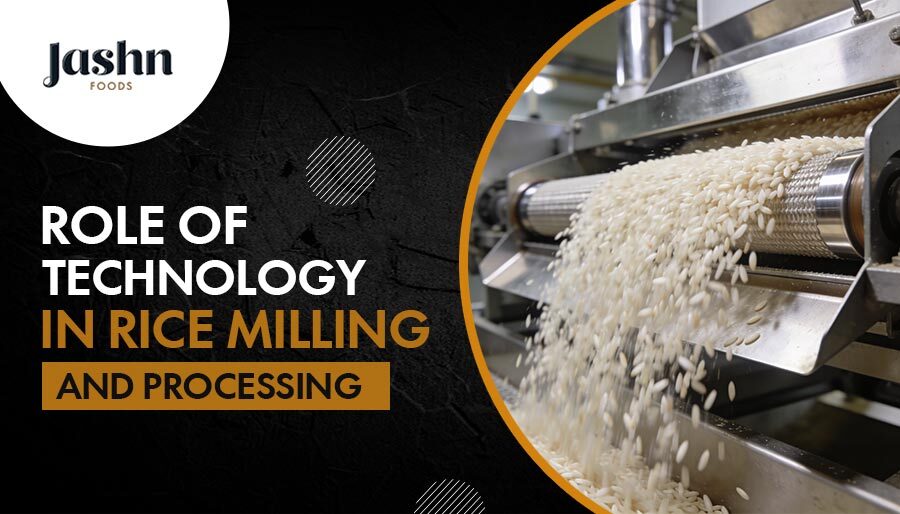
Rice milling used to feel like a very hands-on job. If you walked into an older mill, you would notice that most things depended on people more than machines. Workers would listen to the sound of equipment, adjust settings manually, and check rice quality by touch and sight. It worked, but it wasn’t always consistent.
As demand increased and buyers became more particular, that way of working started to show its limits. People weren’t just buying rice for quantity anymore—they wanted cleaner grains, better uniformity, and fewer defects in every bag. That shift is what slowly brought attention to the Role of Technology in Rice Milling and Processing in a very practical way.
Today, milling is more controlled, though not perfect. Mills track moisture, grain breakage, and polishing quality more closely than before. Even small variations can change how rice looks or cooks. That matters a lot for premium varieties like basmati rice, where buyers are quick to notice differences.
Understanding the Role of Technology in Rice Milling and Processing
Rice milling isn’t one simple step. It is a sequence that starts when paddy enters the mill and moves through cleaning, dehusking, separation, polishing, grading, sorting, and finally packaging.
Earlier, many of these steps depended heavily on manual attention. Machines were used, but they weren’t precise or automated. Operators adjusted them based on experience, and small changes in handling often led to different results.
That is where inconsistency used to creep in. One batch might come out slightly more broken, another a bit cleaner, even if the same raw material was used.
Now the situation is different. The Role of Technology in Rice Milling and Processing becomes easier to understand when you see how modern mills maintain steady output even at higher volumes. Machines regulate flow better, reduce unnecessary handling, and keep processing conditions more stable.
There is also less guesswork involved. Operators can monitor performance and catch small issues before they turn into bigger quality problems.
Rice Processing Feels More Stable Now
Older mills worked in a stop-and-go pattern. Grain would be moved, processed, checked, adjusted, and then moved again. It wasn’t smooth, and it took time.
Modern setups are more continuous. Conveyor systems keep rice moving from one stage to another without so much manual interruption.
Cleaning has improved in a very practical sense. Dust, stones, and husk particles are removed more effectively before milling even begins.
One thing that really stands out is the reduction in broken rice. Earlier machines didn’t always handle grains gently. Now the process is more controlled, even when production is running at high speed.
This matters because mills today are not producing for small local demand alone. They are supplying bulk orders where consistency is expected, not optional.
Machines Have Quietly Changed Rice Quality
Most buyers don’t think about milling—they just see the final product. But appearance plays a big role in decision-making.
Pre-cleaning systems remove basic impurities early on. Destoners help eliminate heavier materials that come in with paddy.
Paddy separation is another step that makes a visible difference. If unhusked grains stay mixed in, the final product looks unfinished.
Color sorting has probably changed things the most. Earlier, workers removed defective grains manually, which was slow and inconsistent. Now machines use sensors to detect and remove them more accurately.
Polishing has also become more balanced. Instead of over-processing rice, modern systems try to keep the grain intact while improving appearance.
Efficiency Is Not Just About Speed
People often assume efficiency means faster production. In rice milling, it’s more about control and reduced loss.
Even a small reduction in broken grains can improve profit margins when production volumes are large.
Storage is another area that has improved quietly. Moisture control systems help prevent spoilage, especially in humid conditions where rice quality can drop quickly.
Inventory tracking is also more structured now. Instead of depending only on manual records, mills can monitor stock and production more clearly.
Packaging is faster and more uniform too, thanks to automated filling and sealing systems.
Demand for Private Label Rice is Expanding
Retailers are increasingly moving toward private label rice, where they sell rice under their own brand instead of a manufacturer’s label.
This changes how mills operate behind the scenes.
Packaging flexibility becomes important. One facility may need to switch between multiple branding styles and pack sizes within the same production cycle.
The bigger challenge in the private label rice segment is consistency. Retailers expect every shipment to look and perform the same because their brand depends on it.
So grading and sorting systems quietly become very important here. They help keep output stable across large volumes.
For many mills, this segment has become a steady source of long-term business.
Processing Quality Affects Basmati Rice Price
When it comes to premium rice, processing quality directly affects value. The basmati rice price is not only about variety—it is also about how carefully the rice has been handled after harvest.
Long grains, low breakage, and preserved aroma are key expectations. If milling is rough, even good raw material loses value.
Modern systems help protect grain quality better during processing. That results in better appearance and more consistent output.
Storage conditions also matter more than people assume. Poor moisture control can slowly reduce quality over time.
Because of this, export-focused mills invest more in equipment, testing, and packaging. That investment is reflected in basmati rice price in the market.
How Basmati Rice Manufacturers Are Adapting
Competition has pushed many basmati rice manufacturers to upgrade their operations.Buyers today expect consistency across every shipment, not just occasional quality.
Grading machines and automated sorting systems help reduce variation in output.Traceability is becoming more important too. Buyers want clearer information about where rice comes from and how it is processed.
Inside mills, hygiene practices are also stricter than before. Enclosed systems and automation reduce direct handling of grains.
For many basmati rice manufacturers, technology is now less about expansion and more about staying reliable in a competitive market.
Food Safety Has Become a Basic Expectation
Food safety is no longer something extra—it is expected.Modern mills reduce contamination risks by limiting manual contact during processing.
Dust control systems help maintain cleaner working conditions and improve hygiene. Packaging has also improved, especially sealing methods that help keep rice fresh for longer periods.
These changes are not always visible to customers, but they strongly affect trust.
The Future of Rice Milling Technology
Rice milling is still evolving. Digital monitoring systems are becoming more common and help track operations in real time.
AI-based sorting is slowly improving how defects are detected.
Energy efficiency is becoming important as operating costs rise.
Sustainability is also entering the picture, with more focus on reducing waste and improving resource use.
Conclusion
Rice milling has moved away from being purely manual and experience-driven. It is now a more controlled and system-based process. The Role of Technology in Rice Milling and Processing can be seen in almost every stage today—from cleaning to packaging.
It has helped improve consistency, reduce waste, and support larger-scale production. And as demand continues to grow, this shift toward more controlled processing is likely to continue further.